Why Do Bees Buzz?
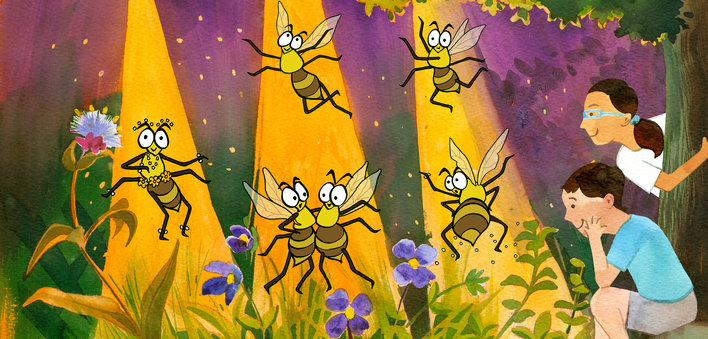
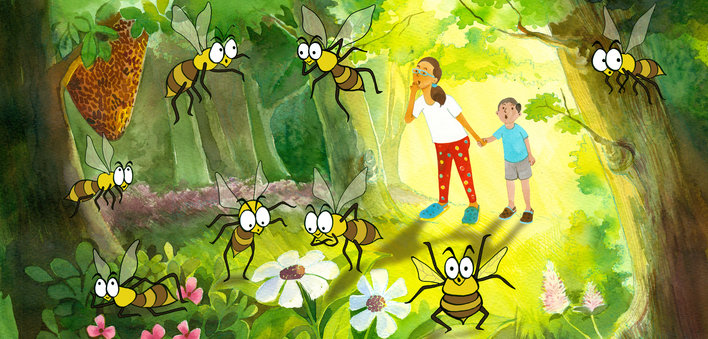
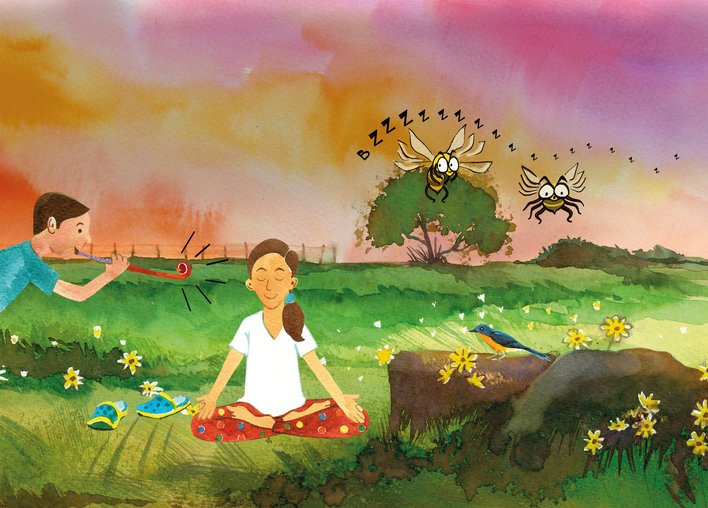
Bzzz…Hey, what’s all that buzz about?
Is it a code word used by bees to call their friends? Or a hum of excitement when honey is spotted?
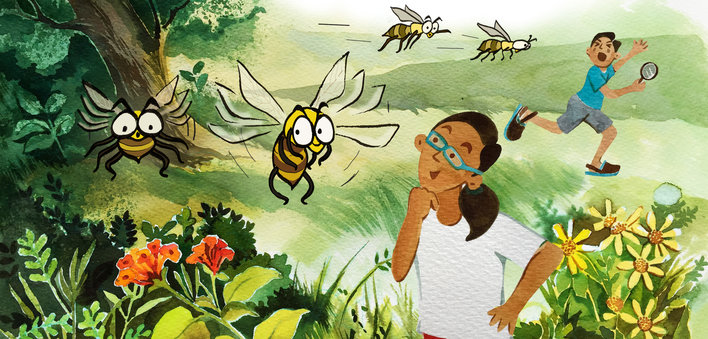
Bees, particularly bumble bees, make a loud buzzing sound as they fly. The sound is made when the wings beat up and down. The smaller the wings, the faster the bees have to beat them in order to fly. And the quicker they beat, the louder the buzz.
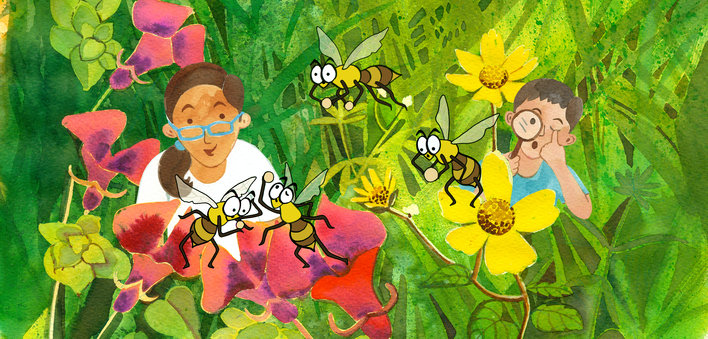
Bees also buzz to do something very useful; they carry pollen from one flower to the other like a postman delivering letters.
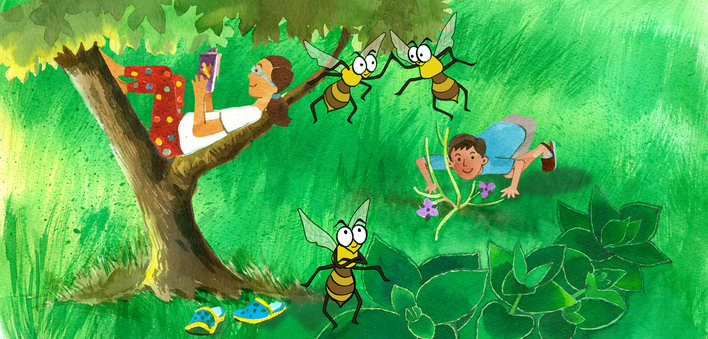
Pollen is the powdery grain on flowers. Pollen helps plants to make seeds. Bees are excellent pollinators. Thanks to them, many new plants grow and sprout all around.
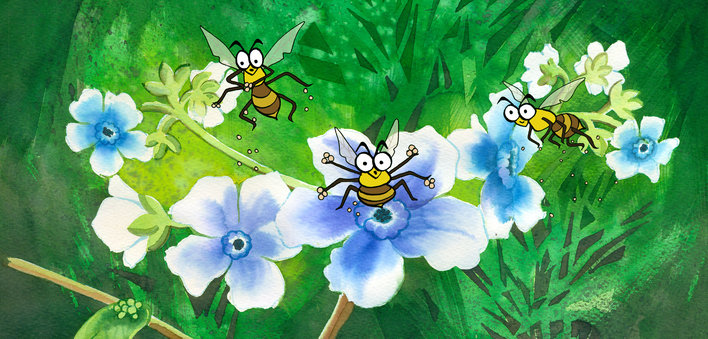
How do those tiny grains of pollen stick to the bees' feet? When bees sit on a flower to suck honey, the grains of pollen stick to their feet and bodies.
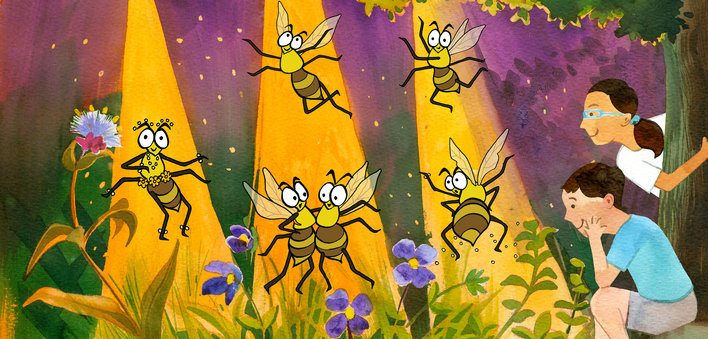
Then when the same bees buzz near a flower and perform a lively dance, the quivering shakes the pollen off on other flowers. The bees then fly to other flowers where they leave the pollen behind to pick up new ones and this process continues.
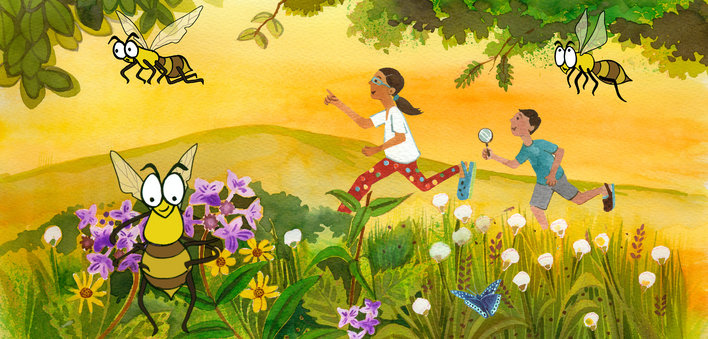
Bees are the buzzing godfathers of many new plants that grow away from the parent-tree.
Can you hear your own breath? Usually not. But you can hear a bee breathing. That is because the buzz is also the sound of the bee breathing. It has a small, segmented body so when it breathes, the air gets on a roller coaster ride through all those bumpy parts inside and creates a buzz.
Sounds pretty exciting, doesn’t it? Aren’t those busy bees truly amazing?
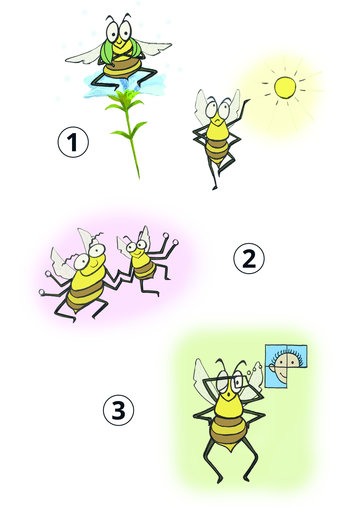
DID YOU KNOW? 1. Bees are hard workers. In winter, they can live up to nine months and in summer only up to two months. All work and no play does not make them dull.
2. A curious case of the bees is that when they do the work of a younger bee, their brain stops ageing. It starts working like a younger bees’ brain. Do you now wish you were a bee?
3. Bees recognize faces just like human beings do. Each part of the face is first taken separately, then put together to make up the face. Remember not to anger a bee!
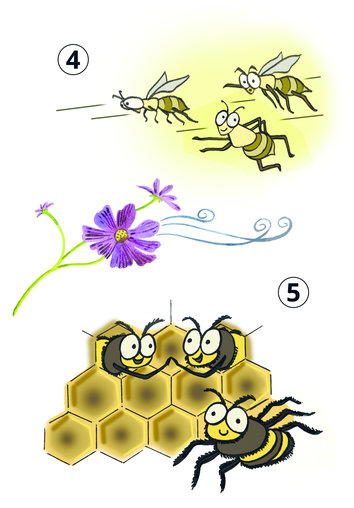
4. Caffeine, a chemical used by plants to keep away harmful insects, helps bees remember the location of the flower. It welcomes the bees for a second visit.
5. Bumble bees are larger than honey bees and other types of bees. They live in hives and love to socialise. Many bumble bees do not have a sting. They may not produce much honey but are excellent pollinators.
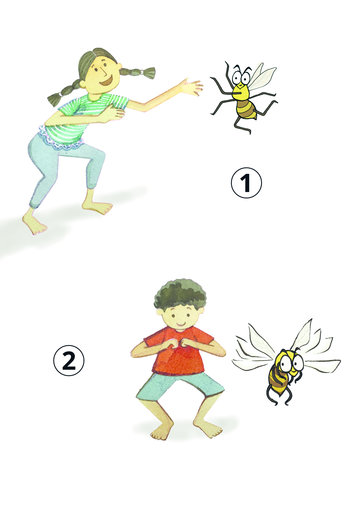
Be a bee!
1. A honey bee performs a dance that tells the rest of the hive where to find nectar. Now try to express some information through dance moves, and see if your friends are able to understand what you are communicating!
2. Try buzzing like a bee... flap your arms and see if you can hear a buzz.
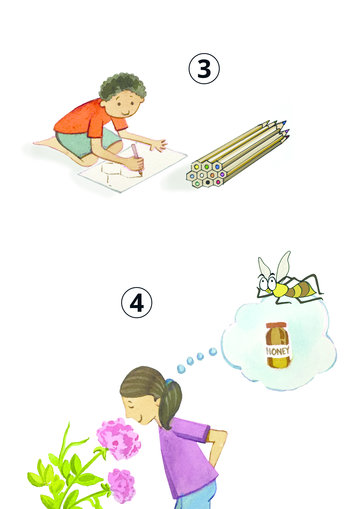
3. A honeycomb, the house of the bees, is known to be a masterpiece of engineering. Why do you think? Try and draw perfect hexagons as in a honeycomb. Or make models using ordinary cartons. Maybe you’ll guess the answer then!
4. Try to carefully smell different flowers. You could then imagine how honey made from the nectar of different flowers can also taste different.