Under the Microscope
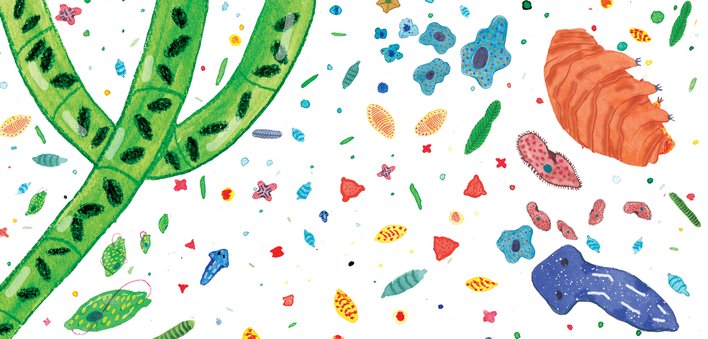

From the pond...
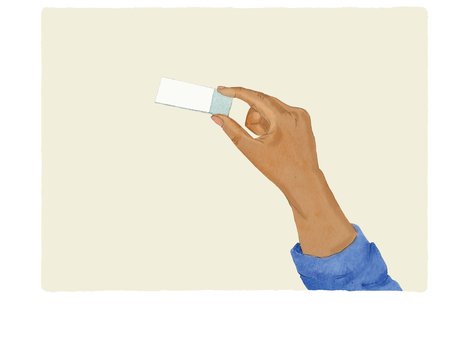
To the lab...
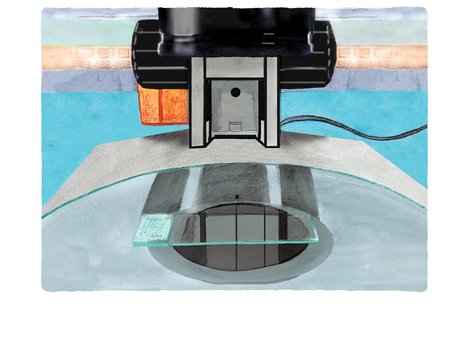
Under the microscope...
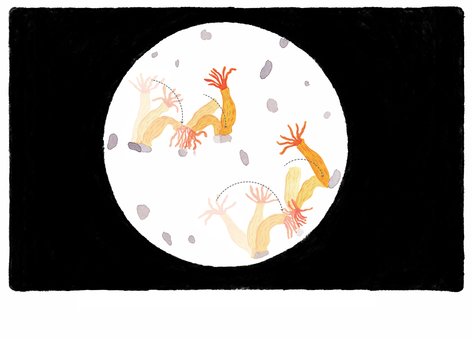
Hydras somersault
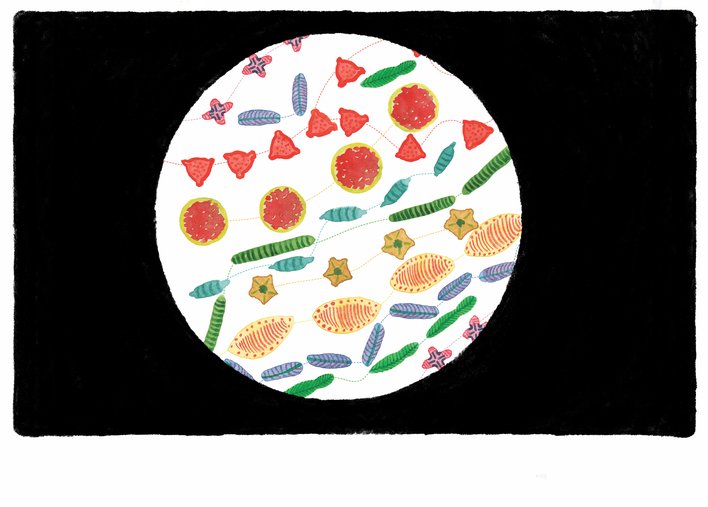
Diatoms drift
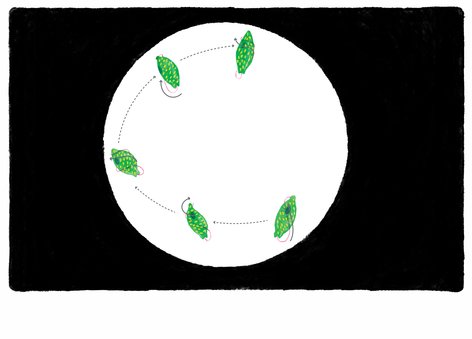
Euglenas twist and turn
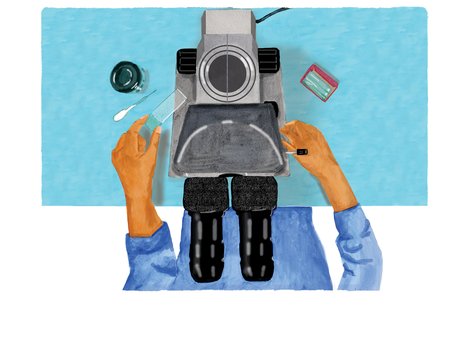
Under the microscope...
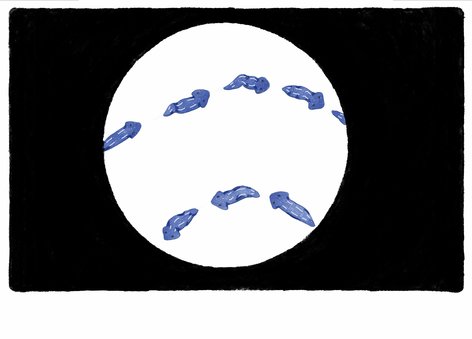
Planerias glide
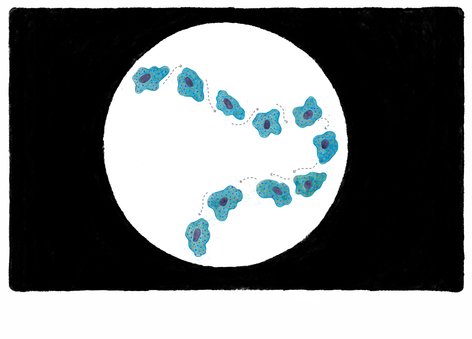
Amoebas crawl
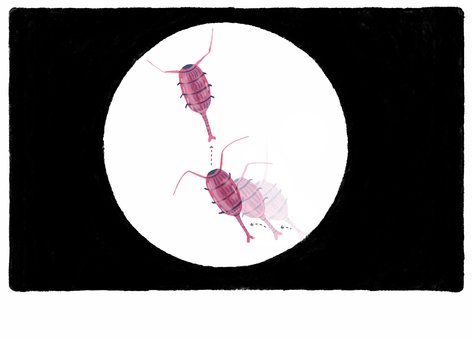
Copepods swim
Under the microscope...
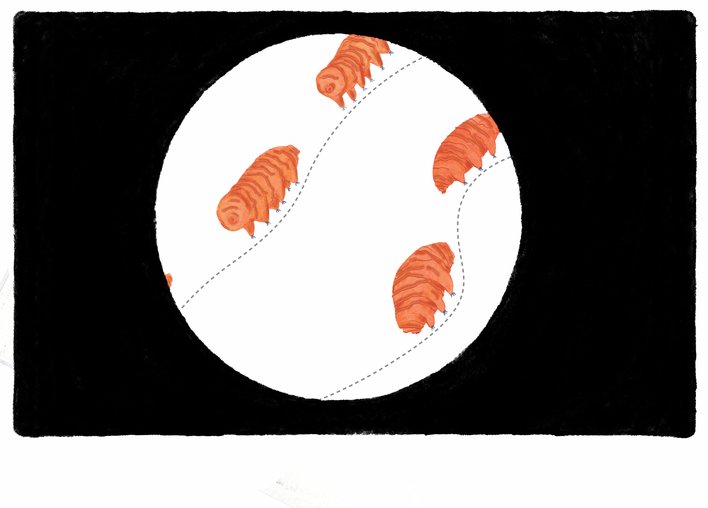
Tardigrades stroll
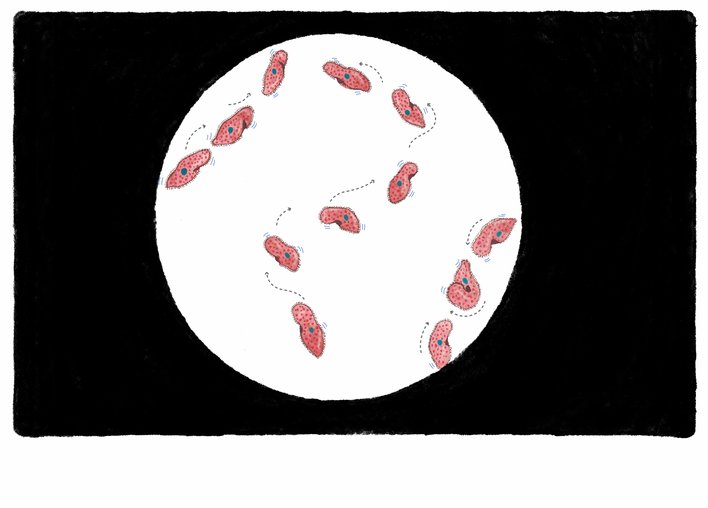
Paramecia spiral
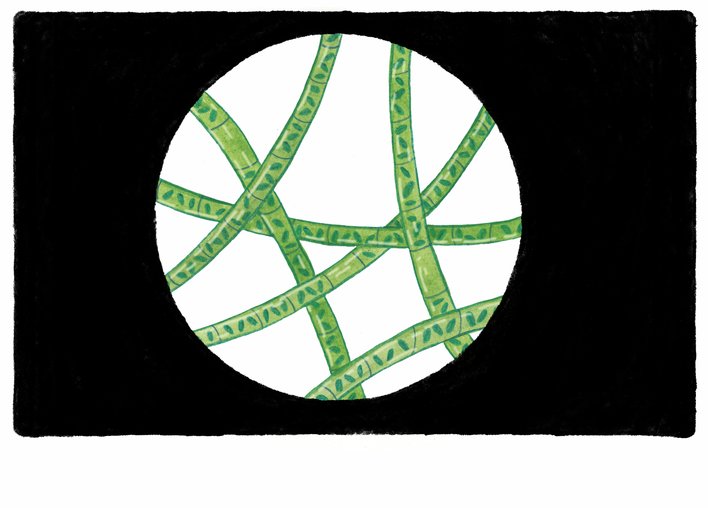
Cyanobacteria stay still... Under the microscope.

Microbes Are Everywhere!
Hydras look like plants, tardigrades walk like tiny bears and amoebas are shapeshifters. But what they have in common is that they’re all microbes, tiny creatures that live all around us. From deep under the earth to far up in the sky, microbes are everywhere. They live in the freezing cold and in the bubbling heat. They live in food, waste, rocks, trees, soil, and even you and me. So how many microbes live around us? A drop of water from a pond will have hundreds and hundreds of these tiny creatures! But to look at them, we’ll need to use a microscope. A microscope is a device used to enlarge very small things that can’t be seen with the naked eye.
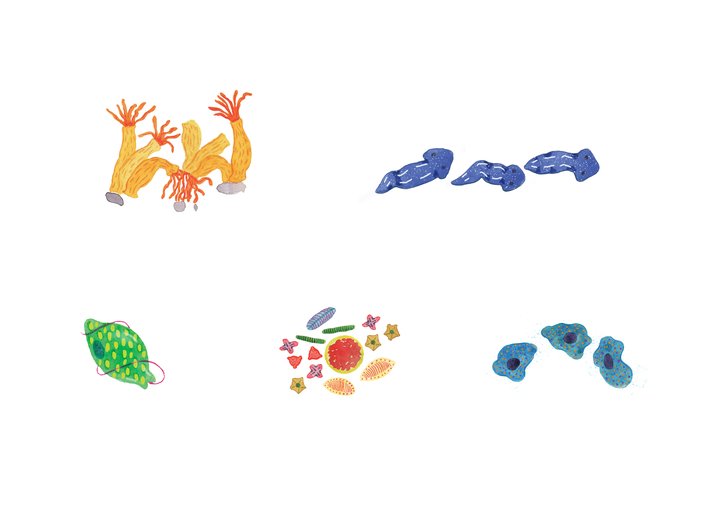
Let’s take a closer look!
Hydras can grow back their lost body parts and almost never die of old age.
If you cut a planaria into two, each piece will develop into an individual planaria.
Euglenas, like plants, can make their own food through photosynthesis.
Diatoms produce 25 to 40 percent of the air we breathe.
Amoebas can change their shapes. Sometimes, they do this to trap food.
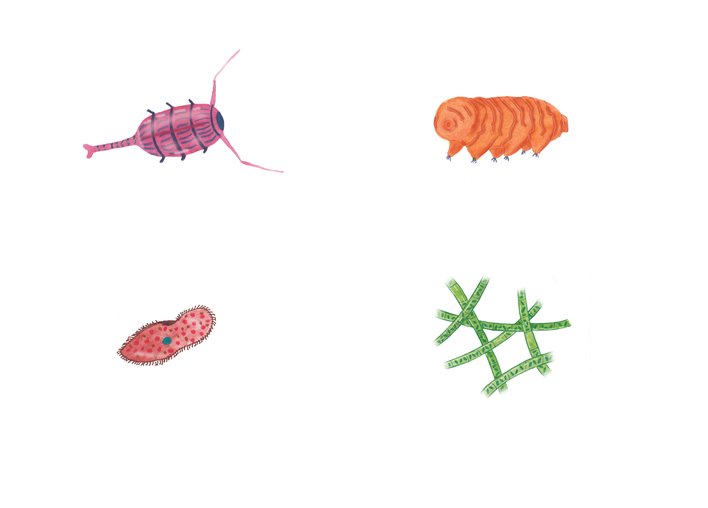
A single copepod can eat thousands of diatoms in just 24 hours.
Tardigrades can survive in the most extreme conditions, like inside a volcano or in outer space.
Paramecia swim really fast and can cover a distance of four times their length in a second.
Cyanobacteria have been around for a very long time and have been found in fossils that are over a billion years old.