Sudipta Sengupta - The Rock Reader
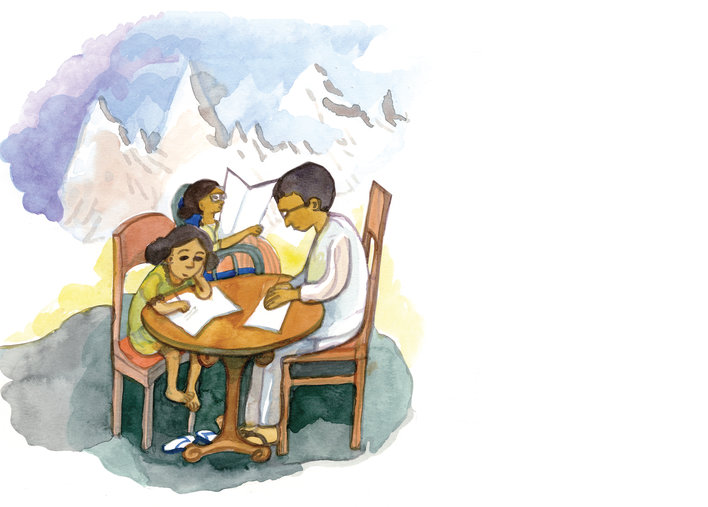
When Sudipta sits to do maths with Baba, her mind wanders to the mountains.
She dreams of climbing over rocks and boulders, scaling snow-capped peaks.
She dreams of being a mountaineer.
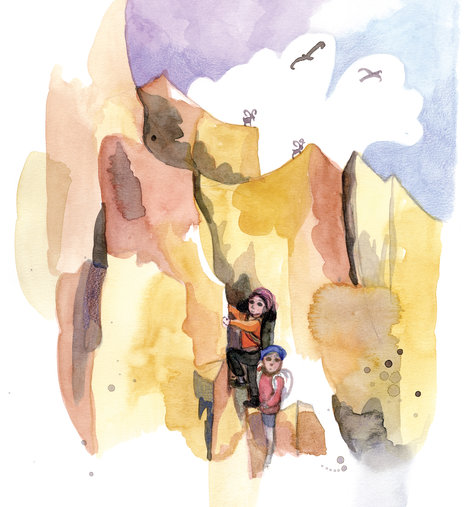
Soon, Sudipta’s school days are over and she applies for a physics course in college. There she meets a professor who suggests that she study geology instead.
A geologist studies rocks and how they are formed. During the course of her studies, Sudipta collects rock samples, she goes exploring and trekking, she scales mountains and she travels to far and secluded places.
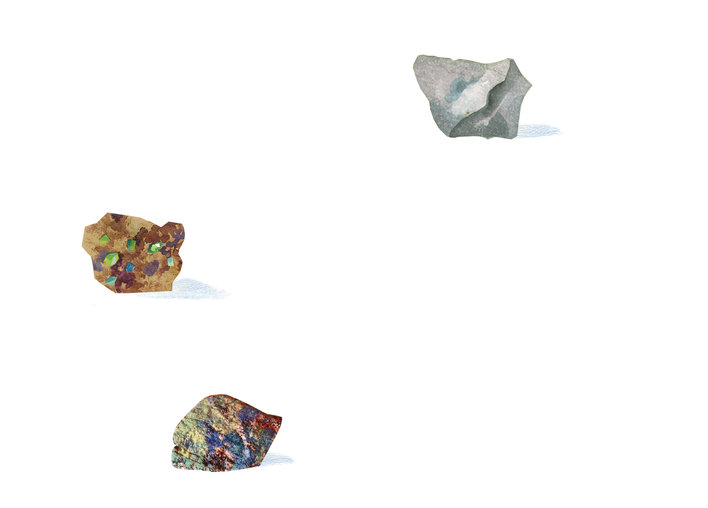
She studies rocks from all corners of the world.
She wants to understand how Earth’s forces can cause deformation in rocks. Sudipta continues to study for a long time even after she completes college.
Soon she can read a rock like a book. She can tell whether it was involved in an earthquake or was a part of a mountain.
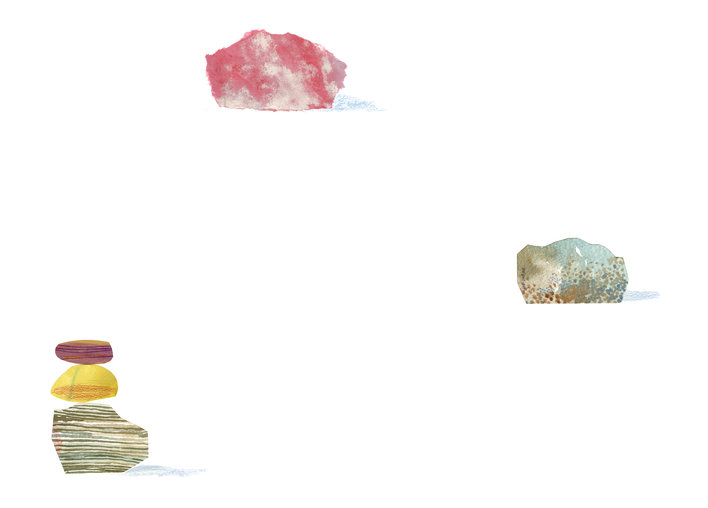
She continues climbing mountains. She is given advanced training by Tenzing Norgay, one of the first two men who scaled the mighty Everest.
Deep inside Earth, there’s a lot of heat and pressure which makes rocks soft. They can deform, which means they can change shape. Closer to the surface, the pressure is less. Here, the rocks can crack. Sometimes, one rock goes through the impact of different forces and periods of time. So it changes shape multiple times.
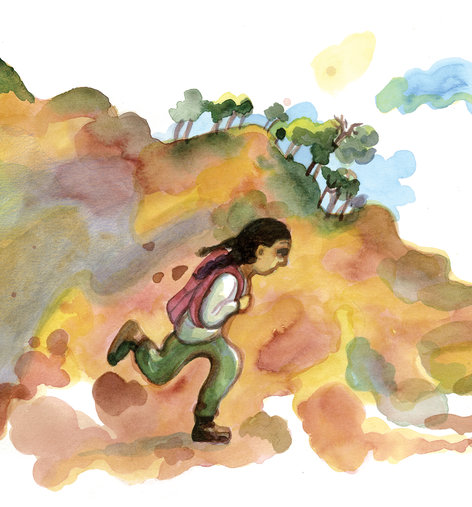
Sudipta’s search for rocks takes her on the wildest adventures in the remotest places.
Once when she’s climbing ridges at Singhbhum, a place known for its wild elephants, her guide shouts, “Elephant, elephant! Run, RUN!”
With a rucksack of rocks, Sudipta runs as fast and as far as her feet can take her. But are there any elephants?
No, all she sees are footprints of wild boar and deer.
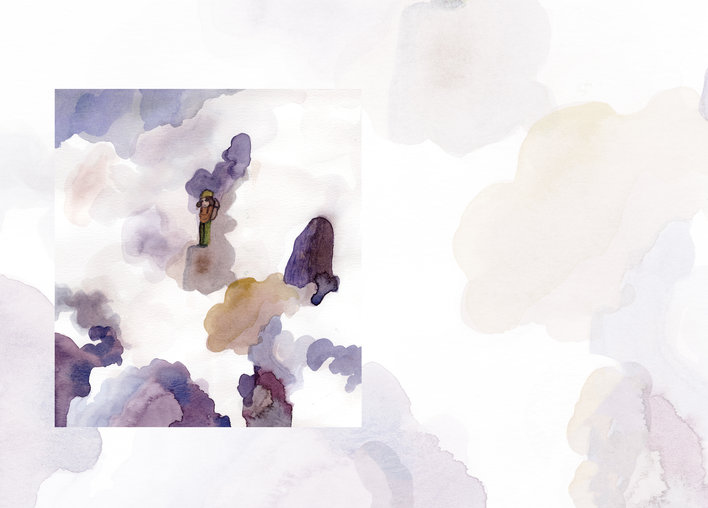
Another time, she’s on an expedition to the Scandinavian Caledonides range. It’s dusk and she’s on a narrow cliff, when suddenly fog sets in. It’s so thick she can’t even see her own hands. She stands frozen for an hour. Even the slightest movement, and she might fall off the cliff!
The next day, she is walking across a lush green valley. Sudipta begins to sink. This isn’t grass, it’s a bog! She gathers all her strength, pulls herself out of the bog and makes it back to the camp.
Sudipta hears that there is going to be an expedition to the coldest place in the world, Antarctica. She can’t wait to apply! But the expedition is not open to female scientists.
A year later, much to her surprise, she gets a telegram calling her for an interview. And the next thing she knows, she’s setting sail from Goa to Antarctica. The only other woman scientist on board is Aditi Pant, a marine biologist.
According to the Antarctic Treaty, Antarctica is a ‘natural reserve, devoted to peace and science’. All countries that have stations there pledge to conduct research only for peaceful and earth-friendly purposes. They also share their findings freely with scientists from other countries.
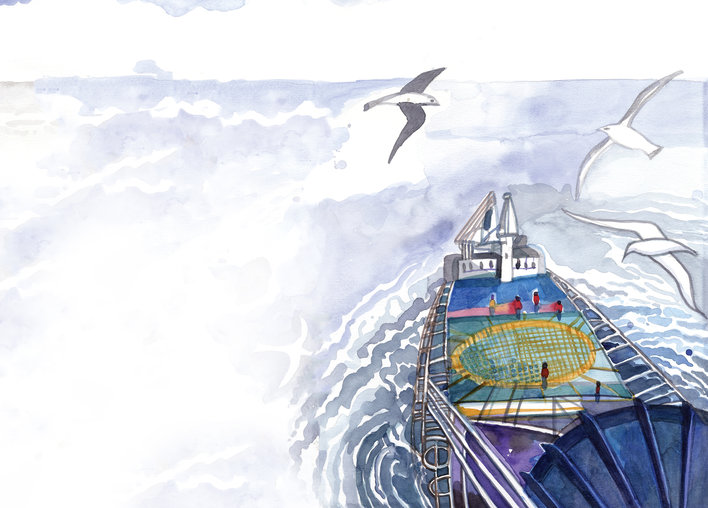
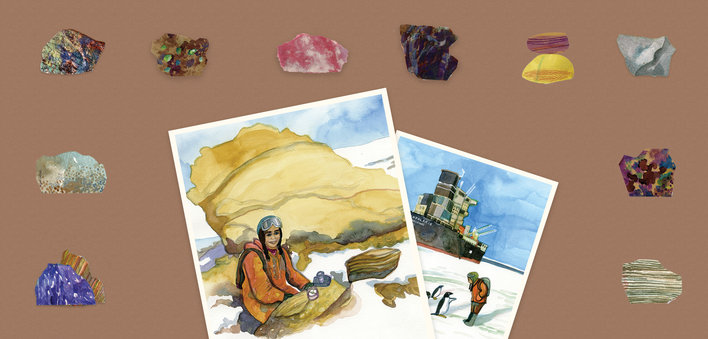
Twenty-three days after setting sail from Goa, the Finnpolaris docks at Antarctica. On board are 83 people—scientists, engineers, and officers from the armed forces. They will set up India’s first research station, Dakshin Gangotri*.
* The Station was abandoned after it was submerged in ice in the late 1980s.
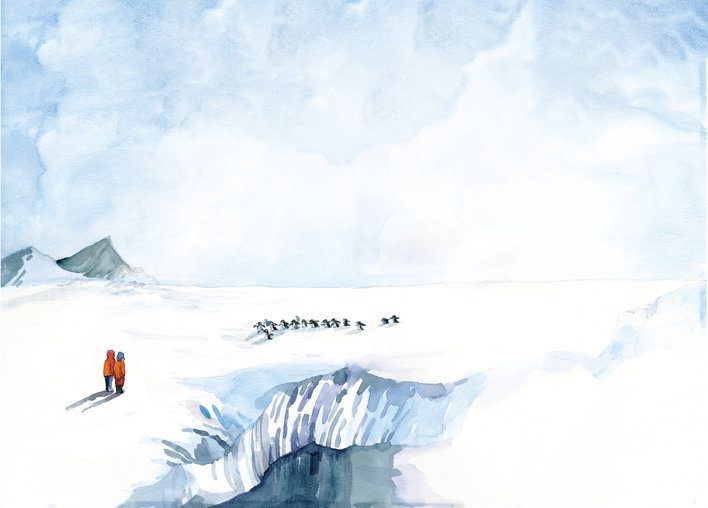
From the deck, Sudipta can see miles and miles of blue and white. No trees, no plants, no animals, no people. Only penguins.
On 27 December 1983, Sudipta and Aditi become the first Indian women scientists to set foot on the icy continent.

90% of the world’s ice is located in the Antarctic.
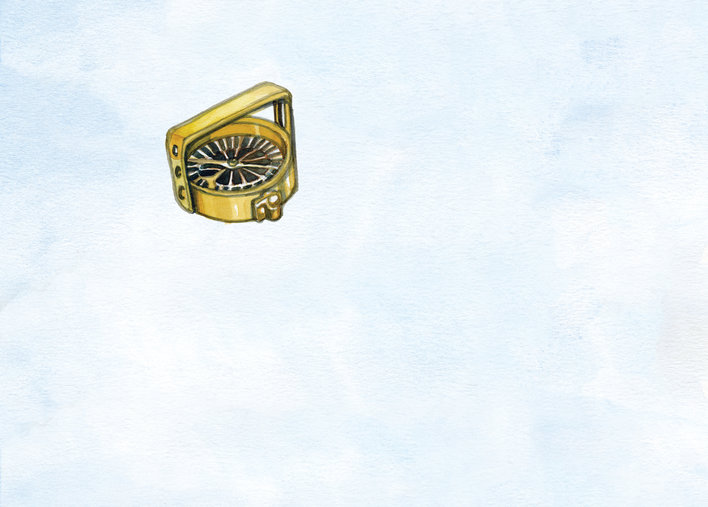
Looking for rock samples in Antarctica is not easy. Sudipta always leaves the research station with her clinometer, a special compass that not only shows her the direction but also the incline of the rock.
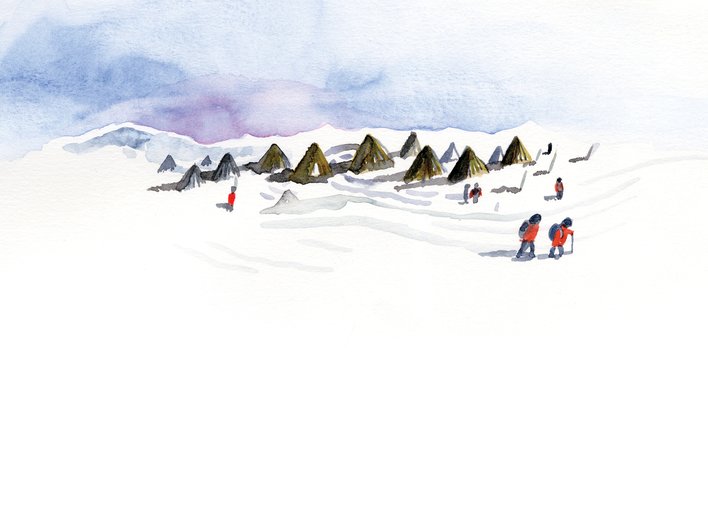
She doesn’t know when the ice and rock bridges she’s walking on will break, or when the snow will give way to a crevice. Blasts of dry, chilly wind hit her face as she walks on sheets of ice that are 4 km thick.
She cannot spot any rocks. Where will she find them?
On top of the mountains.
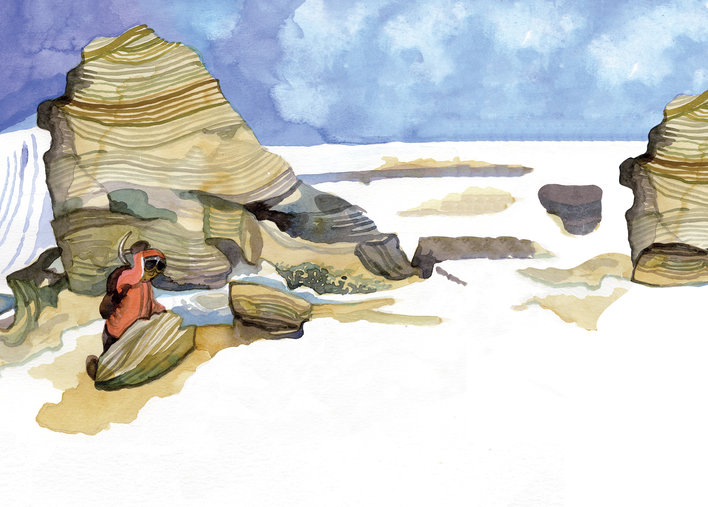
In Antarctica, there are mountain peaks that jut out of the ice. Sudipta scales these peaks for her samples, and finds almost 20 kg of rocks which she carries in her rucksack. She spends long hours hammering away at fresh and hard rocks. It is so cold she can’t even take off the cap of her pen to take field notes.

In summer, the temperature can range between -20 to -30 degrees Celsius and in winter it can go as low as -89 degrees Celsius!
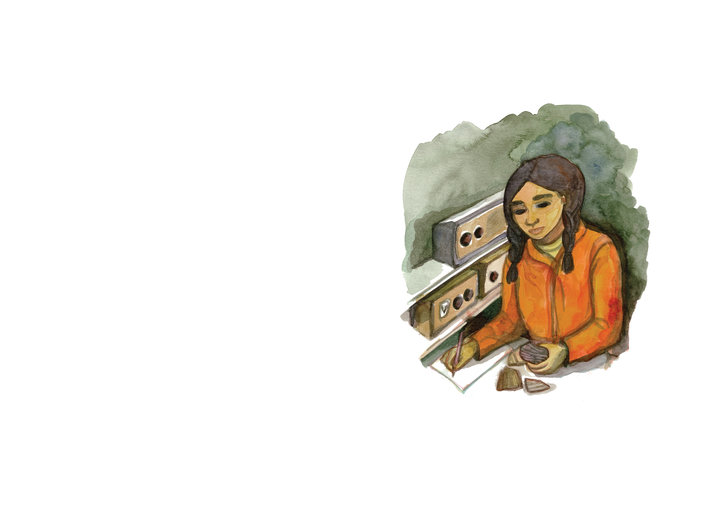
Sudipta collects lots of rocks in Antarctica. Big rocks. Small rocks. Rocks with sharp edges. Rocks with lines running across them. She can trace their history back a million years.
Some of the rocks have deformation patterns similar to the rocks in South Africa and some have patterns like the ones in South India.

Scientists say tens of millions of years ago, the continents of Asia, Africa, Australia, South America and Antarctica were joined together to form one huge landmass called Gondwanaland. Twenty million years ago, it split and began to drift apart to form separate continents. Antarctica settled in the South Pole.
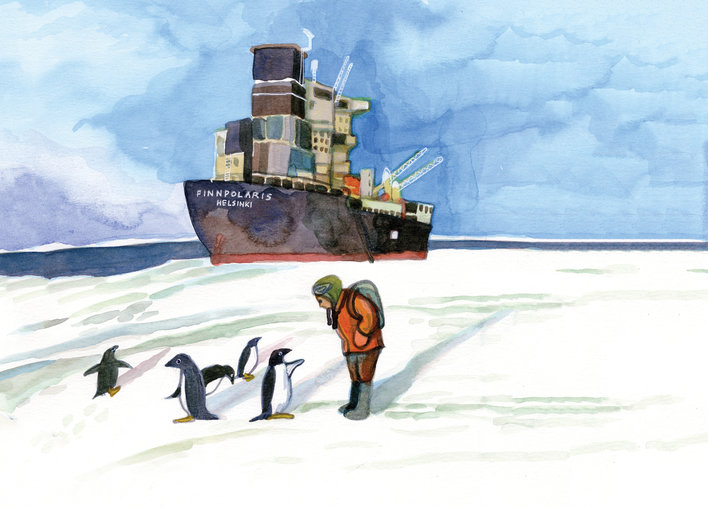
Sudipta returns to Antarctica a few years later. Again she walks for miles on ice, treks across mountains, discovers new rocks. She watches, she listens, she writes, and she brings back stories on how the world came to be.
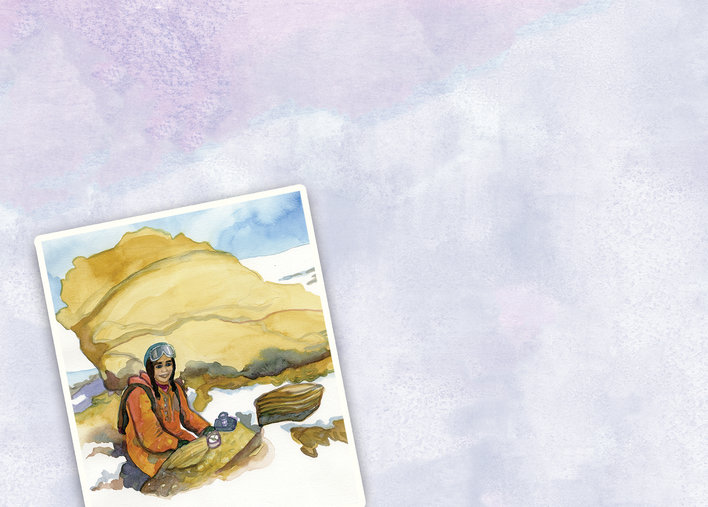
Sudipta completed her graduation and post-graduation in Applied Geology. She continued her Ph.D. research in Structural Geology at Jadavpur University.
Sudipta was selected to conduct her post-doctoral research at the Imperial College of Science, London. As of 2018, she is the only Indian geologist to have received this fellowship.
A STORY SET IN STONE
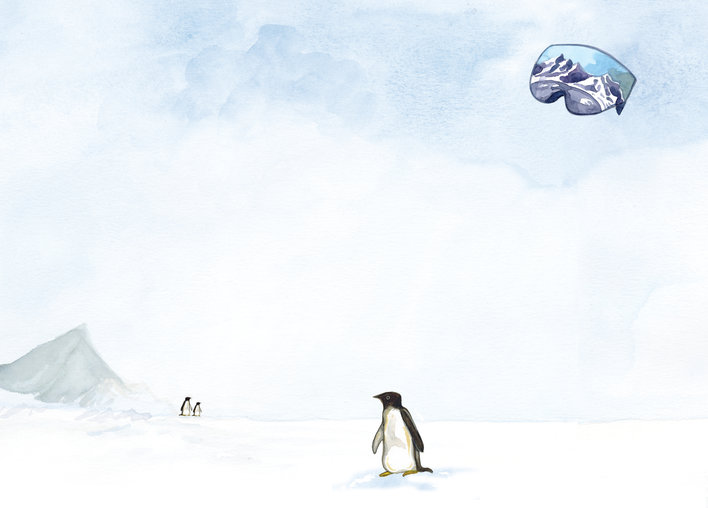
Sudipta pioneered geological study in the Schirmacher Hills in East Antarctica. Many other scientists continued the work she started here.
Some awards she has received: the Shanti Swarup Bhatnagar Award (1991), the Antarctic Award (2000) and the D.N. Wadia Medal (2016).
Sudipta is a former professor and INSA Senior Scientist at the Department of Geological Sciences, Jadavpur University, Kolkata.