Nature's Webmasters
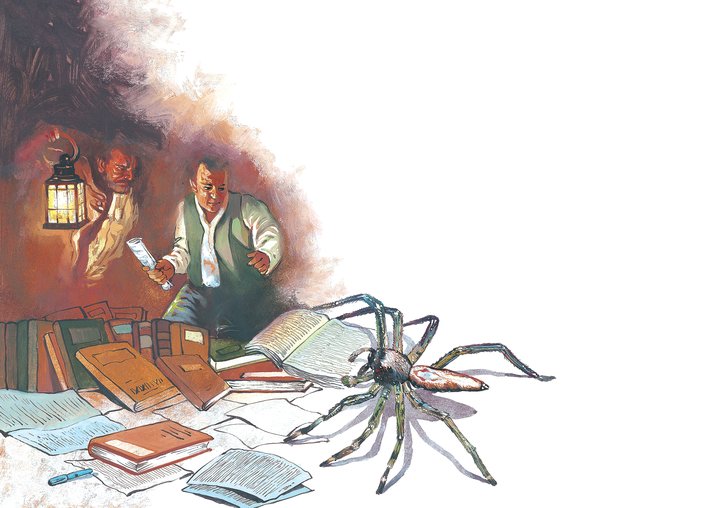
What do most of us do when we spot a spider? We either scream, or roll up a magazine and WHACK! Actually, there's no need to do either because spiders, hairy and scary though they may appear to be, are mostly harmless and good pest controllers.
Don't do this, dude
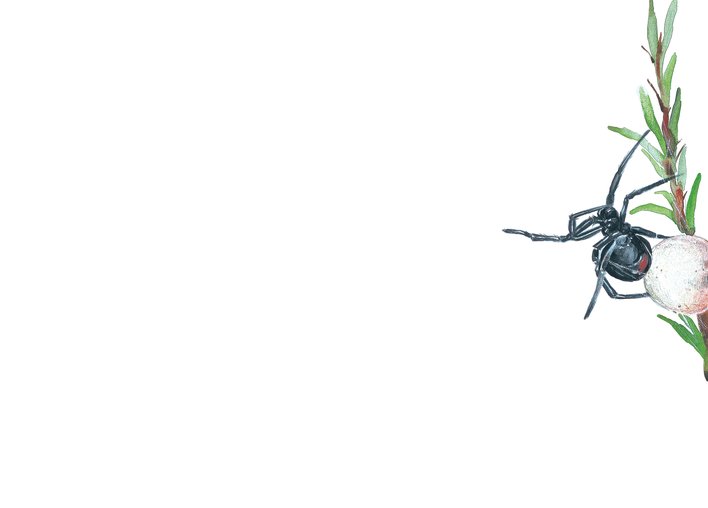
There are a few poisonous ones, like the Black Widow, (not found in India) but these are just a tiny fraction of the 30,000 different types we have so far discovered in the world.
None of the Indian spiders are fatally poisonous, but they do eat vast numbers of flies, mosquitoes and cockroaches, so if you are one of those, you have to watch out!
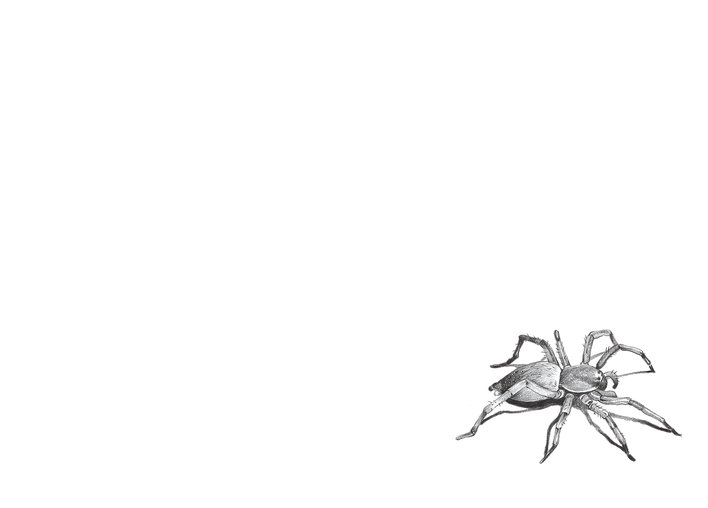
With eight legs, six to eight eyes, and a body that is divided into two parts, spiders are not insects but belong to the order Arachnids and are related to ticks, mites and scorpions.
Their size varies from so small, that you need a magnifying glass to see them properly, to as large as a dinner plate! And they're best known for their ability to spin webs; those same webs your mother ruthlessly brandishes a broom at, in the house.
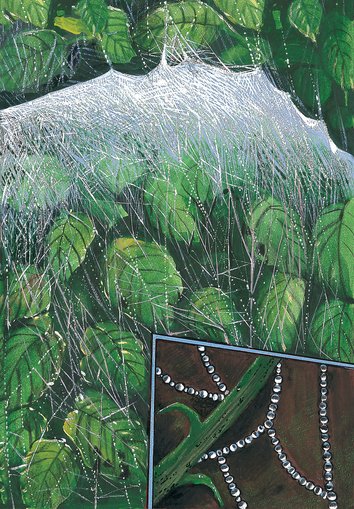
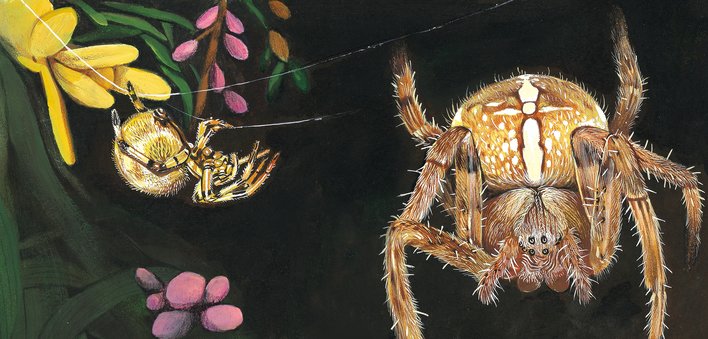
But even the most ardent spider-- hater ( and fussy mother) would agree, that an orb web beaded with dew in the early morning, looks like some gorgeous pearl necklace.
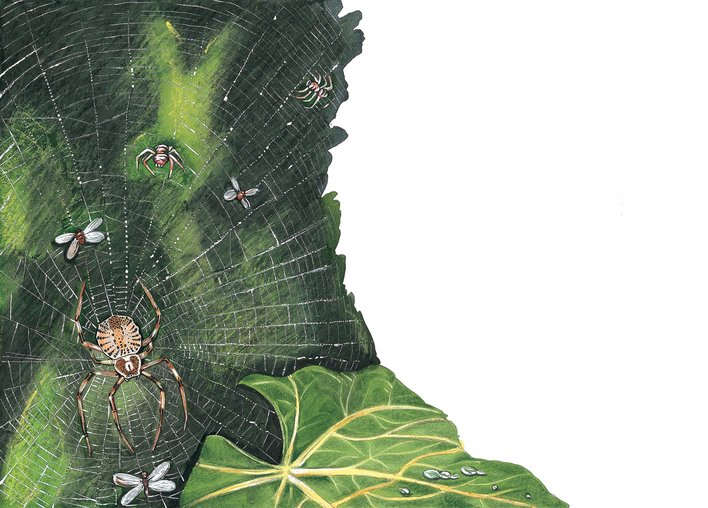
The web's main function of course, is to trap insects and this it does admirably. An orb---weaving spider (as those making such webs are called) spins a new web every evening and takes it down the following morning, by eating up the silken threads, so that she can recycle and reuse the protein in the silk, and ensuring that the precious substance is not wasted.
I once watched a spider do this and she looked exactly like a magician doing the ribbon trick in reverse!
Free pearl necklaces at dawn
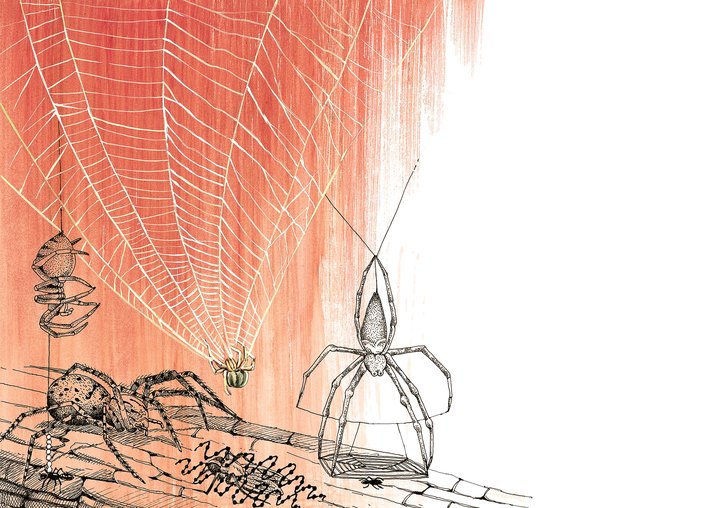
It takes a spider about half an hour to spin a new web, and if you watch her doing so, you will notice that she does so in a very methodical way. Sheis very careful not to get caught in her own sticky web, and the sticky threads (beaded with tiny drops of glue) are laid down right at the end of the process.
The little central area, where she sits and waits is made of non--sticky threads, as are the threads she runs along in order to reach her prey.
Let me drop this over you, delicious!
The magician's trick in rewind mode. Recycling by eating is good for health
Can you do this with bubblegum?
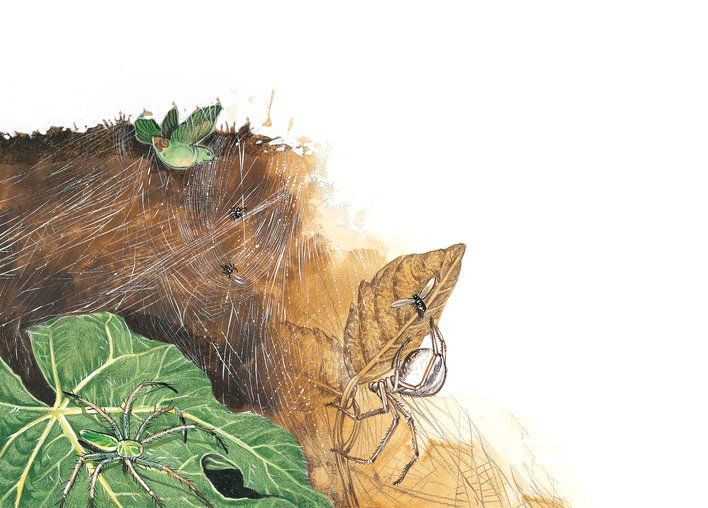
Not all spiders build beautiful orb webs; some build huge tent or hammock webs made of crisscrossing non-sticky silks that snare insects by tripping them up (you can spot these easily while driving out in the countryside on winter mornings). Others make tunnel webs, and clever Trapdoor spiders sink silk lined shafts into the ground, topped off with a silken trapdoor and wait for their prey to trundle over it.
Spiders' silk is one of the strongest substances in the world, stronger than Kevlar ( out of which they make bullet proof jackets and tethers for oil rigs) and several times stronger and more elastic than steel wire of the same thickness.
I read somewhere that strands of spider silk, the thickness of a pencil, would be able to stop a Boeing 747 in mid-flight! Of course we are trying to artificially make spider's silk, but haven't quite succeeded as yet.
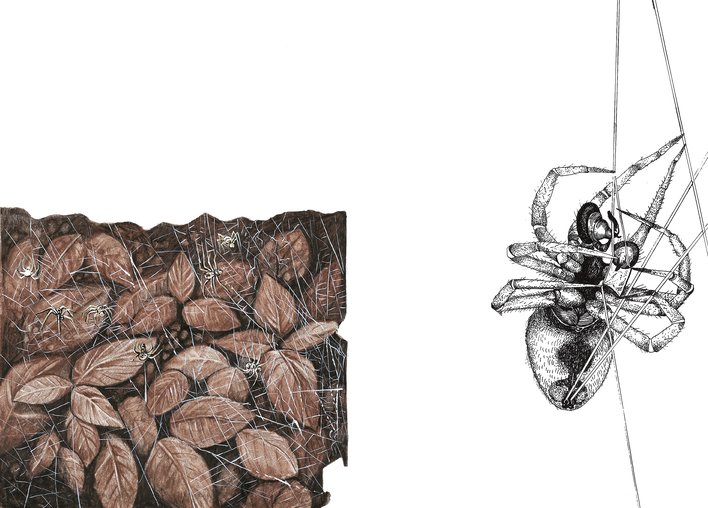
Spiders produce silk from organs called spinnerets, located at their rear end and it emerges in liquid form, hardening as it makes contact with the air. They can produce different types of silk, depending on what they need it for.
Thus, baby spiders leaving home, stick their bottoms up into the air, and release threads of a fine type of silk called gossamer, which catch the breeze and sends the little fellows parasailing far and high, to land in new areas. (When they want to land, they draw back the silk thread and roll it into a ball!)
Silk: it squeezes out like toothpaste but is stronger than steel wire
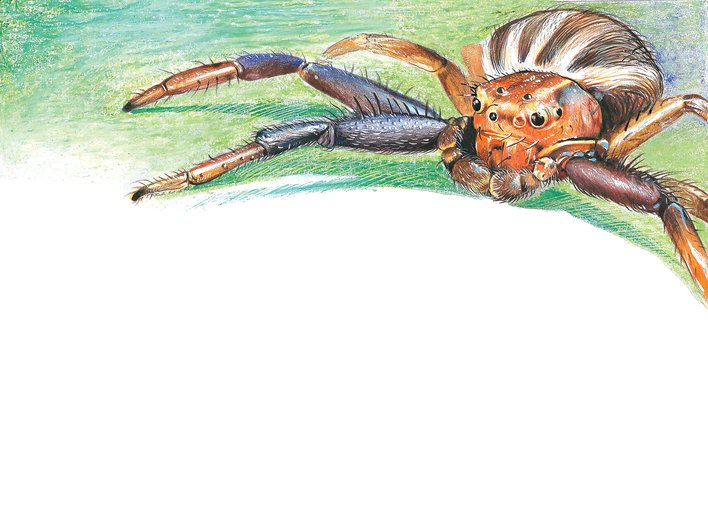
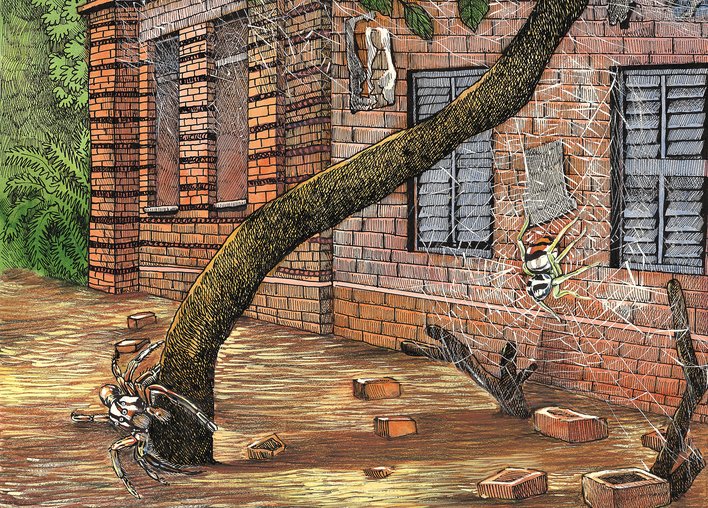
Crab and Jumping and Wolf spiders, use silken threads as safety lines, while leaping after their prey - they do not build webs at all - but actively hunt their prey on walls and the ground. Some spiders make nets out of silk and fling these over their victims, which always reminds me of gladiators in a Roman arena! Egg cases too are spun out of silk and guarded fiercely by the mother. Orb weavers may also embalm their prey in silk to store them for a future meal.
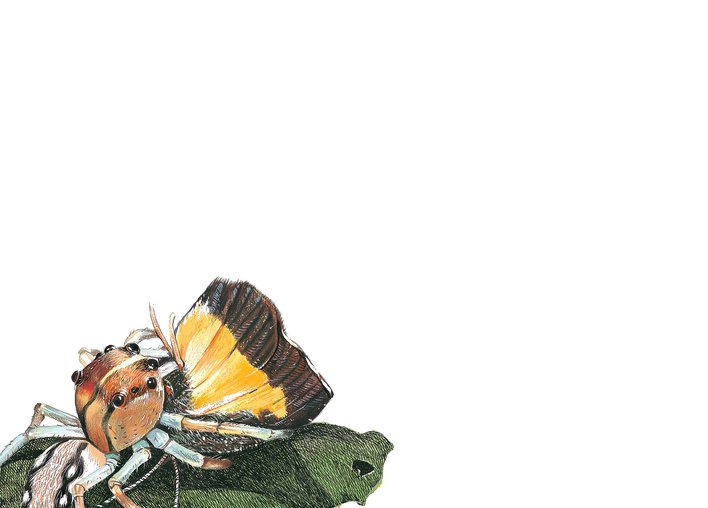
Spiders are carnivorous and after trapping a victim, or pouncing on it, will sink their fangs into it and inject a poison to subdue their prey. Then they inject digestive juices into the victim, which liquefies its flesh and suck up the broth! Nice way to have lunch, eh?
Recipe for all meals: Wait, pounce, poison, inject digestive juices to dissolve, slurp up, burp! Yum!
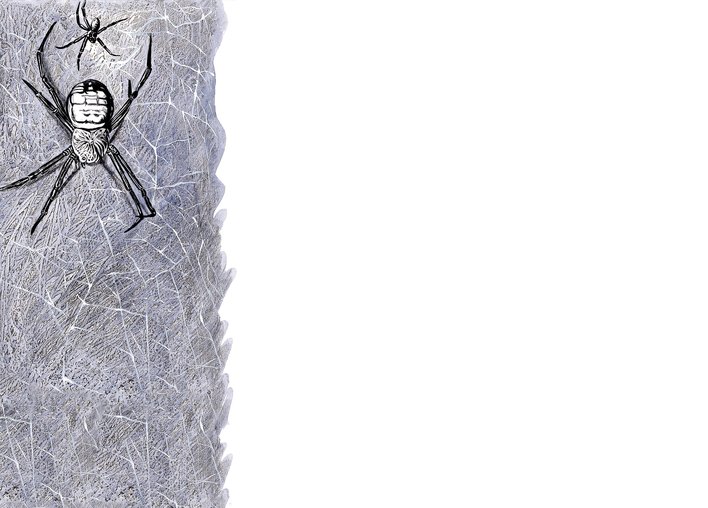
The family life of spiders is also pretty horrifying, though I think this adds a great deal of charm to the creatures - at least they're not boring! Female spiders are usually many times ( sometimes many hundred times!) larger and fiercer than the males.
So when a male comes courting, he has to be very, very careful and very, very well mannered indeed. If he's not, he'll be lunch! Naturally there£ ore, gentlemen spiders have devised various ways to indicate to a female that their intentions are honorable.
Some will twang the threads of the female's web in a particular way, with their claws, before entering it. Entranced by the 'music' - rather like someone playing the harp, I would imagine - she allows him to enter and even (for safety's sake!) tie her up with silk,before mating with her - and fleeing! Others bring silk--wrapped gifts ( a juicy fly or bluebottle) for the female, like a young man bringing his girlfriend a box of chocolates. As she busies herself unwrapping and eating it, he quickly mates with her and beats it!
Even so, many gentlemen spiders do actually get eaten after mating though their sacrifice is not in vain. The protein they so supply the female, helps the eggs to hatch into strong, healthy babies. Papa power, what!
Little fella...you may be the date and the dinner...
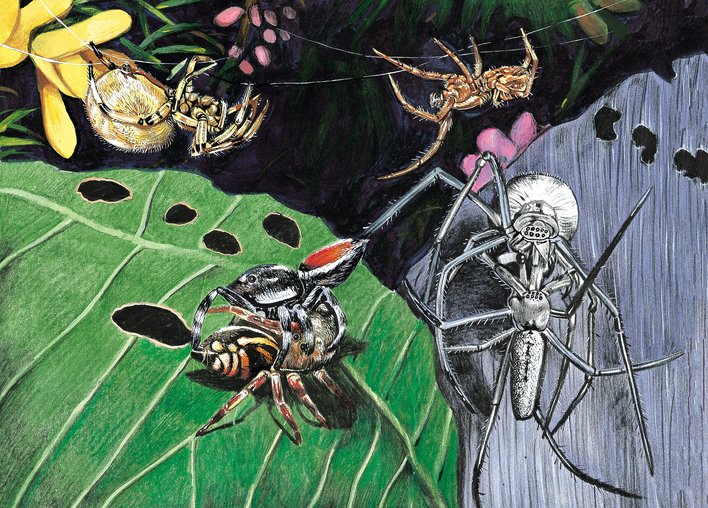
...so bring the beautiful lady a gist-wrapped cockroach, or play her some music or dance with her...
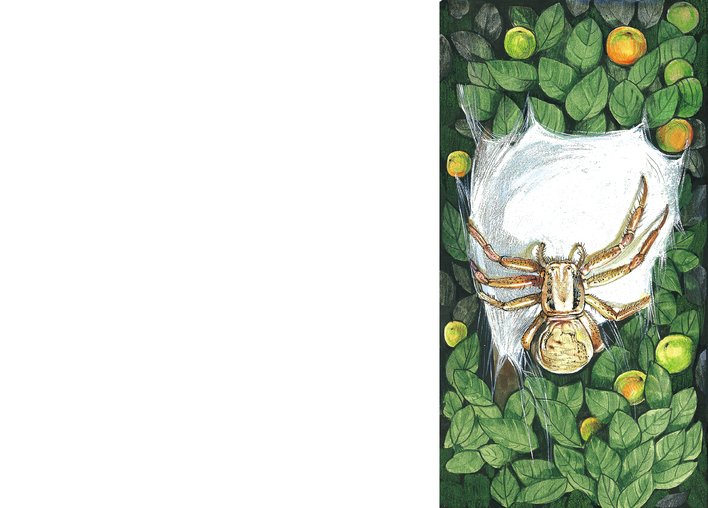
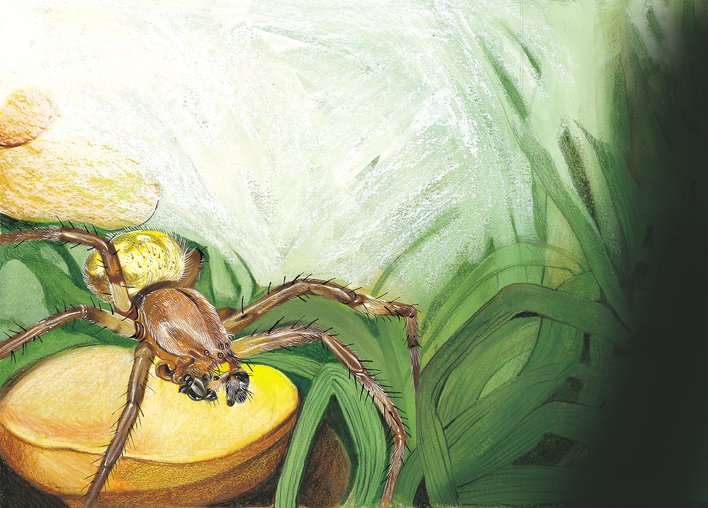
The female will lay her eggs about ten days after this, and a mother spider guarding her eggs, which are usually shrouded in a silken egg case or egg sac, is as fierce as a Rottweiler guard dog.
She will not abandon her eggs easily, and may even carry her young piggyback for the first few days after they hatch. I once discovered a Lynx spider with an egg case on the Chinese orange bush in the garden, and would check it out every day.
It was the monsoon, and after one shower I noticed that the female had very cleverly pulled down and attached the leaves of the bush with silken threads in such a way, that they farmed a sort of umbrella over the egg case, so that it would not get wet.
But then we had an absolutely humongous rainstorm, and sure enough there was no sign of the egg case or the female when I looked for them afterwards. Too bad, I thought, they had probably been washed away.
Hey, but what were those little white specks trundling up and down in what seemed to be mid---air? I peered closely and was delighted. They were snow---white little spider babies, crawling up and down a length of silk. So, the eggs had hatched just in time, though there was no sign of the mother. But wait a minute, what were these little angels up to?
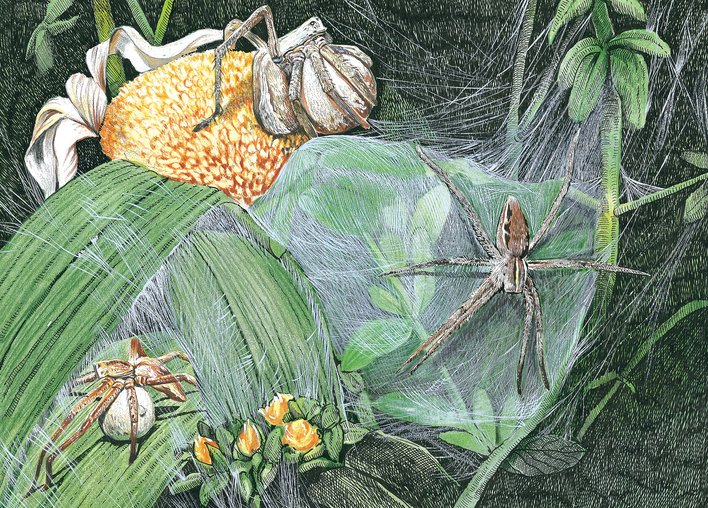
Nothing gets between a spider and her egg-case
They were, in fact, grimly trying to knock one another off the threads! I knew there was no love lost between spider siblings, and if food was in short supply, the little horrors would happily eat each other. Even mama dear was not averse to doing that, if she was exceptionally hungry and thought it was time for her brood to leave home and be independent!
While most spiders eat insects and other creepy crawlies, some of the bigger and hairier ones may even eat small birds, eggs and nestlings. Usually however, it is the other way around, and apart from small animals and birds, wasps and centipedes too may actively hunt spiders.
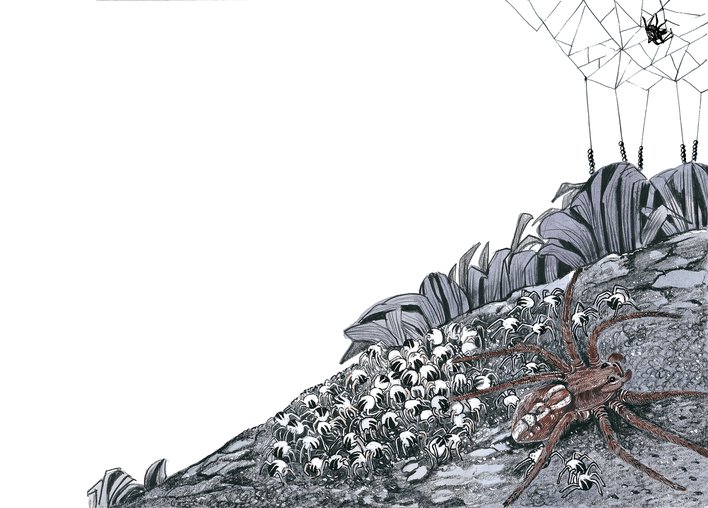
The spider wasp, for example, paralyzes spiders and lays her eggs on them, which then develop into grubs, which dine off the fresh and still alive spiders! But spiders have done well - they're found virtually everywhere in the world and it has been estimated that one acre of healthy countryside, may hold a population of two million spiders!
We love our little beothers and sisters so much we eat them...yaaegh!
In their natural state, they may live for periods ranging from several months to ten years. While most people (unfortunately) do not like spiders very much, some are terrified of them and are known to suffer from what is called arachnophobia.
Some, on the other hand, keep large, hairy spiders such as Tarantulas as pets, and call them 'teddy bear' spiders! Though some spiders may appear hairy and scary, many are beautiful and multi-coloured and look like jewels. I just like watching them wherever I find them.
Hairy, scary, harmless as a dairy, for some
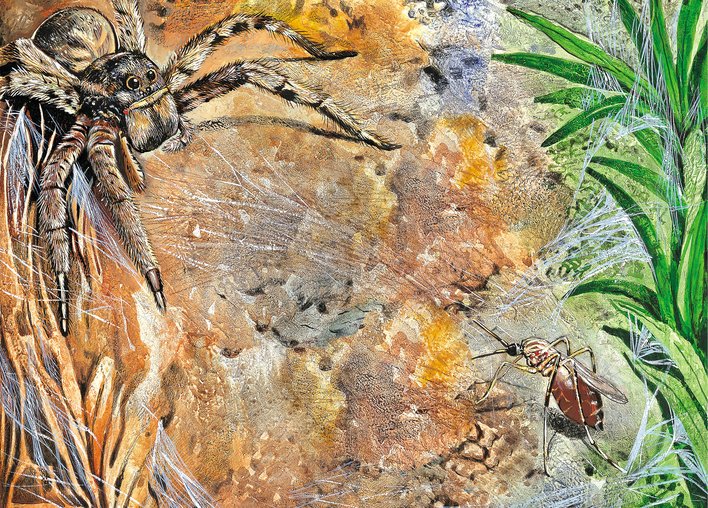
I just wanna be your Teddy-bear!
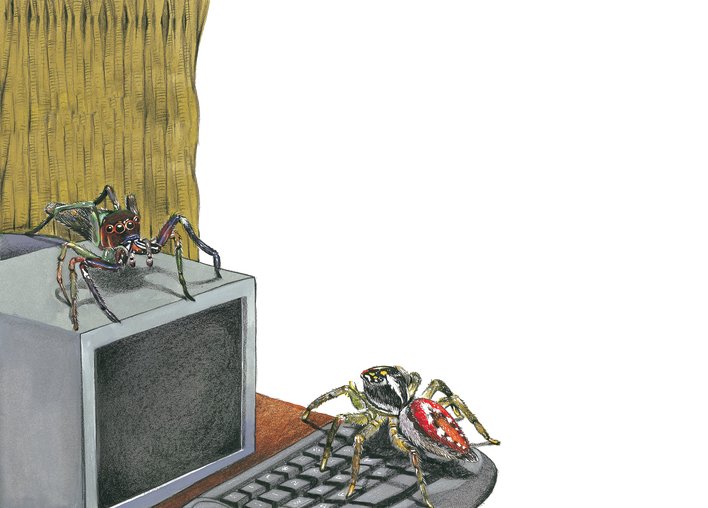
I'm watching every word you type and I have SIX eyes (at least).
I love the way Zebra jumping spiders on the wall behave like boxers in a ring when noticing a movement and admire the patience and diligence with which a Garden spider builds its fantastic web, and the swift, merciless way in which it wraps its victims in a shroud of silk (like an Egyptian mummy!), making escape impossible. Some time ago, for several weeks, I had a fearsome looking Wolf spider sharing my bathroom with me.
But I must say, she was a model guest and never gave me a fright while I was in the shower! At the moment, however, there is a beady /eyed Jumping spider on the top of my computer monitor, eyeing me speculatively and making sure I write only good things about them!
Interesting Facts
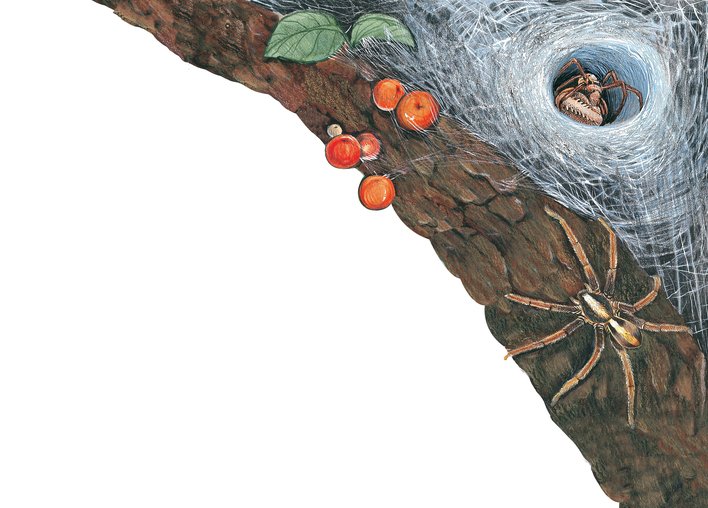
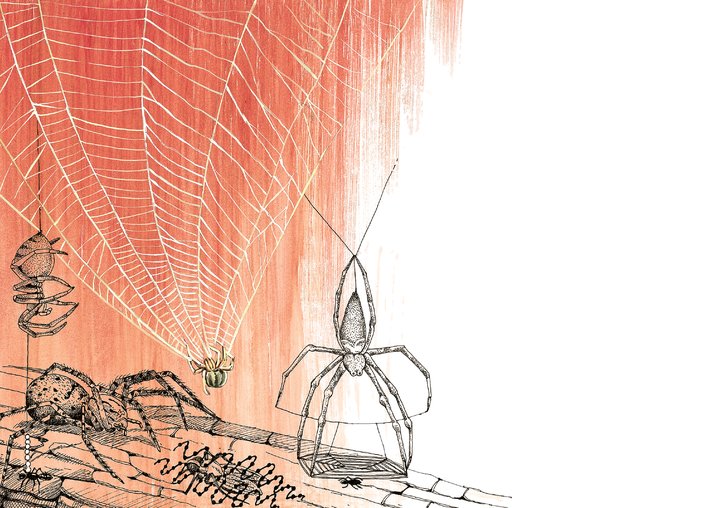
Not all spiders build webs. The Trapdoor spider sinks a silken shaft into the ground topped off with a silken trapdoor. It lurks just under the door and when it hears an insect march over it, leaps out and drags it down!
The Spitting spider binds down its prey with zigzag threads of gum, spat from its mouth. Imagine if you could do something like that with bubblegum! The Bolas spider swings a sticky blob of silk at the end of a silken line in an attempt to glue flying insects on it.
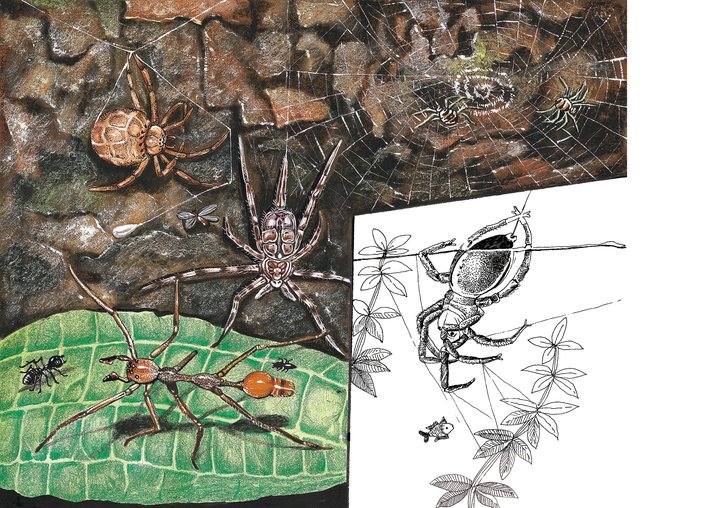
Spider? What spider? Spiderant? Maybe! Hah-hah-Hah!
Of course I throwback the small fishies, heh, heh, heh!
Swing it, swing it, drat! missed again!
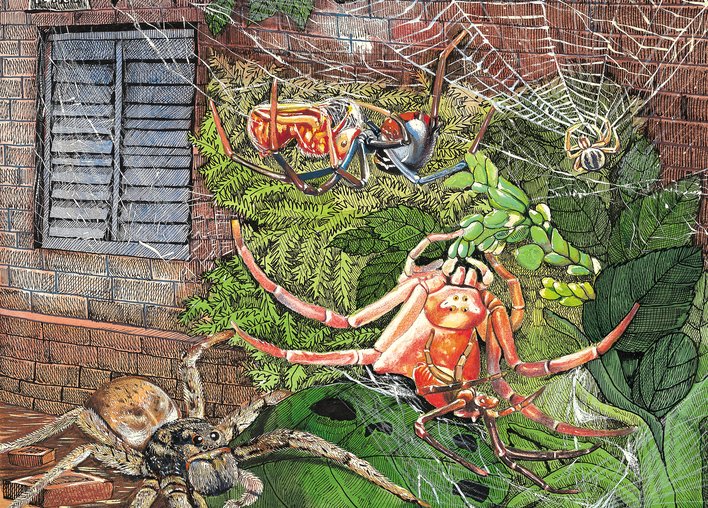
The Ant-mimic spider looks just like an ant, and lives with ants in their nests. When the ants are not looking, it quickly devours one of its hosts and pretends as if nothing has happened! The Ogre-faced spider flings a sticky net over its prey to trap it. The Fishing spider dangles its front legs in the water and pounces on any fish that comes up to investigate the movement.
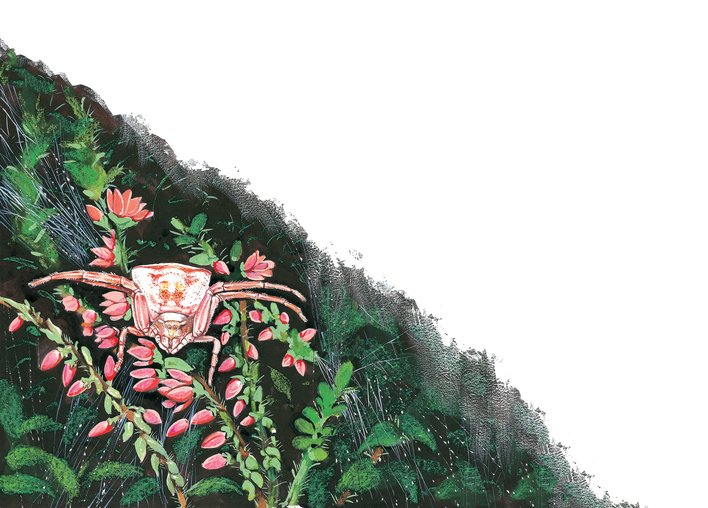
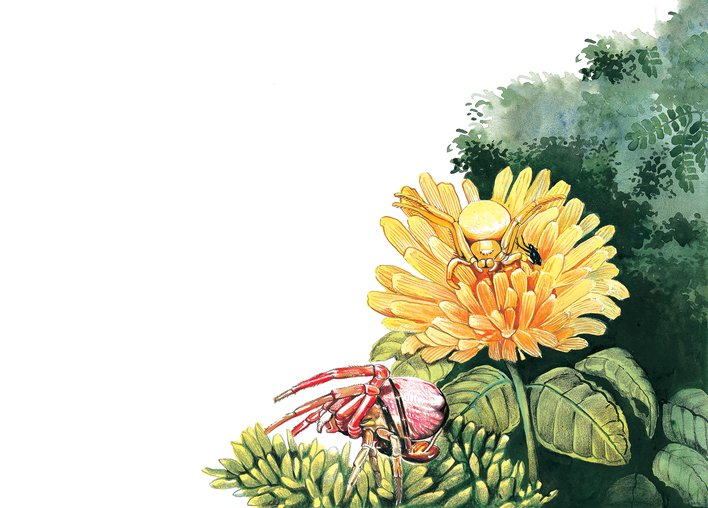
Some spiders, called Thomsoid spiders or Crab spiders, camouflage themselves in flowers - being exactly the same colours as the petals. When a bee comes visiting, wham! I once saw this happening in a madhumalti creeper and though the bee was much larger than the spider, it had no chance. Some of these spiders can even change colours, to match the colour of the flower they're hiding in.
Flower power for spiders
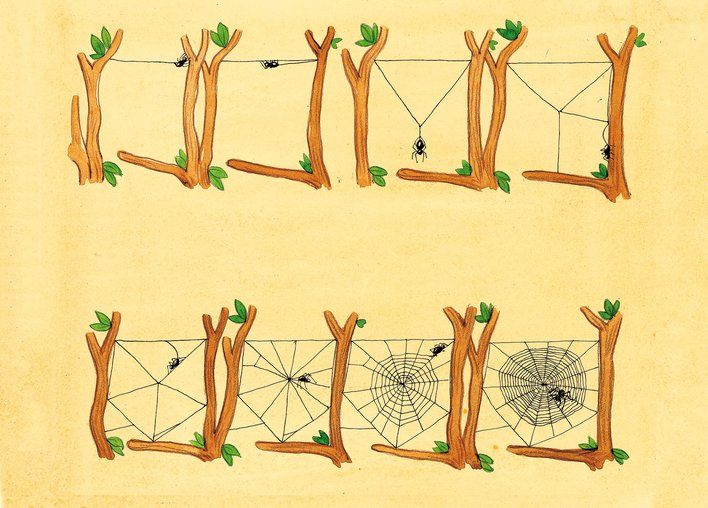
It's easy. Form a triangle, then a hexagon, then a bicycle wheel...
About the Web!
The dense, zigzag silken lines radiating from the center of some orb webs, have been described as having various uses. Some people think they serve as warning signs for low flying birds, to prevent them from crashing into the web and destroying it. Others think that they guide insects into the web. And still others think that they simply reinforce the structure of the web.
Architects have been thinking about how they can make structures like sports stadia by applying the geometry used by spiders in web construction. Webs are extremely strong and can absorb huge impacts without collapsing.
Apart from trapping insects, certain spiders' webs have been found so good for trapping fine particles from the air, ( which stick on the glue) that they make ideal detectors for toxic pollutants such as, heavy metals and dioxins.
Scientists have managed to draw over 100 metres of silk from a spider in an hour!