Monumental Maths
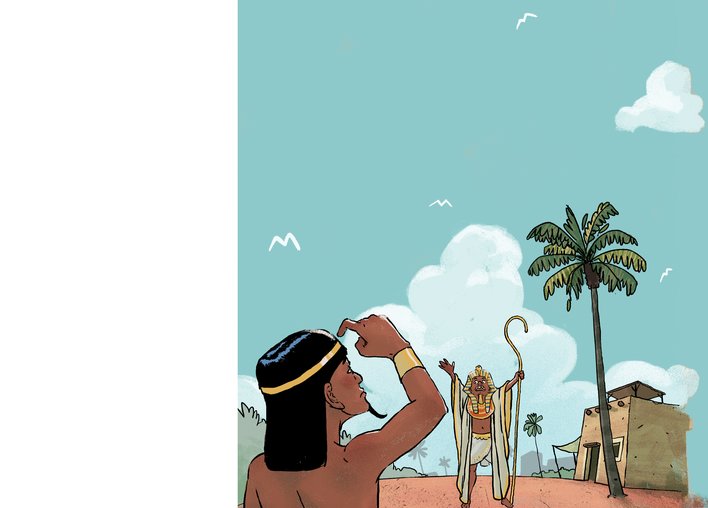
It had to be magnificent. Something no one had ever built before. Bigger than anything anyone had ever seen, or would ever see.
It was to be a tomb fit for a king. A Pharaoh of Egypt. His body had to be preserved for eternity after his death because the ancient Egyptians believed that would help him pass safely through the afterlife. So they had to build a tomb that would last forever.

The architects racked their brains for the perfect building plan. It had to be faultless. They couldn’t just build something as tall as 30 giraffes piled one on top of the other and wait to see if it stood. They looked to mathematics for the perfect plan. First things first — what shape should it be?
Nothing fancy, and definitely not like a giraffe!
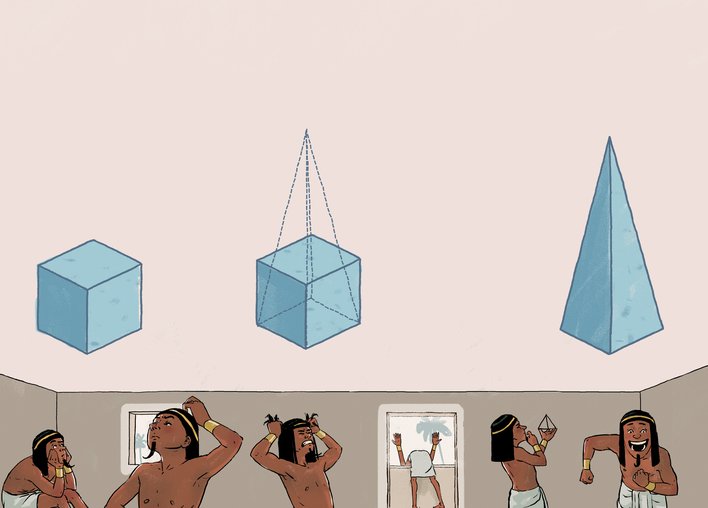
Draw a cube and a pyramid, both with the same volume. The pyramid is almost three times taller!
Cube with side a = 2 cm Volume = a3 = 8 cm3
This definitely looks more impressive, while using the same amount of building material. So, the architects decided, a pyramid it would be!
Pyramid with same base as the square but three times the height, that is, a = 2 cm h = 6 cm Volume = a2h/3 = 8 cm3
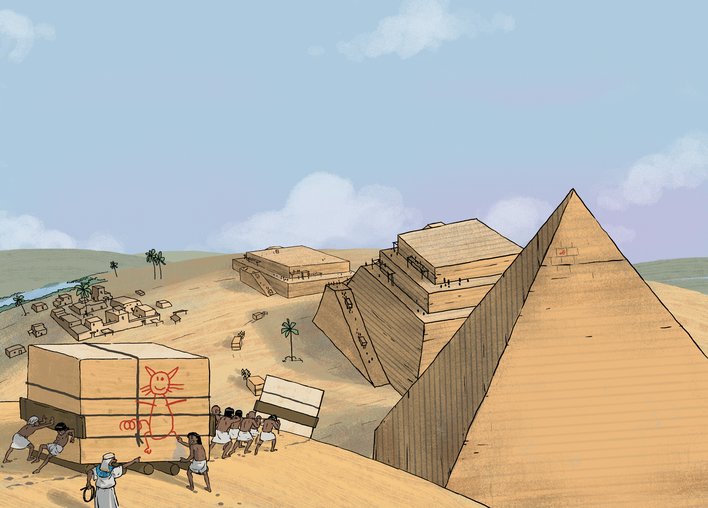
First, they built a firm, square base to create a solid foundation. They built this layer with massive limestone and granite blocks, each one the size of a truck. Then they put another layer of blocks on top of this, but slightly smaller in area. On top of this went another square, still smaller — until smaller and smaller squares stacked on top of each other created a pyramid.
The final piece at the top, a little pyramid by itself, sat elegantly, supported by the mathematically sound structure beneath it.
Seven hundred years ago, Egypt was rocked by a powerful earthquake. Most of the newer buildings fell, but the pyramids stood strong. They are still standing strong.
But would this tomb be strong enough to last forever?
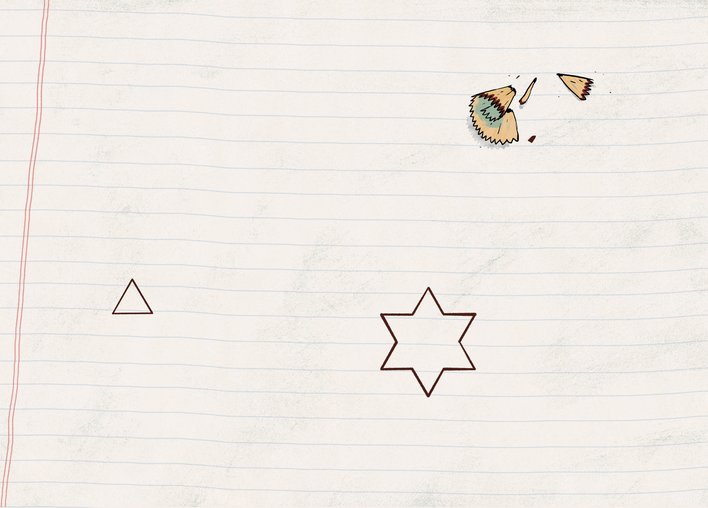
And then making some smaller triangles along the sides.
A fractal is made by starting with a simple geometric shape, like a triangle.
Over in another part of the world, southern Karnataka, a group of 11th-century Hoysala chieftains wanted to leave their mark on the world. They were not yet emperors, but growing stronger, and they wanted to show their expanding power.
So, what else expands?
A fractal geometric shape!
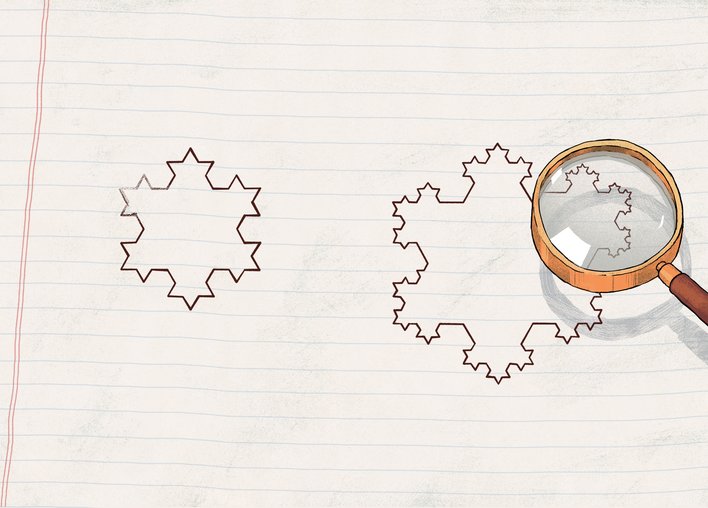
And then some more little triangles on the sides of the smaller triangles.
And then some more, making the design quite complex.
A fractal expands outwards from a central point, becoming more detailed and intricate as it grows.
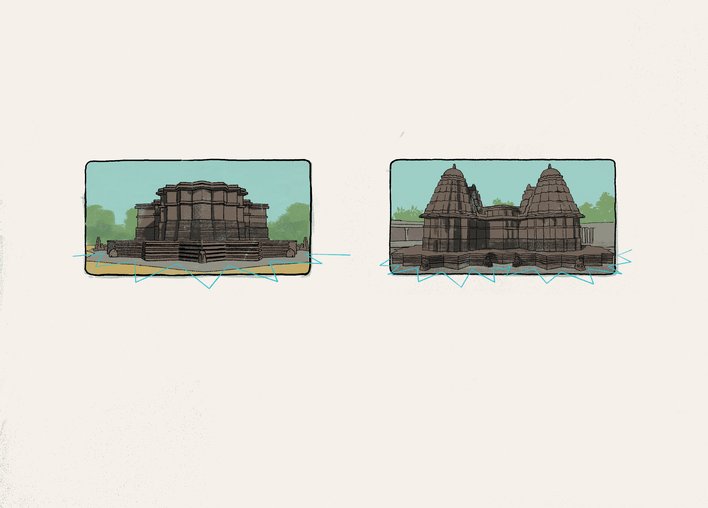
Perhaps this is what the Hoysala architects had in mind when they built their temples on platforms to create an effect of movement and grandeur. Like the Kedareshwara temple at Halebidu, built on a staggered square platform.
The temple also follows a staggered pattern within the platform boundaries, creating a dramatic effect.
The architects got more creative and played with different shapes. Like the star-shaped base of the Chennakeshava temple at Somnathpura.
Six hundred years after the Hoysalas, another architect used mathematics to create the effect of grandeur.
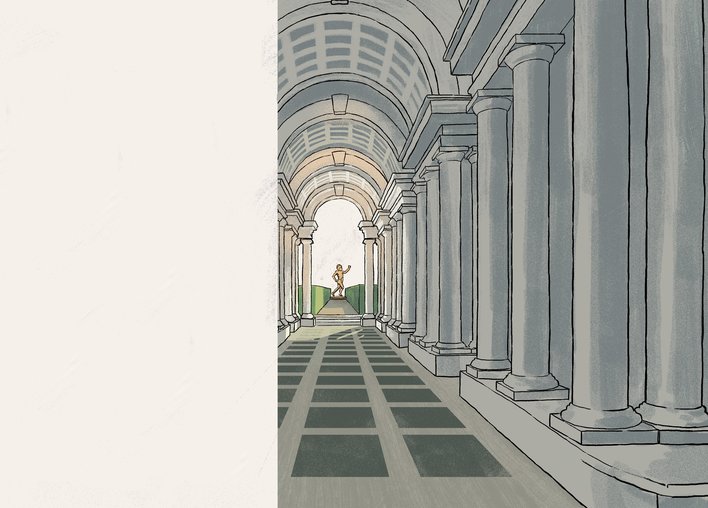
Francesco Borromini had to build the 'ideal Italian corridor', measuring 99 feet long with a life-sized statue at the end, in the Palazzo Spada in Rome, Italy. But there was a problem. He only had 26 feet of space. So he used a technique called 'forced perspective'. He built pillars close to each other, and made them smaller and smaller in size as he moved towards the end of the corridor. He created a gentle slope for the floor. At the end of the corridor, he placed a child-sized statue. All these mathematical tricks combined to make the corridor look almost four times as long, and make the statue at the end appear double the size!
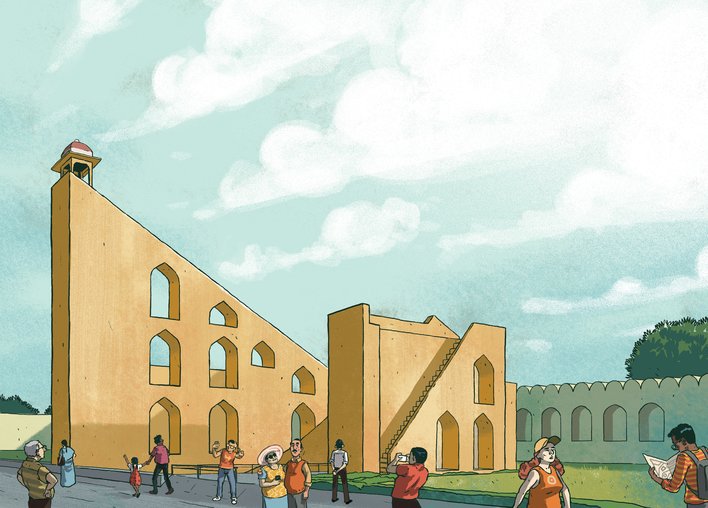
Speaking of size, what would it be like to walk around inside a mathematical instrument that is as big as a house?
This is exactly what the Rajput king Sawai Jai Singh built 300 years ago. Sawai Jai Singh, apart from being a ruler, was an astronomer and mathematician. He would calculate the movement of stars and planets using small brass instruments. But he was not very happy because they were not as precise and accurate as he wanted. To get better readings, he decided to make the instruments bigger than anyone had ever imagined!
He built 19 structures that measure and predict the movement and position of the Sun, stars and planets. He also built the world’s largest sundial, standing 73 feet tall and 9 feet wide. This can be seen at the Jantar Mantar in Jaipur.

For thousands of years, architects have used mathematics to create monuments that are really strong. But that’s not all.
Architects have used the concept of symmetry to design some of the most beautiful buildings in the world!
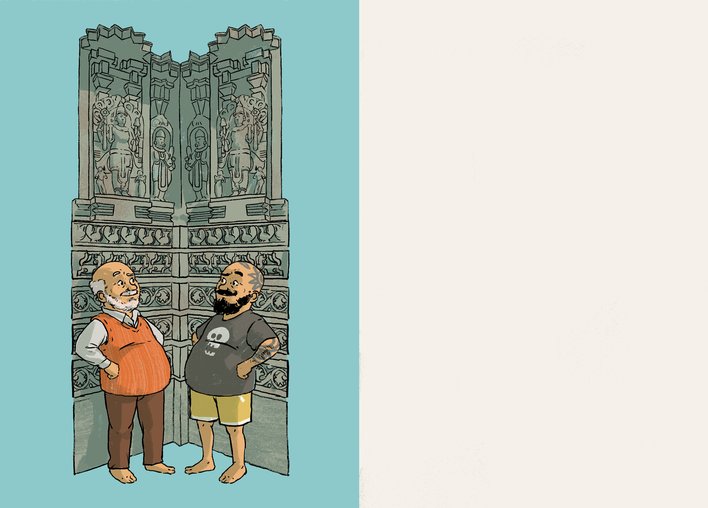
The walls of the Keshava Temple in Somnathpur, Karnataka, are covered with intricate carvings that are like mirror images.
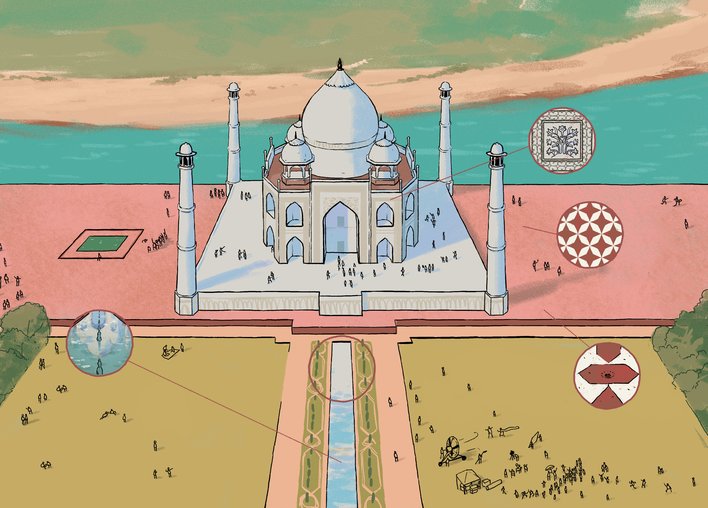
Every part of the Taj Mahal is symmetrical. The building itself...
Its reflection in the clear pool of water...
The line of fountains bisecting the reflection...
The gardens on either side of the structure...
The patterns on the walls...
The tiles on the floor...
Down to the last drain hole.
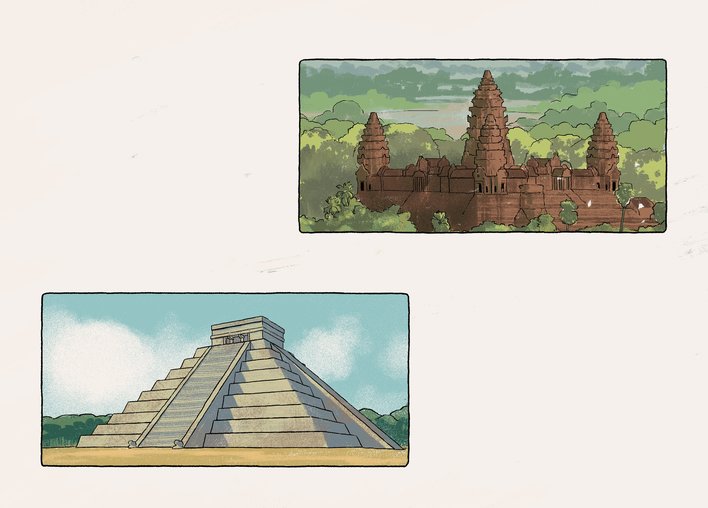
Angkor Wat in Cambodia is the largest religious complex in the world. It is also symmetrical.
The Mayan architects built the pyramid of Chichen Itza, Mexico, with symmetrical precision.
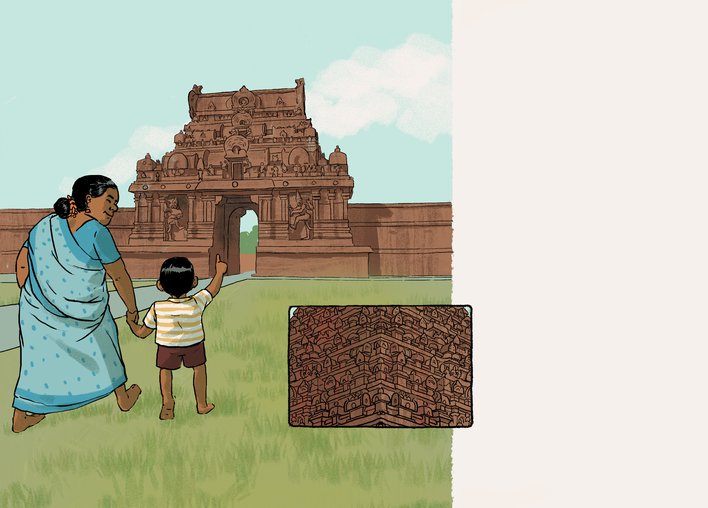
It’s not just the main structure of the Brihadeshwara Temple in Tamil Nadu that is symmetrical...
The designs carved on the vimana are symmetrical, too.
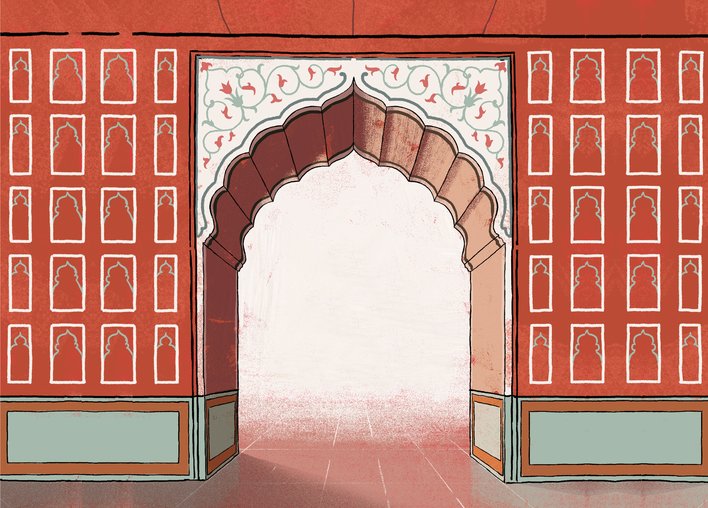
When architects use mathematics in their designs, what do we get? Strength, grandeur, beauty and illusion! Like mathematics, these designs never grow old. The buildings built from these designs have stood for centuries and can still be seen today.