LIGHTS... CAMERA... ACTION! The life and times of Dadasaheb Phalke
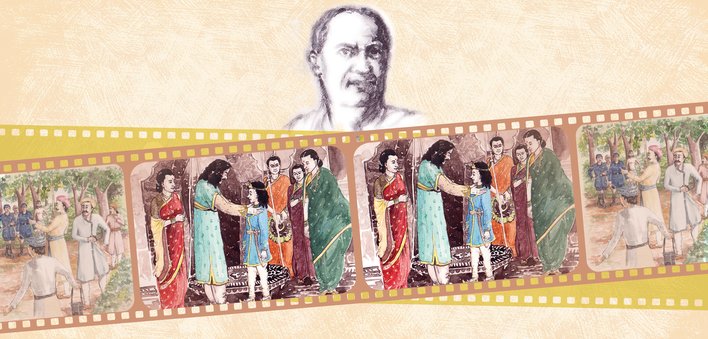
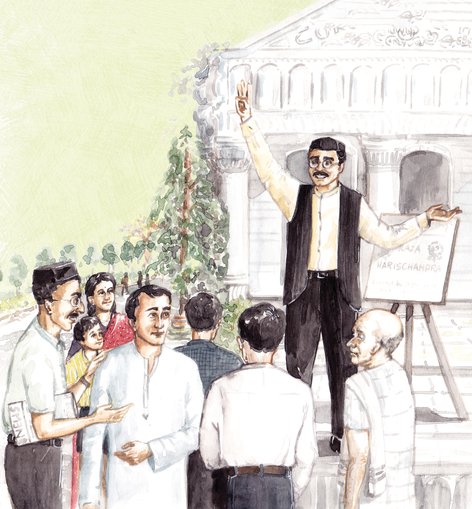
“Come one! Come all! See a performance with 57,000 photographs! All this for just three annas!"
“Watch people move in the magic photographs! A picture two miles long! Only three annas!"

A man was calling out to passers-by outside Bombay's Coronation Theatre. It was the 3rd of May, 1913. Most people ignored him and continued walking by, thinking that he was crazy. Some gave him strange looks. However, a few curious folks gathered around the man.
“Arre, what are you talking about?” an onlooker demanded.
“Raja Harishchandra has been released today...it is a film!” the man replied enthusiastically.
“A film? What’s that? Is it like a play?” the onlooker asked.
“A little, but instead of live people, photographs will move. You will see Raja Harishchandra’s story being performed. It has magic in it too. Do you want to watch it? The ticket is just three annas,” the man said.

After a brief discussion among themselves, the group of onlookers decided to give it a try.
They were the first audience of India’s first silent film ‘Raja Harishchandra’ and its maker was none other than Dadasaheb Phalke!
Dhundiraj Govind Phalke, more popularly known as Dadasaheb Phalke was a photographer and a magician who had also studied painting and sculpting, dramatics and architecture at the Sir Jamsetjee Jeejeebhoy School of Art and the Maharaja Sayajirao University of Baroda. He was always involved in some new creative pursuit or the other.
One day, Dadasaheb Phalke went to watch the film 'The Life of Christ'. He was mesmerized by what he saw. He felt it was magical! He was a photographer. But even then, this was all new to him.
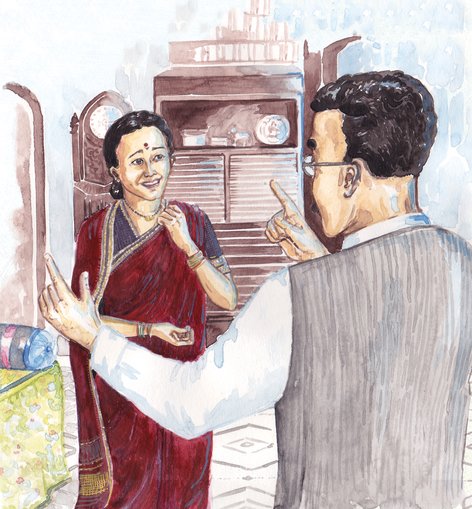
He came home and shared his experience with his wife Saraswati.
“Saraswati,” he said, “I take still pictures, but these pictures were moving! There were people in those pictures. They moved like they did in real life. I was so fascinated that I watched the next show too.”
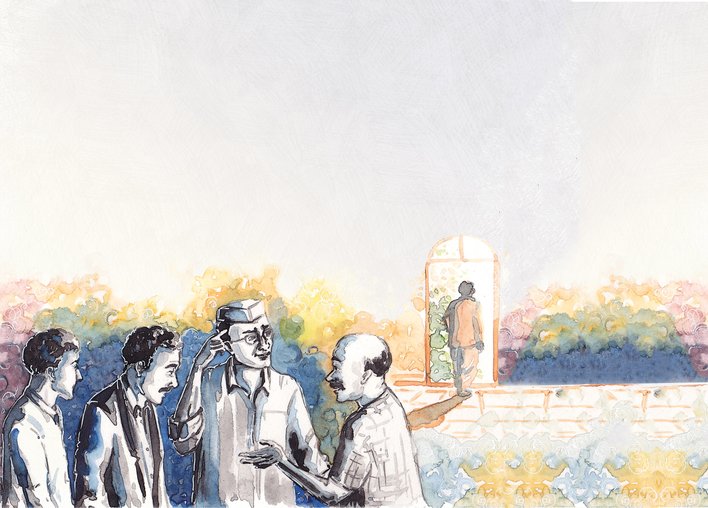
Saraswati smiled. She knew her husband’s child-like enthusiasm very well.
“You know, I am going to learn how to make these moving pictures. I will make films in India and tell Indian stories through films,” he declared.
Although Dadasaheb was very passionate about everything that he did, he was not very successful in his businesses. So some people called him crazy. But his wife, Saraswati, recognized his talent and passion. She was proud of him. Even in periods of financial hardship, she stood by him like a rock. Saraswati decided to support him in this plan too.
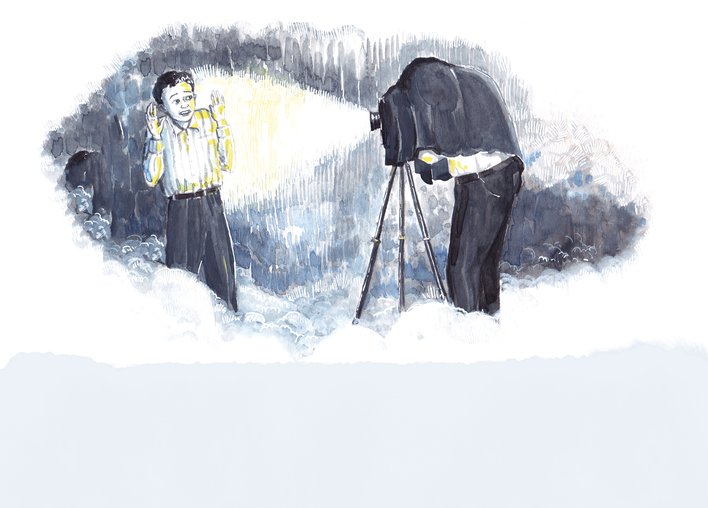
Before making films, Dadasaheb Phalke had a photography studio at Godhra. But soon he had to close it down. Do you know why? It is because, during those times, people believed that when the camera took your picture, it sucked out the soul of the person. So nobody was willing to get themselves photographed!

“I’m falling short of money to go to England, Saraswati. What can we do?"Dadasaheb said, expressing his concern.
“Don’t worry. Sell off some of these things. We can do without them,” said Saraswati.
So, with his wife supporting him, Dadasaheb Phalke used up all his savings and sold some household items and went to England in 1912. He learnt the craft of film-making from Britain’s pioneer film-maker Cecil Hepworth.
In order to understand all about film-making, Dadasaheb Phalke taxed his eyes with intense viewing and experimentation. As a result, his health suffered. He went blind. Much to his relief, he recovered his sight after a temporary blindness. Isn’t it ironical? A man who was so driven to make films lost his sight – one of the most essential senses needed for a film-maker!
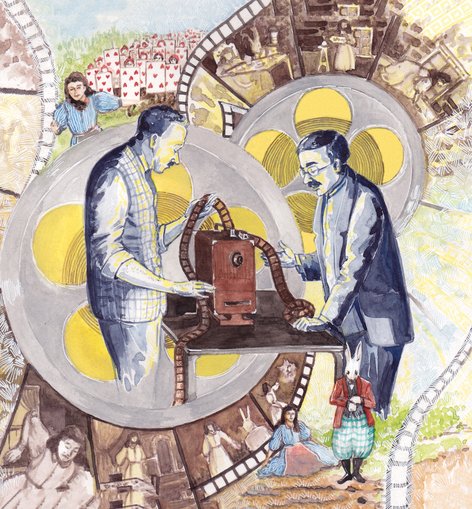
When he returned to India, he was raring to go. He wanted to make a film. With great excitement, he shared his plans with his family and friends. Some of his friends thought he had lost his mind. In fact, they even tried to get him admitted to an asylum! Once again, his wife was his only supporter.
Despite his friends’ reactions, Dadasaheb Phalke was determined to make a film. So he went about raising funds. Alas! Nobody was willing to put their faith in him. It seemed that his dream would not be fulfilled.
Not one to accept defeat, he pledged his life insurance policies and Saraswati sold her jewellery to raise money for the film. With that money he ordered a camera and other equipment from Germany, but it wasn’t sufficient to make a film.

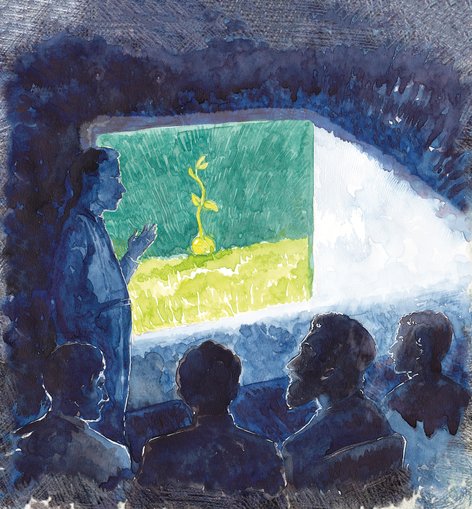
So, to help financiers understand the impact of films, he made a short film called 'Growth of a Pea Plant'. He planted a pea and shot it at intervals over a period to demonstrate how the pea sprouted and grew tendrils. This short film had the desired impact on financiers and he got some loans.
He began to plan his first film in all earnest, but he couldn’t think of a suitable topic. The whole family would have animated discussions about which story to choose. Saraswati would suggest a story and he would reject it for some reason. He would suggest one and the children would reject the idea. And so it went on till, one day, he found what he was looking for. He decided to make a film based on King Harishchandra.
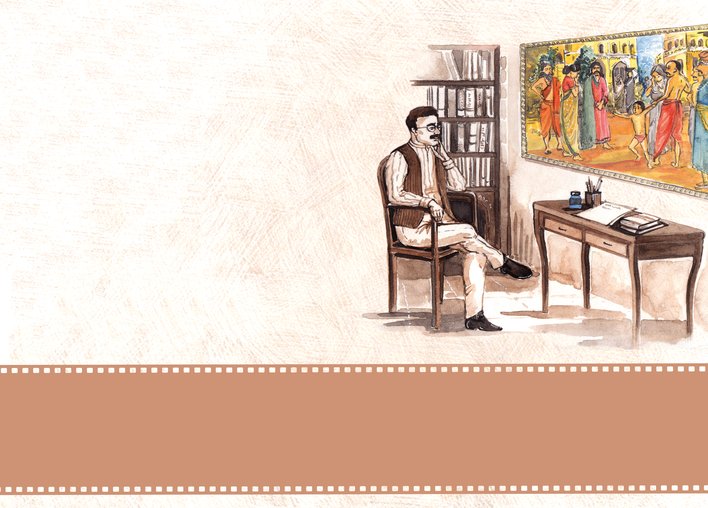
“Indian audiences will love a mythological story since they are so religious. I could bring in the elements of mystery and magic. I know how to do it! The more I think of it, the more
I like my idea!” he exclaimed to Saraswati and the children.
Dadasaheb had studied painting. He was greatly influenced by the prolific painter Raja Ravi Varma’s work. He was himself a painter. He had studied at the J. J. School of Arts. He used this knowledge and expertise while devising scenes in the film. That made them even more effective.

“But where will you get the actors? And who will handle the camera?” asked Saraswati, very worried.
“You! You will handle the camera. I’ll teach you. And we’ll advertise in the newspapers for actors. It’s decided then,” Dadasaheb declared.
But it was easier said than done! Dadasaheb couldn’t find many actors willing to act in a film. In those days acting was considered a lowly profession. People were ashamed to become actors.

The real problem began when he started looking for women to play different female roles in the film. It was taboo for women to act. Not a single woman agreed to act in his film. He found a solution by casting men in female roles. But he was determined to have a woman play the lead role. He was stuck. Suddenly he had an idea.
He said to his wife, “Saraswati, I’ve decided that you’ll be the lead actress.”
But Saraswati firmly refused, and said, “I am already involved in so many things! If I act too, who will do all the things I am doing now? I won’t act in the film.”
Finally, he decided to cast a male actor, a cook from a restaurant, in the lead female role.
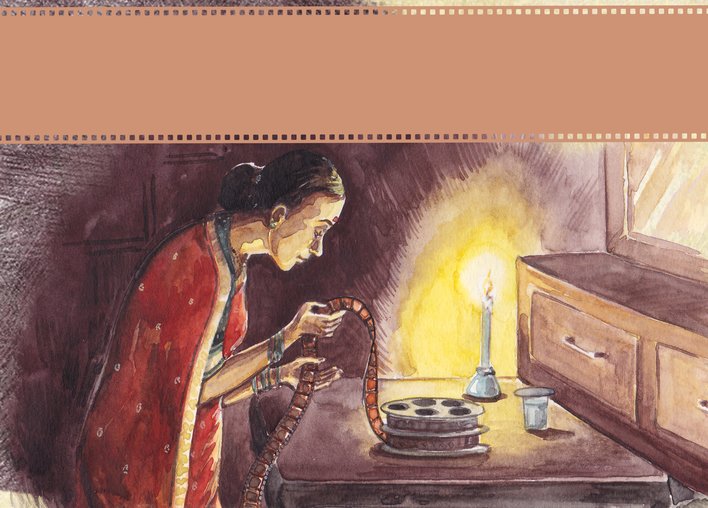
Saraswatibai Phalke, Dadasaheb Phalke’s wife is regarded as the first Indian film-editor. Not only did she manage her family of nine children, but she cooked food for the entire film unit comprising 60-70 people, held white bed-sheets for hours in the blazing sun as light reflectors, mixed film developing chemicals, perforated the raw film sheets at night in the light of a candle and also edited the film.
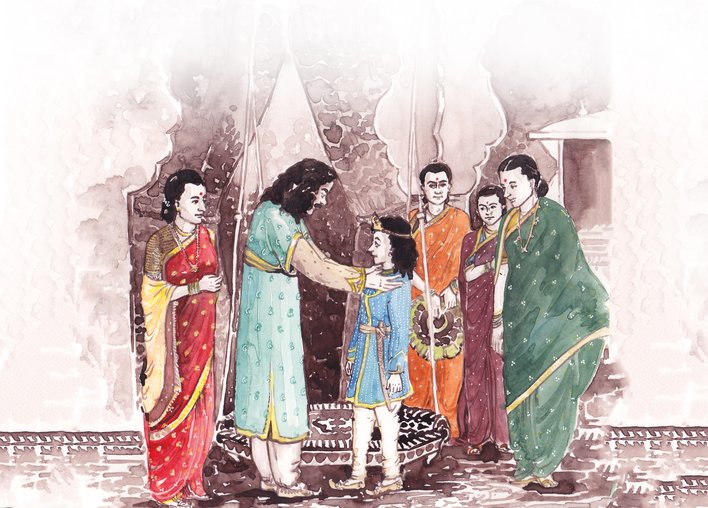
Dadasaheb Phalke’s entire family was involved in the film. His son played the role of King Harishchandra’s son. Later he cast his daughter, Mandakini, as Lord Krishna in 'Shree Krishna Janma' and 'Kaliya Mardan'. Both films were big hits.
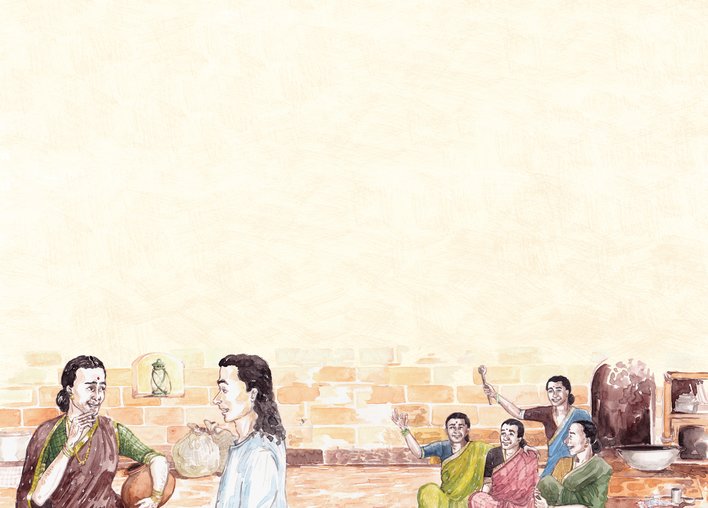
With the filming of 'Raja Harishchandra' began a series of funny and memorable incidents.
One day, an actor came to Dadasaheb and said, “Dadasaheb, I’m leaving. I can’t act in a film.”
“But why?” demanded Phalke.
“My parents don’t want me to act. They said they don’t mind if I sit at home and do nothing, but they will not allow me to act. If the news gets out that I am an actor, no girl will marry me!” said the actor and left.
Dadasaheb realized that soon other actors would come to him with the same problem. So he came up with an idea. He instructed his cast and crew to tell their families that they were working in Phalke’s ‘factory’, instead of ‘film’.

To train his male actors to play female roles effectively, Dadasaheb made them dress up as women even when they were not shooting. They had to do all the things that only women did at that time such as cooking, washing and cleaning. The actors must have had so much fun doing that!
There are many ‘firsts’ to Dadasaheb’s name. He made the first Indian silent film. His wife Saraswatibai was the first Indian film editor. He was the first to introduce a female actor in Indian films. His daughter, Mandakini, was India’s first female child star. His eldest son, Bhalchandra, became the first Indian male child star in 'Raja Harishchandra'.

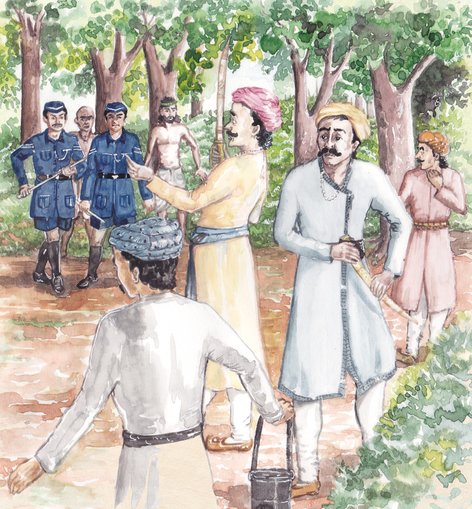
One day, the shooting was to take place in a jungle near a village. Since they wouldn’t be able to dress up and put on make-up in the jungle, Dadasaheb decided that everybody would dress up and go to the shooting location in their film costumes and carry their property with them. As it was the story of a King, naturally, some actors were carrying swords. On the way to the jungle while passing through the village, the villagers mistook them to be dacoits and sent policemen to arrest them!
Finally, after a long journey of many ups and downs, Dadasaheb Phalke released India’s first silent film 'Raja Harishchandra' in 1913. He was the producer, director and writer of the film. His efforts had borne fruit.
At first, the film did not do well. But Phalke’s never-say-die spirit came to the rescue. He got two European dancers to perform before the film began, and offered prizes to ticket buyers. Audiences flocked to the theatre to watch the dance, and walked out mesmerized by the film.
Word spread, and day by day the size of the audience increased. The film became a hit. Not only did Phalke recover all costs and pay back his financiers, he also made a very good profit.
Thanks to his perseverance and passion, by 1920 there was a flourishing film industry in Bombay, now known as Mumbai.

Today films are a medium of our creative expression. We enjoy movies that have Indian themes and actors. They are largely made by Indians. The film industry is a thriving business that provides employment to thousands. We owe it all to the foresight and brilliance of one man – Dadasaheb Phalke.
‘The Dadasaheb Phalke Award’ is India’s highest award in cinema. It was introduced by the Government of India in 1969 to commemorate Dadasaheb Phalke's contribution to Indian cinema. In 1971, in his honour, the Indian Post released a postage stamp bearing his face. The film-city in Mumbai, where most films are shot, is named 'Dadasaheb Phalke Chitranagari' after him.
Dadasaheb Phalke is truly the 'Father of Indian Cinema'.