Ira's Monsoon Feast
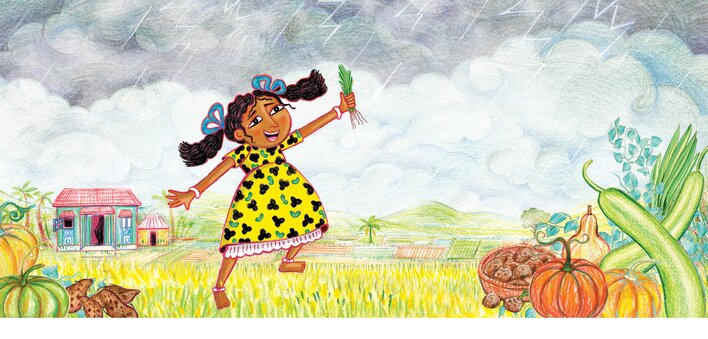
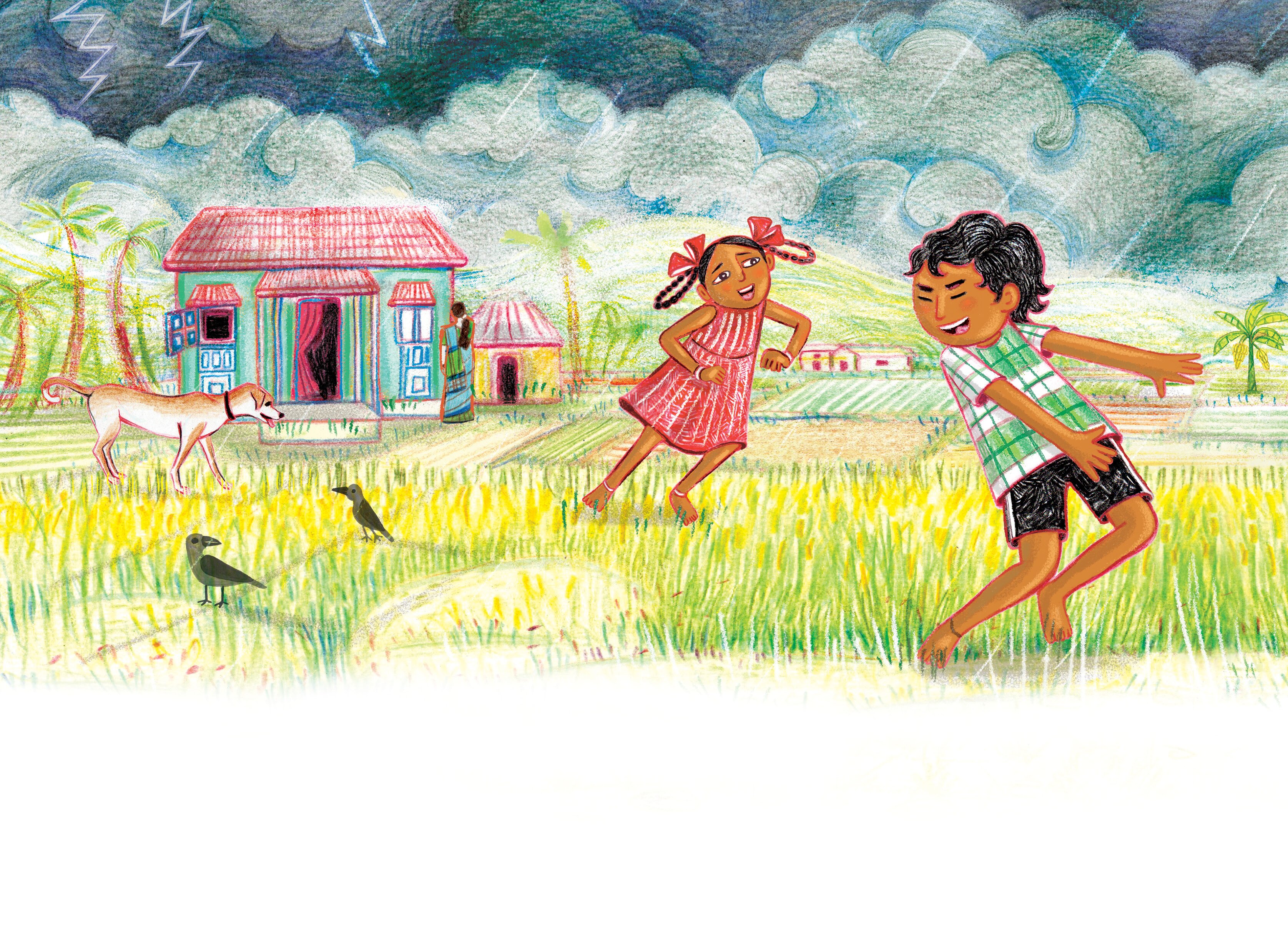
Ira stares out of her window. Giant monsoon clouds swim like grey whales above her. “Let’s go gather food for our monsoon feast, Iru,” Aai and Baba say, swinging her up.
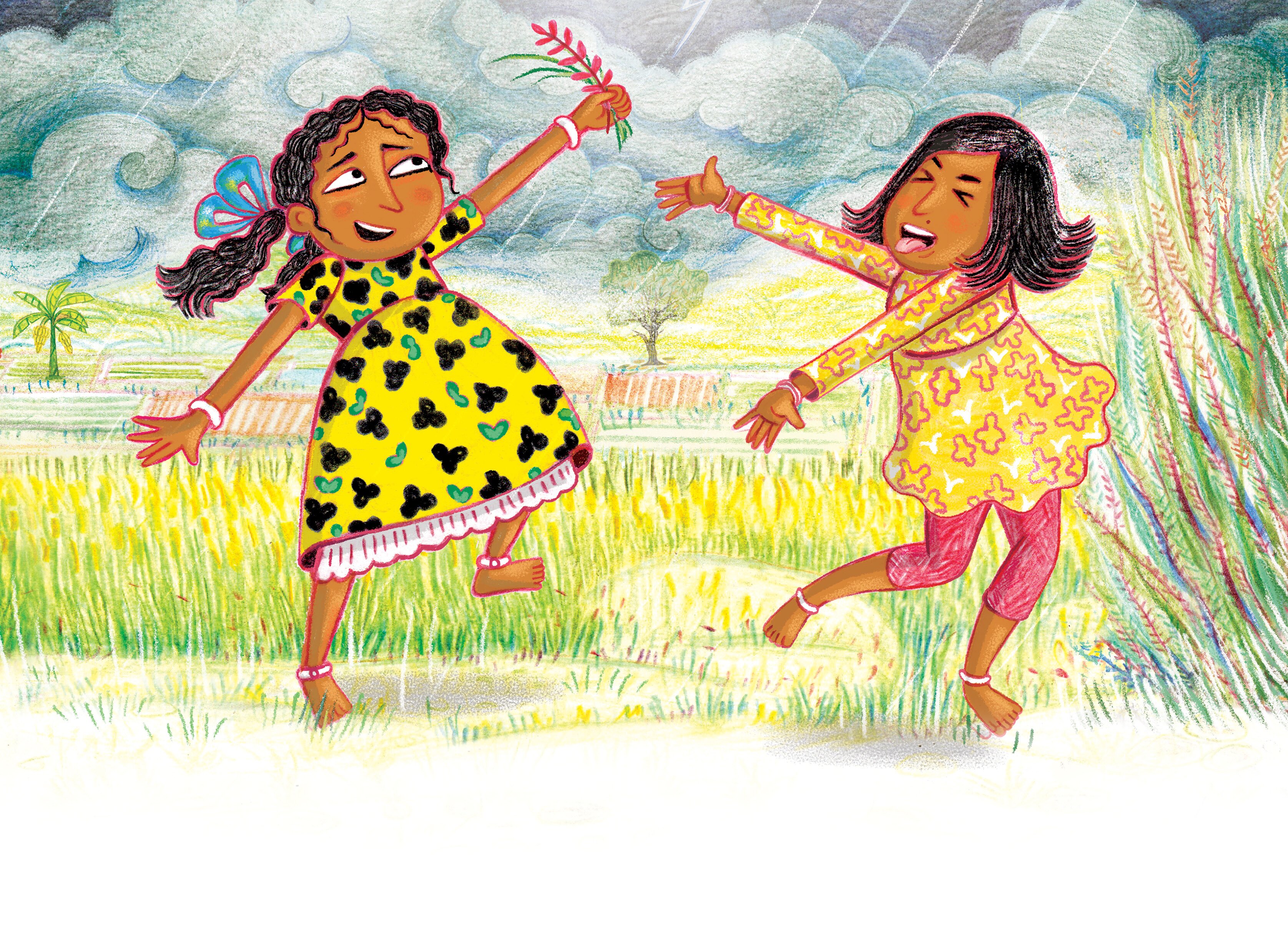
Off they go, walking past the nachni and the rice crops shooting up from the red earth. Maushi joins them and Ira’s cousins, too.
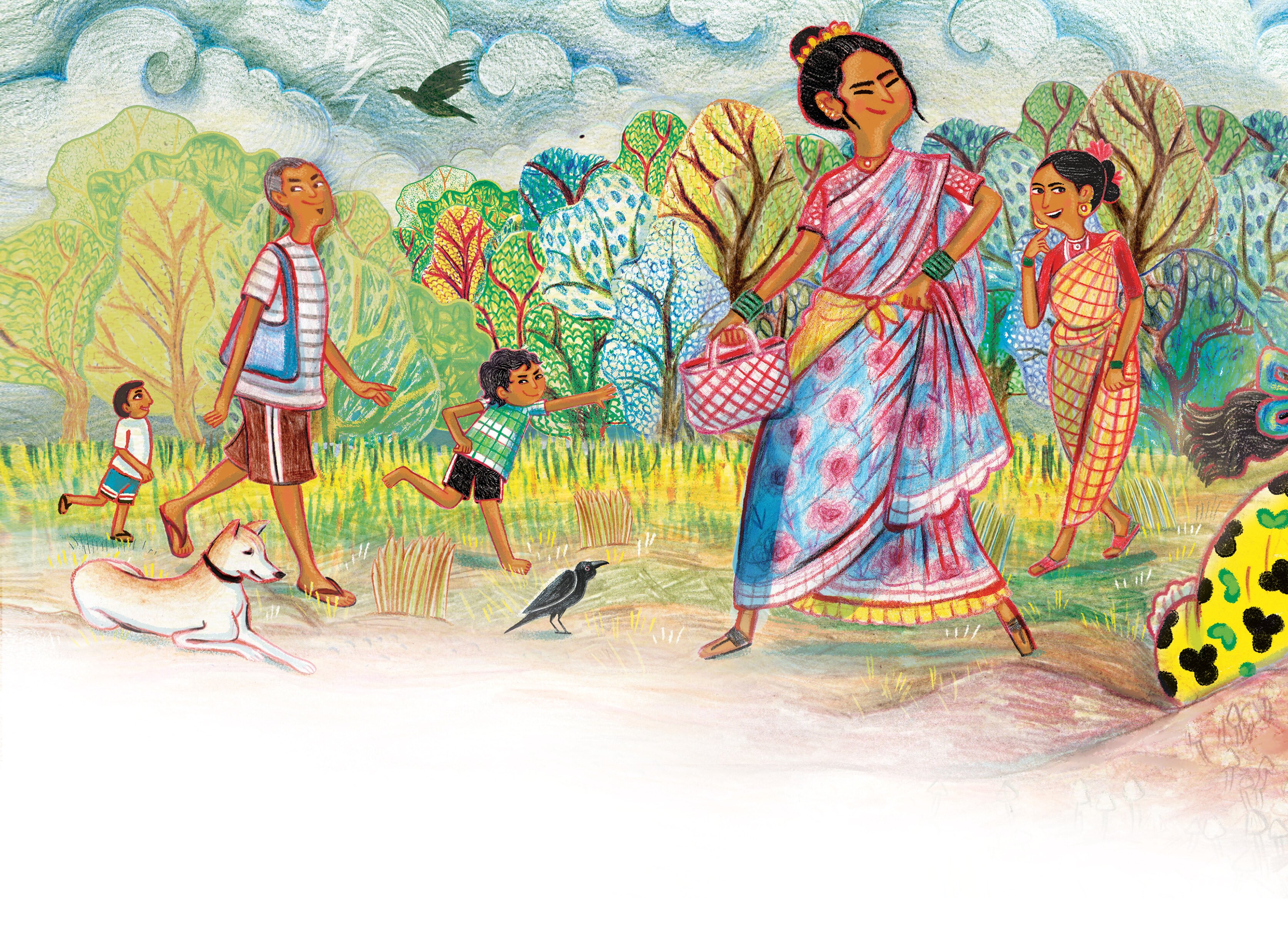
They walk into the forest beyond the farms. They are looking for alambi, the small white mushrooms that grow wild on termite hills.
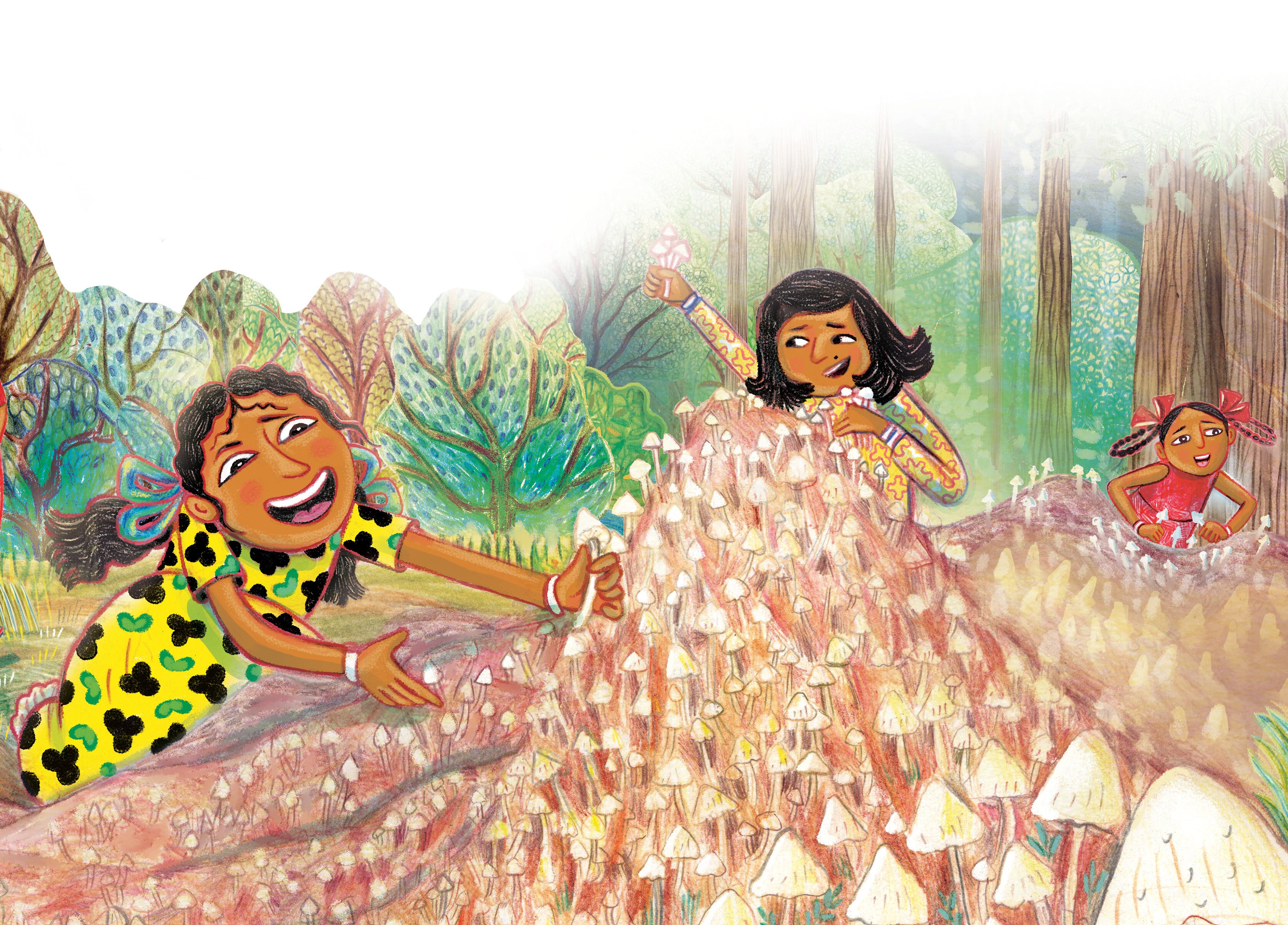
Save one, take one, when our hands are full, we are done, done, done.
They sing like they have been taught by Maushi, as they pluck the alambi.
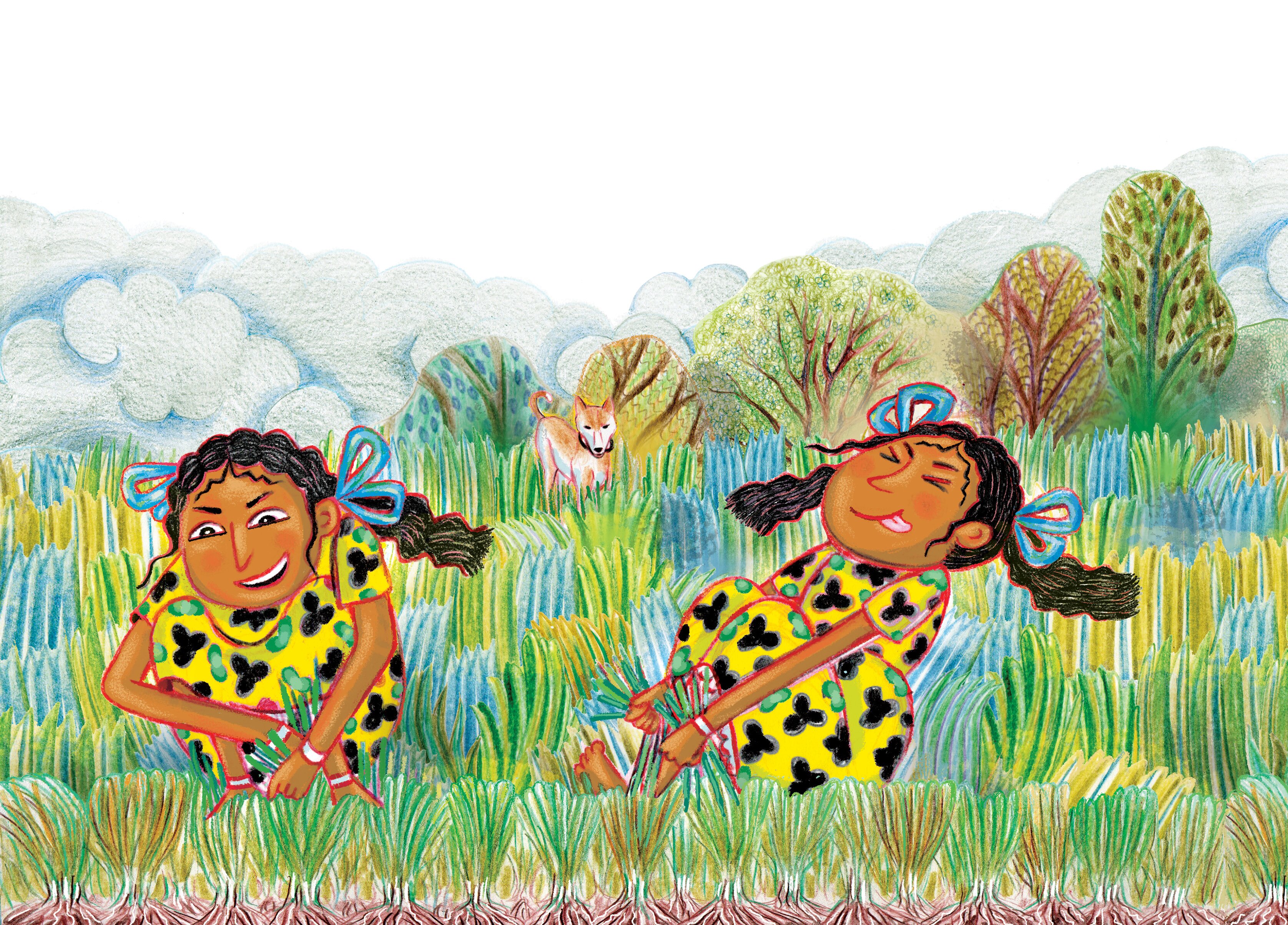
On the way back home, they collect wild greens. Ira plucks her favourite long, thin greens, phodshi.
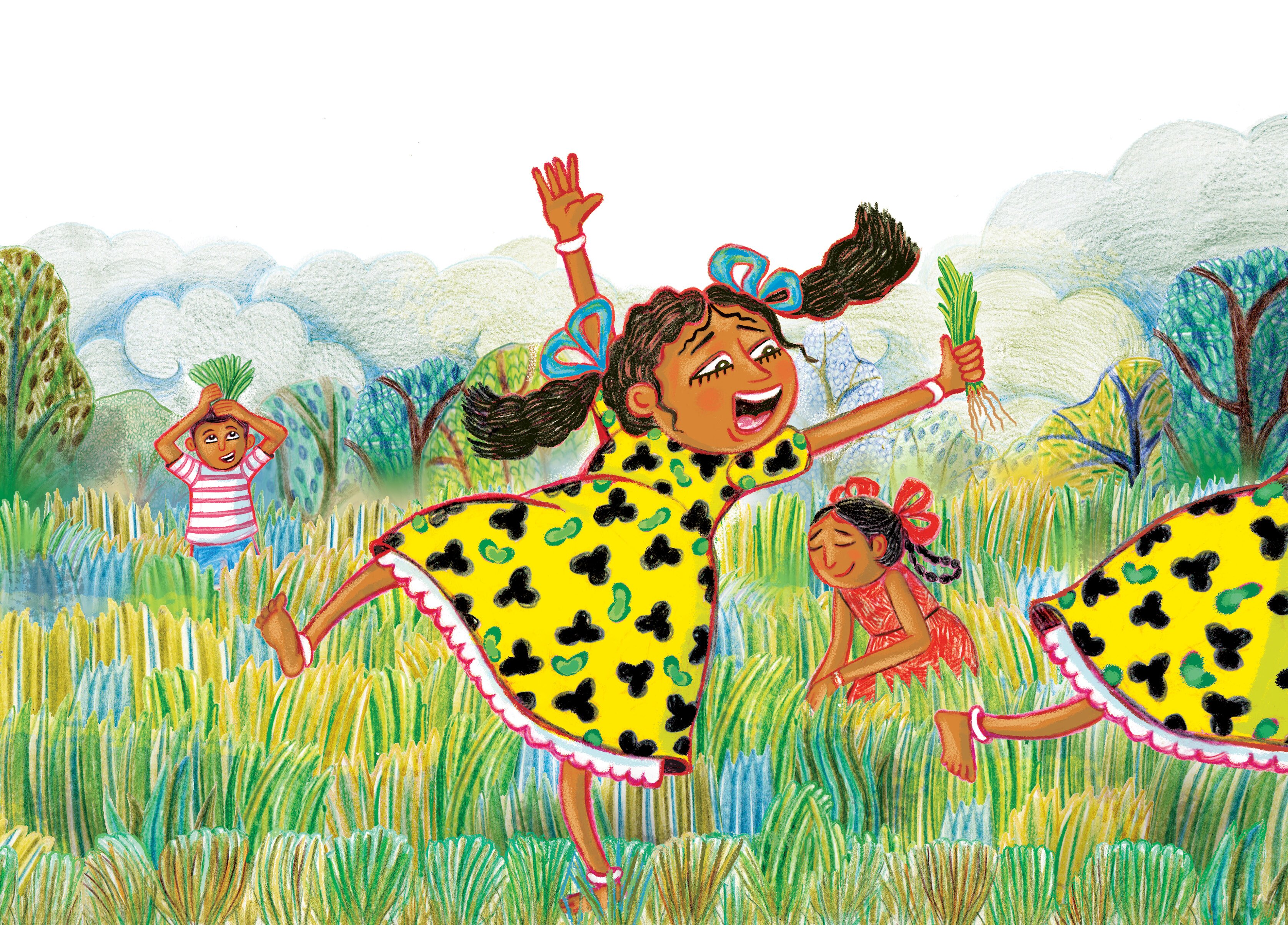
Three hands in height, Green leaves in our fields, Growing wild and bright.
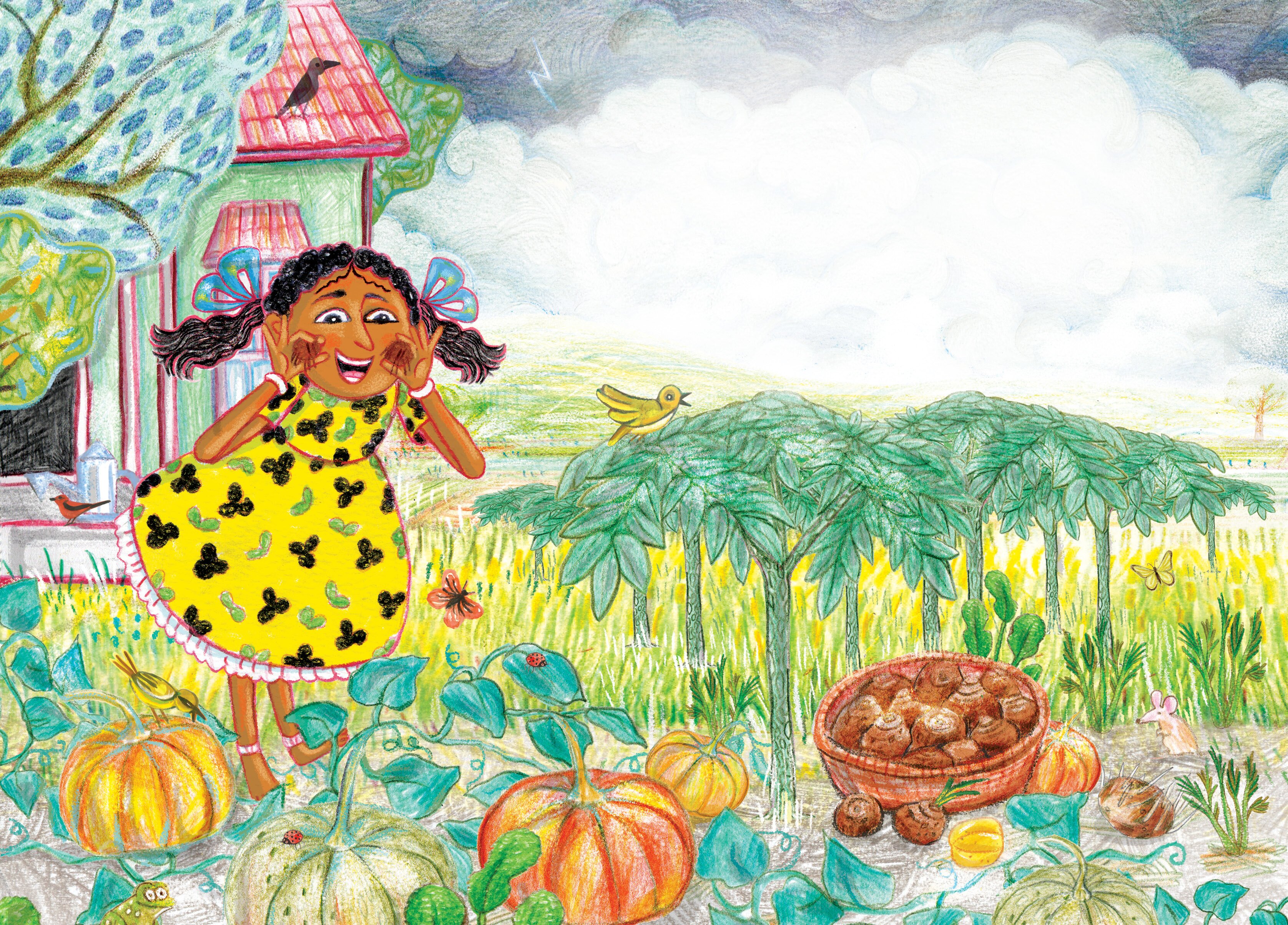
In their family vegetable garden, air potatoes, elephant yams and pumpkins are growing. The pumpkins will be many colours—orange and bright, green and light. Some tubers will grow as small as Ira’s fists, some as big as her belly.
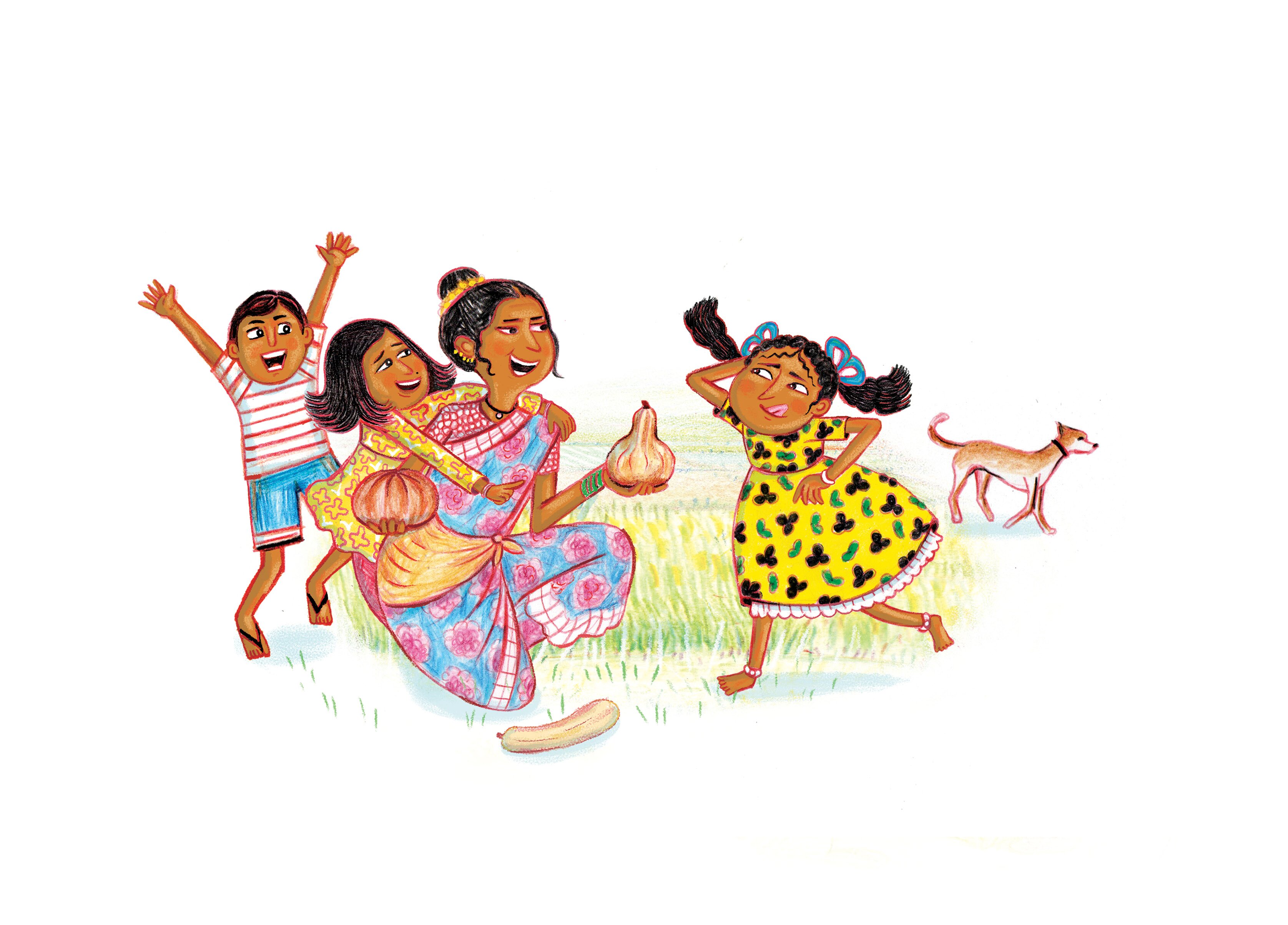
But, for the feast, Aai has saved their harvest of tubers and gourds from last year.
Harvested from the rich, red soil, The gourds wait in the kitchen. Some to be planted again, some to boil.
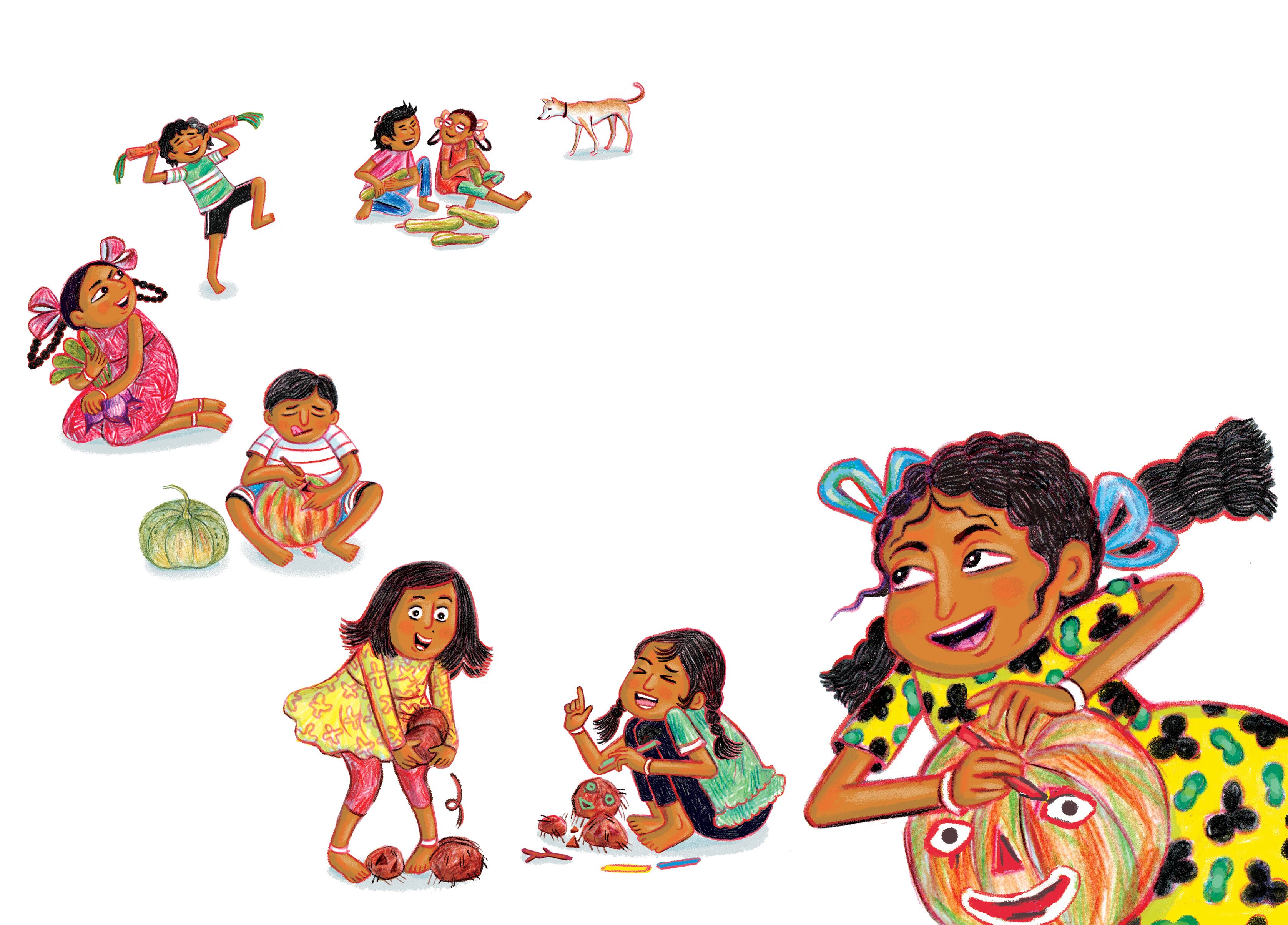
Ira, her cousins and their friends sit around with the tubers and gourds. They draw eyes and noses, brows and ears. Everyone has a big smile.
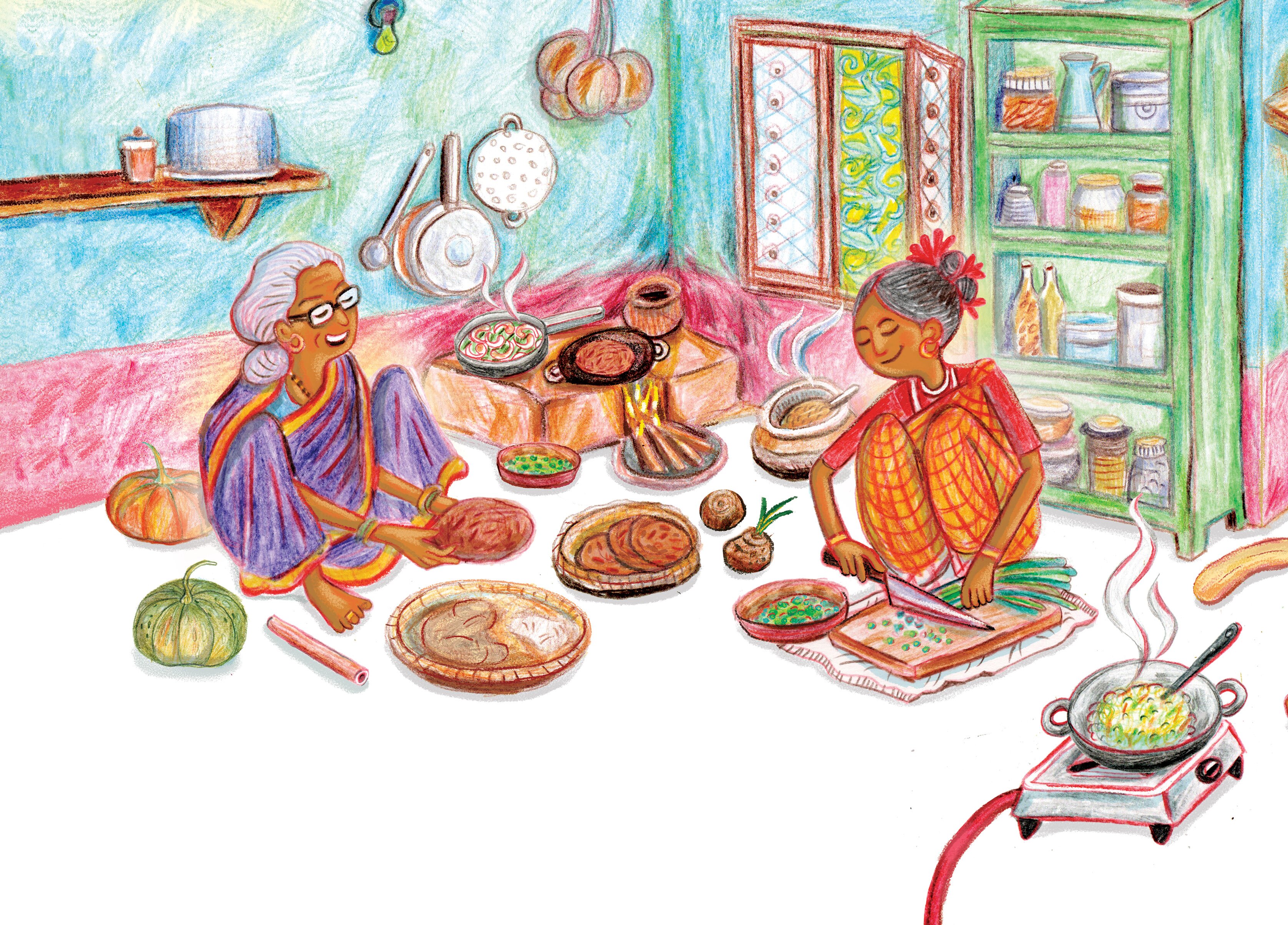
Ajji shapes the nachni bhakris with her hand. Each bhakri blooms over the flame. Maushi chops the phodshi. In the pan, the green stems shrink, mixing with the prawns.
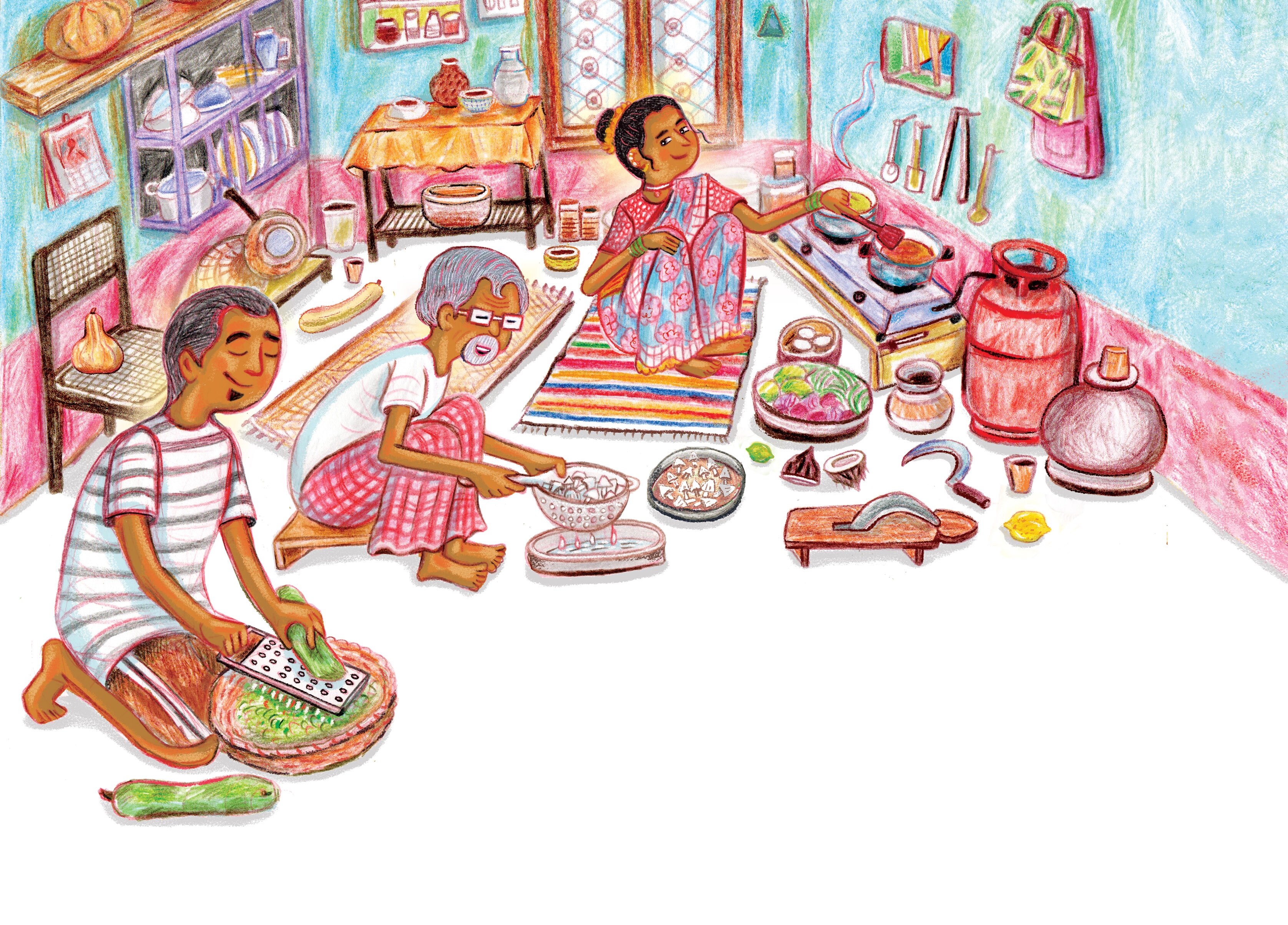
Ajoba soaks the alambi, and helps Aai to clean it. They cook the onions, grated coconut and tomatoes to make a masala. The alambi sizzles in the gravy. Baba grates the long bottle gourd and stirs in the cardamom. The smell of the dudhi halwa spreads through the house.
BOOM! Lightning crackles.
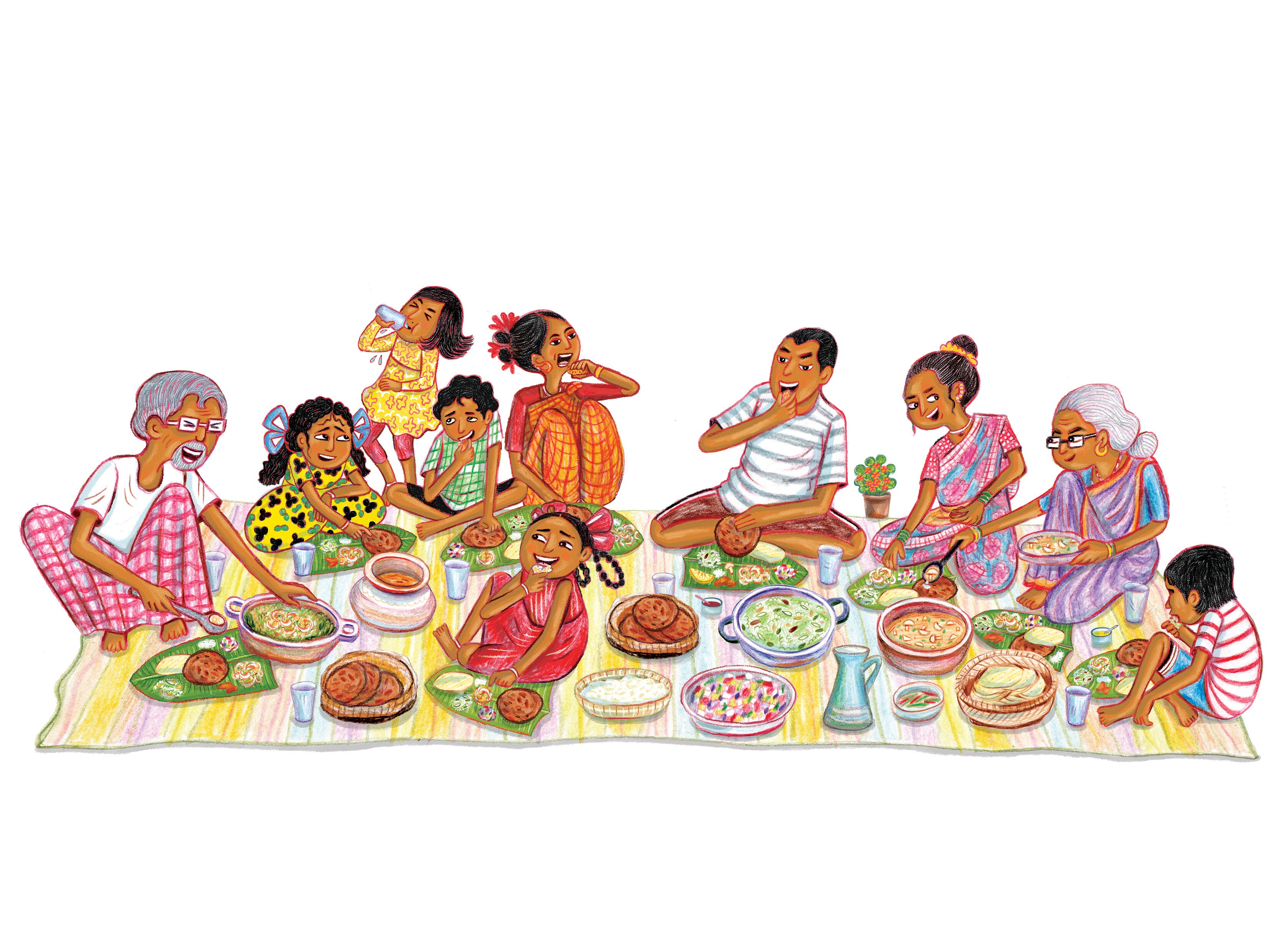
Now, it is time to eat!
EATING SEASONALLY
The Earth’s climate is changing. We have unseasonal rainfall, or it rains too much, too quickly. Sometimes we have heat waves and long dry spells. This means that farming is getting harder. To make sure we are well-fed and safe from some of these climatic changes, we can alter some of our planting patterns and eating habits.
Here’s a look at Ira’s family feast:
Nachni, called finger millet, grows in hilly areas where the soil is not rich. It can withstand a lot of rain, and does not need many chemicals.
Alambi are mushrooms, part of the fungi family, which grow in the Western Ghats during the monsoons. They grow only on termite hills, and are a very important member of the forest ecosystem, so we must harvest them with care.
Wild greens like phodshi, gongura and water spinach sprout up during monsoons. These green leafy vegetables offer nutrition when not many other vegetables are ready to eat.
Tubers like taro, cassava, elephant foot yam, and arrowroot live underground. They are very good at growing even if there is very heavy rainfall, or a flood.
Gourds, like the ash gourd, are full of vitamins and minerals and can be saved for months. This is good in a changing climate because it means we will always have something nutritious to eat. Pumpkins are amazing because we can eat their leaves, flowers and fruits.