Hauz Khas: A School by the Lake
Would you like to go on a secret trail?
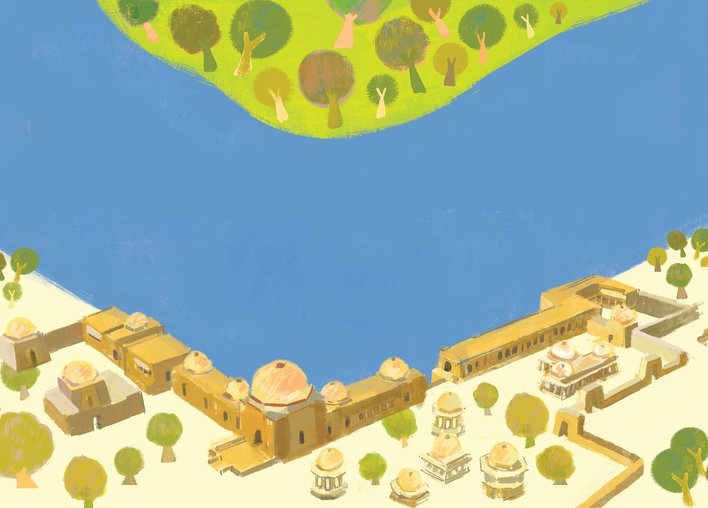
You will find a lake, a mosque, some tombs, a garden, and a very old school.
Where will you find all this?
At Hauz Khas, in the capital city of India, Delhi.
Scattered around the modern megacity of Delhi are the cities of its past. Some of these are Qila Rai Pithora, Mehrauli, Siri, Tughlaqabad, Firozabad, Dinpanah and Shahjahanabad. If you look carefully, many neighbourhoods stand on the ruins of a fort, a palace or a tomb.
Siri was Delhi’s second fort-city, built by a king called Alauddin Khilji. Hauz Khas was close to Siri.

Why is Hauz Khas special?
‘Hauz’ means man-made lake. ‘Khas’ means it was special. Hauz Khas was built in 1295 by Alauddin Khilji to store rainwater for the residents of Siri. After Khalji, the tank lay neglected. Till, in 1352, another king took over Delhi—Firoz Shah Tughlaq.
Around Hauz Khas you can spot peafowl, barbets, hornbills, sunbirds, babblers, parakeets, hoopoes, kingfishers, spot-billed ducks and herons. The air is filled with the calls of birds.

Firoz Shah Tughlaq loved to build new things and restore old structures. He built hospitals, inns, canals, bridges and palaces. He had Hauz Khas cleaned and filled with water again.
Firoz Shah also built schools. These schools were called madrasas. He built one at Hauz Khas. What do you think schools looked like 700 years ago? Did they look like the schools you study in?
Firoz Shah was called the architect king. He ruled from the fort-city of Firozabad.
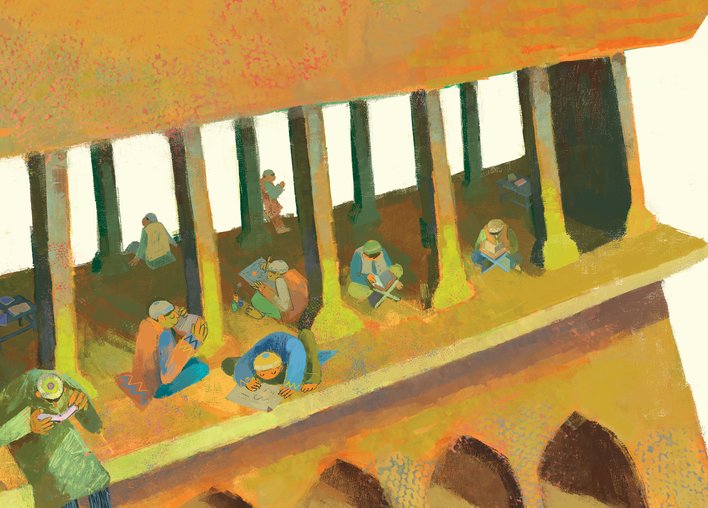
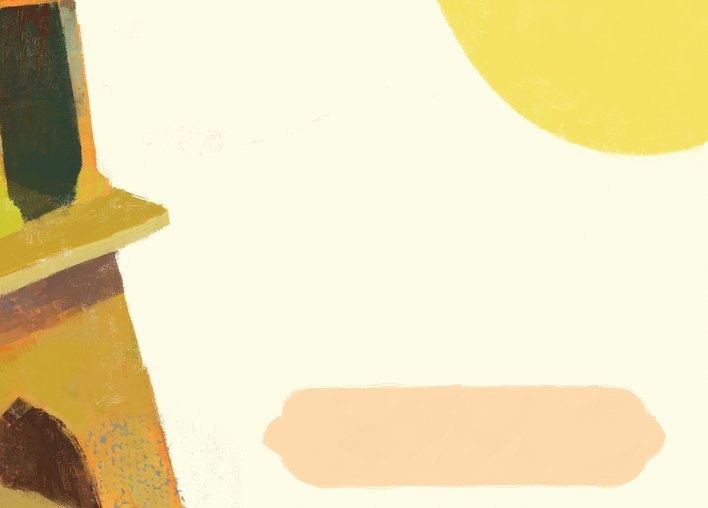
Let’s walk towards the madrasa that Firoz Shah built. This is a two-storey building, where students read the Quran, the holy book of Muslims. They also learnt subjects such as astronomy, history, mathematics, medicine and calligraphy.
Students from near and far came to study here. Maulana Jalaluddin Rumi, the famous Sufi poet, taught here.
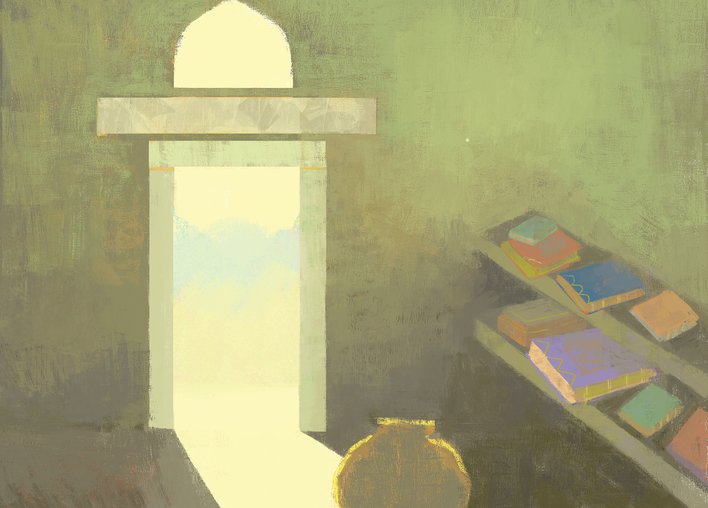
There are small rooms on the ground floor of the building. Students lived here. You can still see the shelves where they kept their books and other belongings.
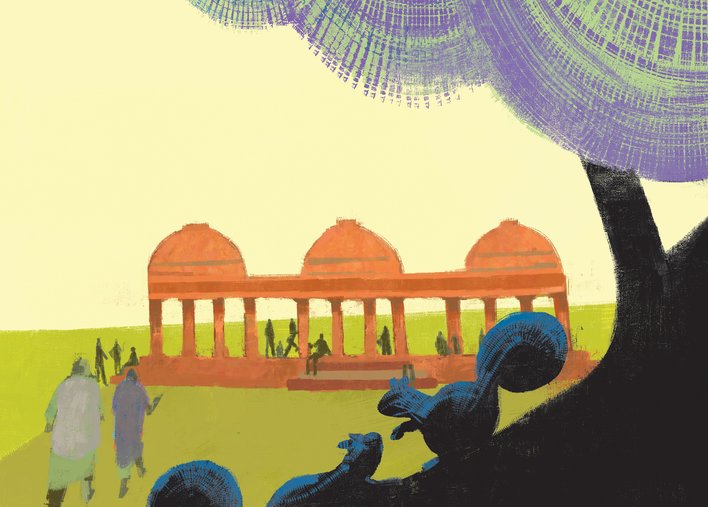
There is a hall with three domes, the Majlis Khana or assembly hall. Classes were held here.
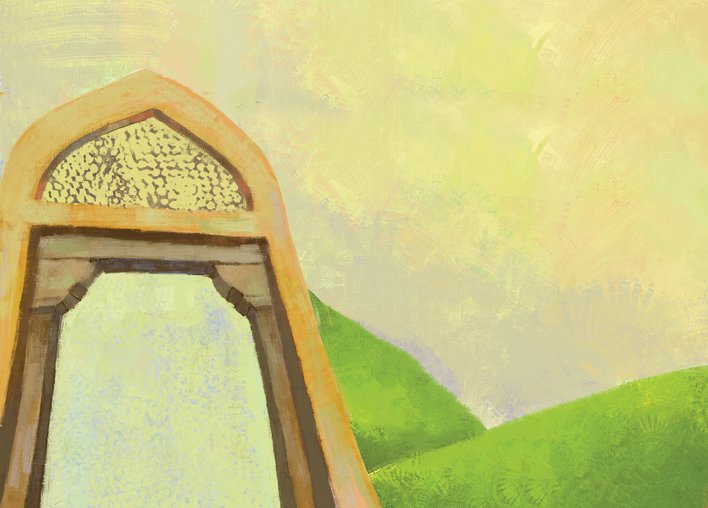
The Hauz Khas madrasa is a symbol of Tughlaqi architecture. The doorways, which are stone columns topped by an arch, are an example of this.
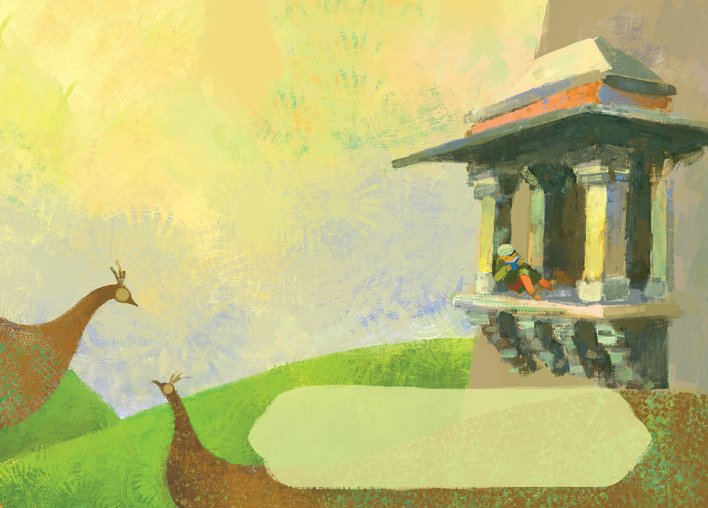
There are covered balconies called jharokhas. Rain or shine, the jharokhas always offer shelter.
Wouldn’t you like to study in a place surrounded by nature, hear bird calls and maybe even go swimming in the lake between lessons?
Jharokhas and chhajjas are elements of architecture from the ancient period in India. Chhajjas are also structures that provide shade.
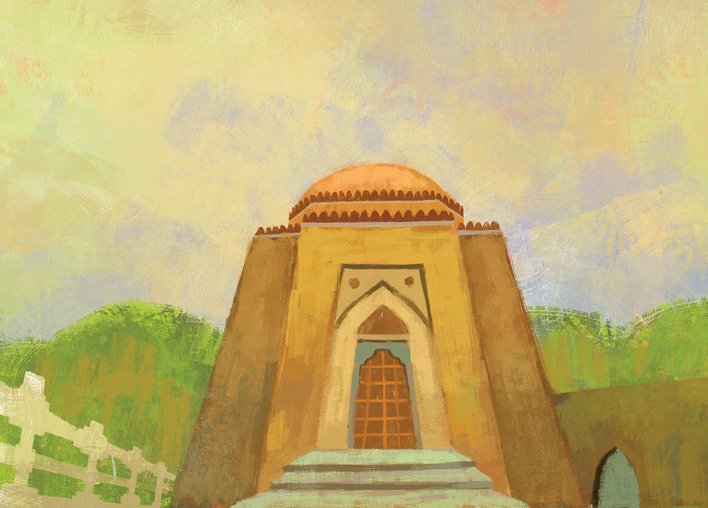
Besides the school, Hauz Khas is special because of the tombs it houses. Let’s head to the tomb of Firoz Shah Tughlaq. It’s the large chamber with a dome. He had it built before he died.
The walls of the tomb are made of limestone plaster. There are black patches on the walls. This is fungus that has formed with damp and neglect.
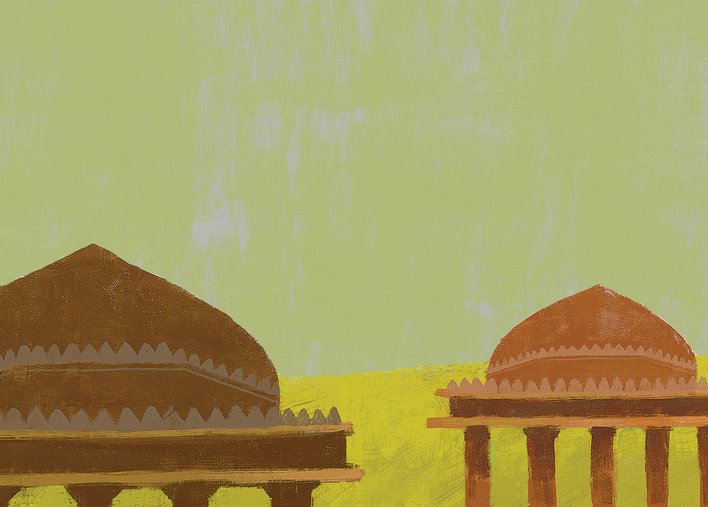
Firoz Shah paid a lot of attention to older styles of art and architecture, and used them in his own buildings.
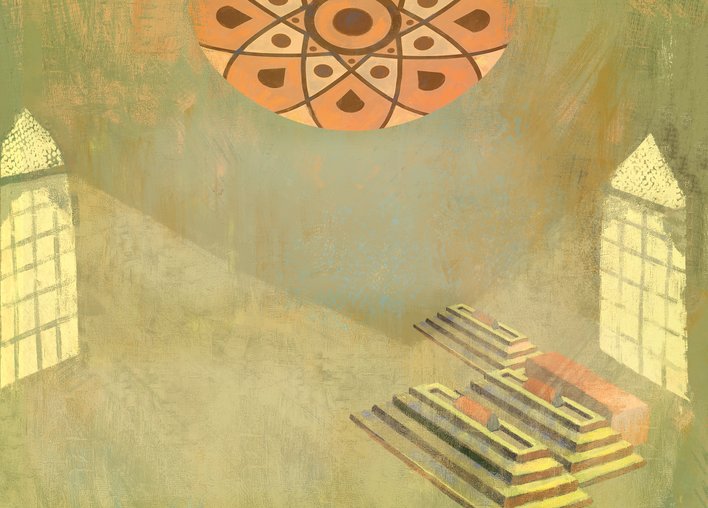
The ceiling is like an upturned bowl. The design has a star with eight points. There are lines written in a fine script within the star pattern. They are taken from the Quran. Similar lines are written on the arches over the doors. This ornate design, it is believed, was added during a later period.
Under the dome, are four unmarked graves and the central one is said to be Firoz Shah Tughlaq’s.
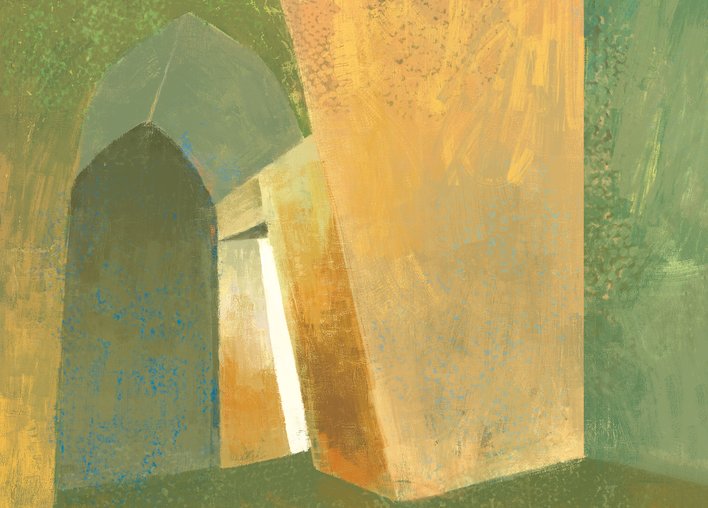
Can you spot the hidden passageways?
Yes, the tomb has two doorways to passages that lead into the classrooms next door. The passages are at right angles and anyone entering from the classroom cannot see who is on the other side.
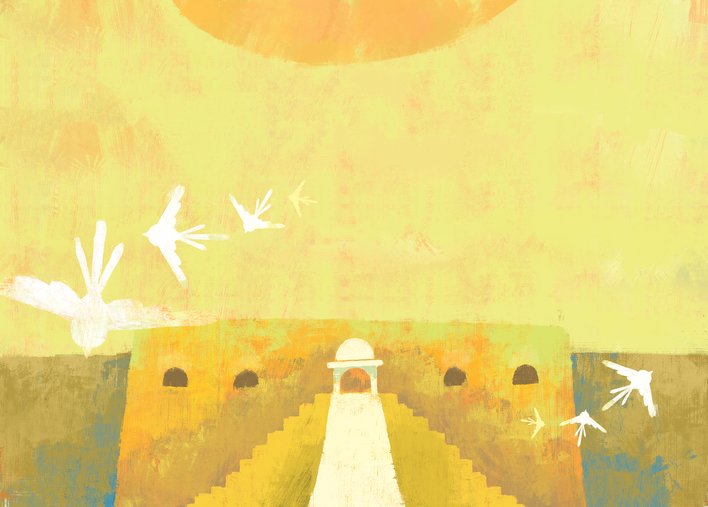
Hauz Khas has a mosque which faces the lake. There are symmetrical stairs on both sides that lead to a mihrab.
A mihrab is a prayer niche in the western wall (facing Mecca), found in most tombs and mosques. This is the direction that people face to say their prayers. Mihrabs are usually ornately designed. In this mosque, the central mihrab is a decorative window.
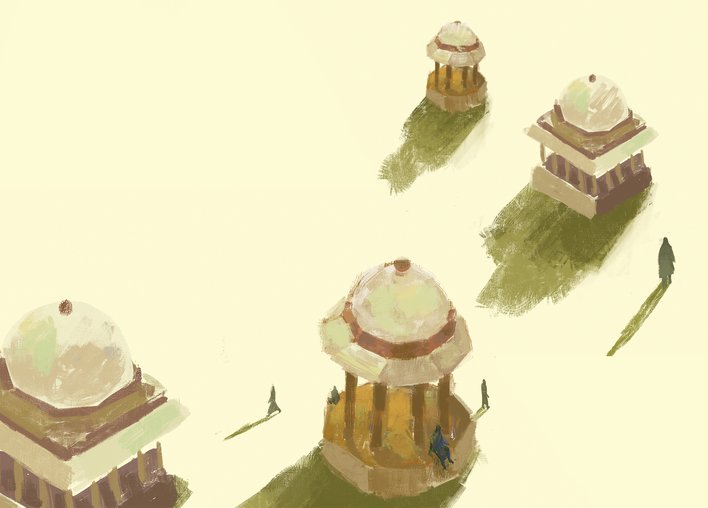
There are more tombs in the garden. It is believed that they belong to the scholars who taught at the madrasa.
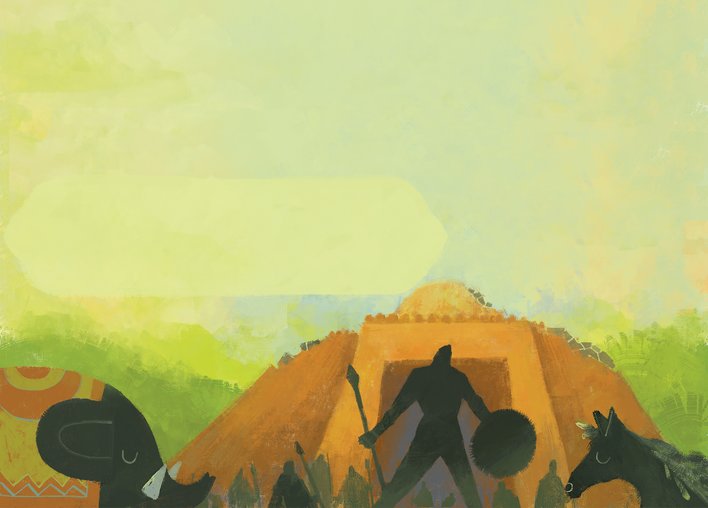
Are you wondering what happened to Hauz Khas after Firoz Shah Tughlaq?
In 1398, Timur, a Central-Asian conqueror, attacked Delhi. He set up camp at Hauz Khas. From a peaceful madrasa, and beautiful garden and lake, it became a camping site for soldiers.
Timur wrote: “The tank is filled by the rains in the rainy season and it supplies the people of the city with water throughout the year.”
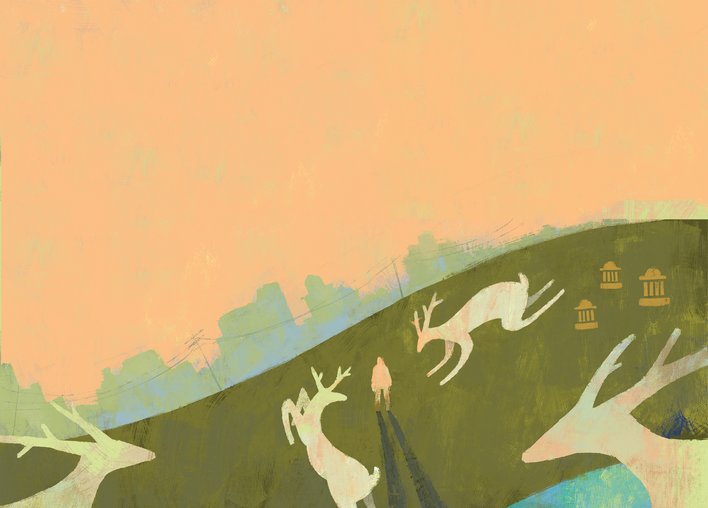
Today, Hauz Khas is a busy area. People come here to shop, eat and walk in the Deer Park adjoining the lake. They are transported to the past and hear students memorising their lessons and wise old teachers reading from books. They feel a gentle breeze blowing from the lake and over a sultan’s resting place. At Hauz Khas, ancient tales are all around.
Hauz Khas Timeline
1295 - A reservoir was built by Alauddin Khilji for the city of Siri. For almost 50 years, the reservoir was not in use.
1320 - The first Tughlaq king, Ghiyasuddin Tughlaq, fought a battle with Khusrau Khan somewhere around Hauz Khas. Ghiyas-ud-din won.
1352 - Firoz Shah Tughlaq, the third Tughlaq king, built a madrasa and restored the reservoir.
1398 - Timur invaded Delhi and set up camp at the Hauz Khas madrasa. The madrasa was abandoned after that.
References
Cunningham, A 1871, Four Reports made during the Years 1862-63-64-65, Archaeological Survey of India.
Elliott, HM & Dowson, J 1871, The History of India as told by its Historians: The Muhammadan Period, Teubner and Co., London.
Safvi, Rana 2018, The Forgotten Cities of Delhi, HarperCollins Publishers, India.
https://artsandculture.google.com/exhibit/hauz-khas-complex-indian-national-trust-for-art-and-cultural-heritage/QRXJIPZO?hl=en