Fossils: Tales of Long Ago
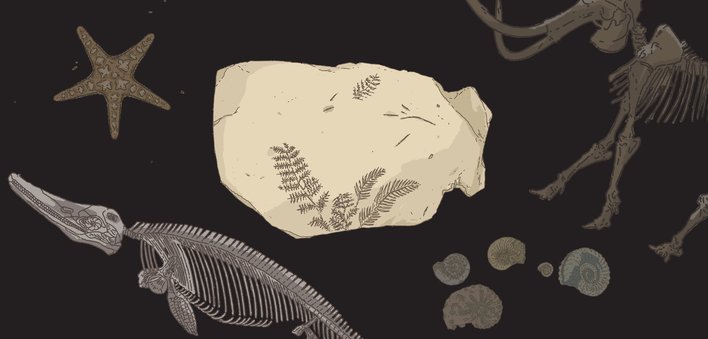
Fossils can answer many questions about our past. About beasts that are extinct. Early humans. Places that were once cold but are now warm. Forests that have become deserts.
Fossils are remains of plants and animals. Some may have turned to stone with time, while others have remained preserved — with flesh and bone — under ice or in tree sap. Fossils are rare because they have to survive climatic changes over thousands of years.
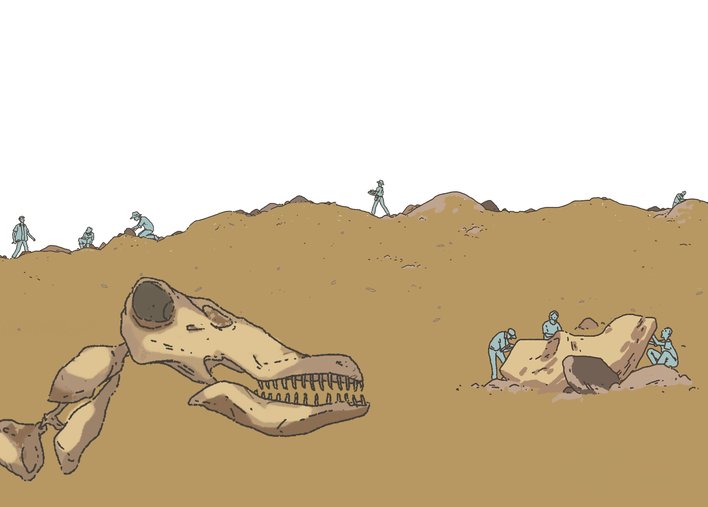
In 1828, British explorer William Sleeman discovered the first dinosaur fossil in our country, in the Narmada valley. The fossil was named Titanosaurus in 1877 by Richard Lydekker, a British naturalist and geologist.
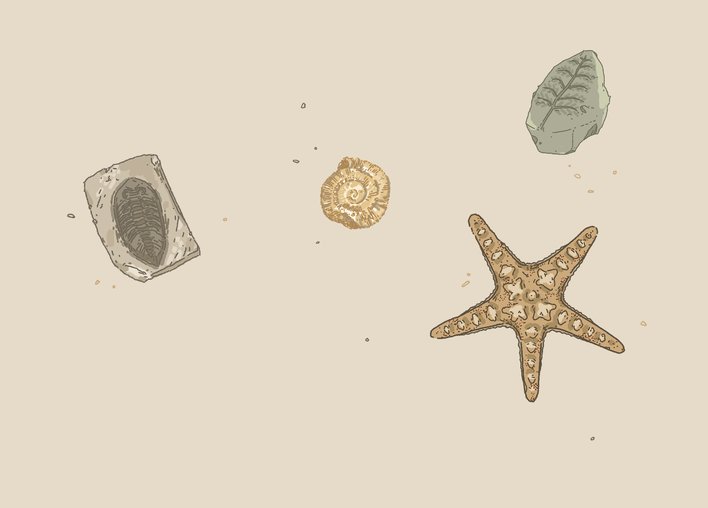
Fossils can be of many kinds.
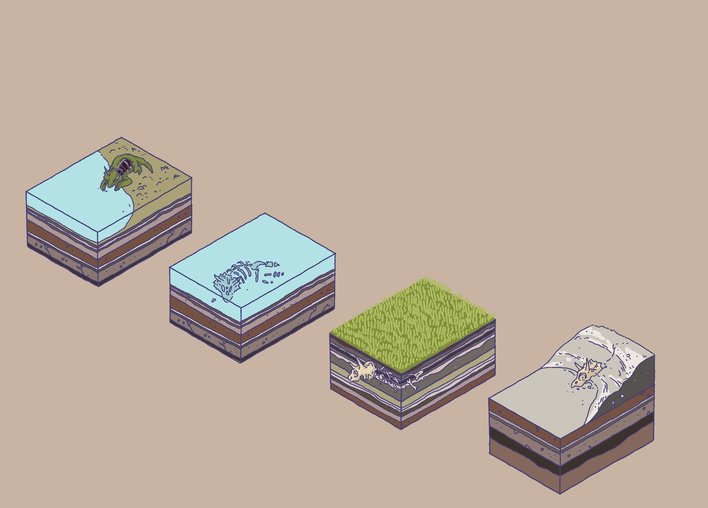
The most common fossils are replicas of animals or plant remains. They are created when dead plants or animals are thrust under water. When this happens, the soft parts rot.
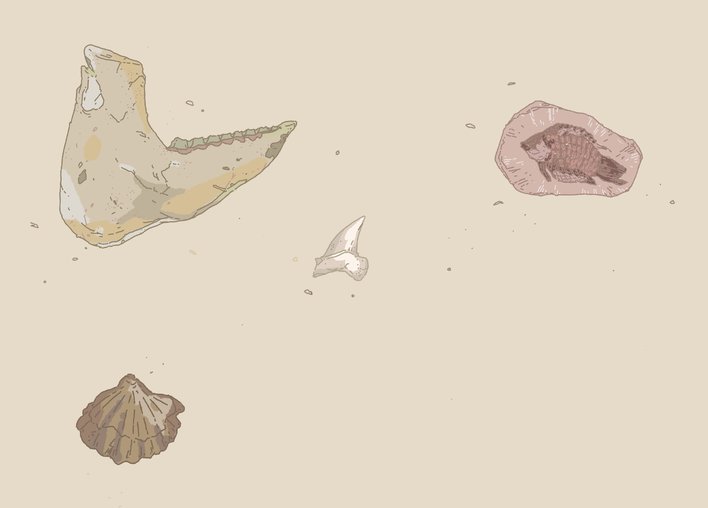
But the hard parts, like bones, teeth and shells are remain. Soil, mud and pebbles pile on it and form a cocoon. Over time, even the bones, shells, and teeth dissolve leaving gaps. But minerals in the water fill these gaps and create replicas.
These are body fossils.
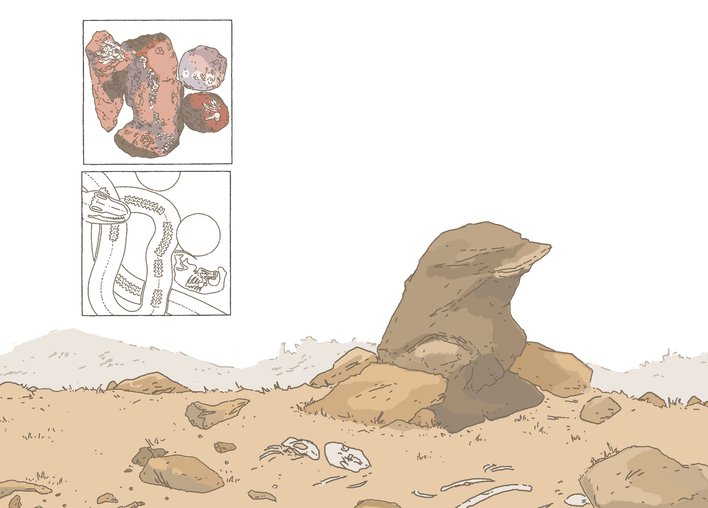
Body fossils have been found across the country. In eastern Gujarat, scientist Dhananjay Mohabey dug out a body fossil of a snake devouring a dinosaur hatchling.
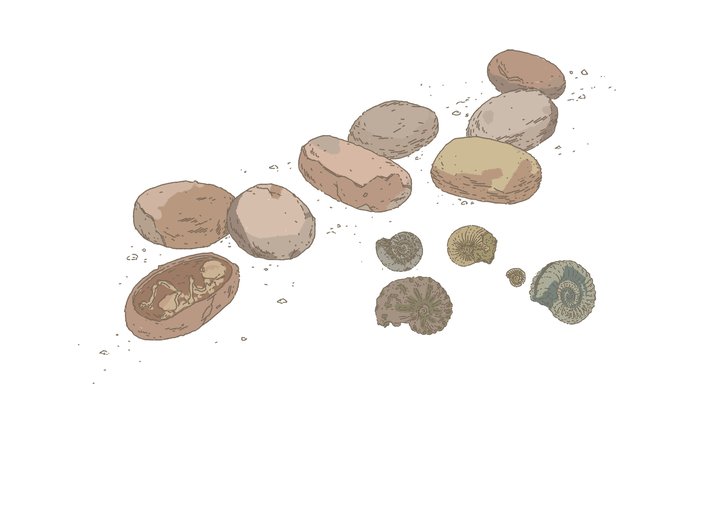
In Madhya Pradesh, Vishal Verma, a school teacher discovered hundreds of dinosaur-egg fossils along the Narmada river.
In Tamil Nadu, ‘Fossil’ Subramanian collected fossils of ammonites. Ammonites are ancient soft-bodied molluscs that are survived by their spiral shells, some of which are the size of truck wheels.
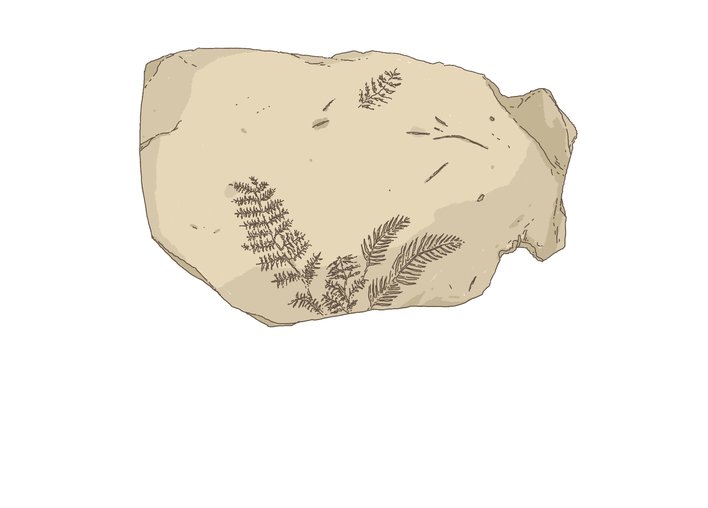
Sometimes, fossils can also be an entire animal or plant, or part of an organism, trapped in their natural form and preserved for millions of years. These are called true form fossils.
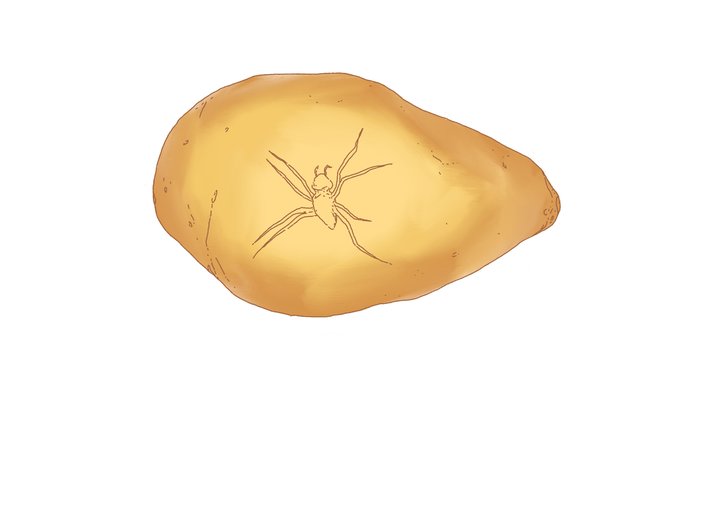
Palaeontologist Ashok Sahni and his team discovered spiders and insects in the sticky amber sap in the coal mines of Vastan in Gujarat.
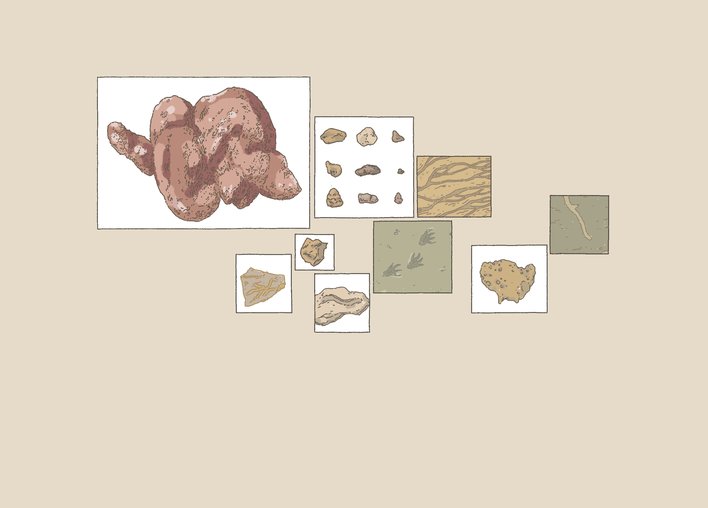
Trace fossils are insect burrows, footprints or even poop.
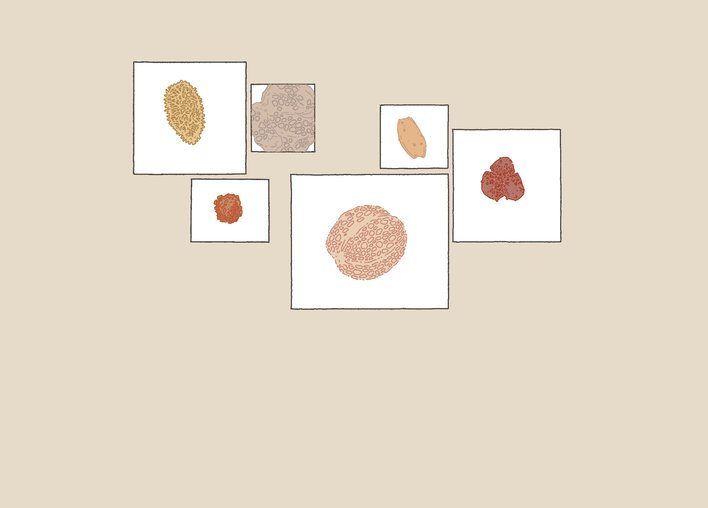
Scientist Vandana Prasad found traces of rice pollen in fossilised dinosaur dung from Maharashtra. That’s how they discovered that some dinosaurs had chewed on rice grains.
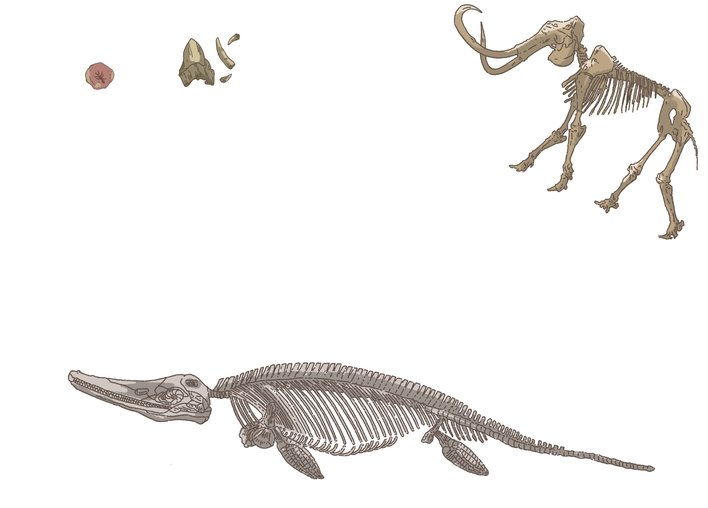
Tiny fossils are called microfossils, like the remains of the 1-mm thick prokaryotes—single-celled primitive organisms—unearthed in Madhya Pradesh.
When the bones and teeth of fossils are visible to the naked eye, they are called macrofossils. Some macrofossils can be gigantic, like the 18-foot Ichthyosaur, an aquatic reptile whose skeleton was found by palaeontologist Guntupalli V R Prasad and his team in Gujarat.
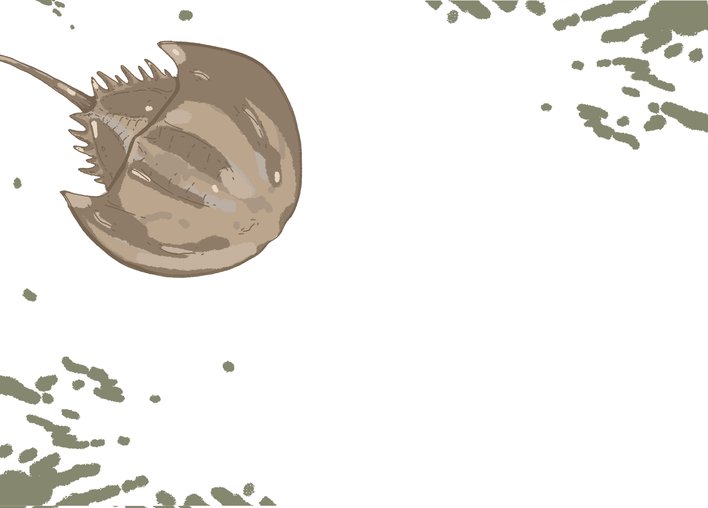
Then there are living fossils. These are species that lived millions or even hundreds of millions of years ago and exist even today.
The ten-legged, blue-blooded horseshoe crabs found in the mangroves of the Sunderbans in West Bengal are living fossils. They are early relatives of spiders, and in danger of extinction. They predate dinosaurs by about 200 million years.
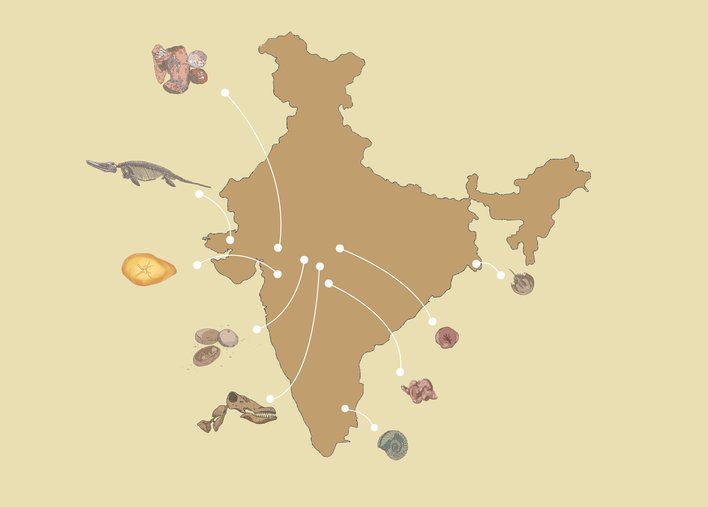
Fossil of snake devouring dinosaur hatchling Gujarat
Spider and insects in amber sap
Gujarat