Cracking the Code: Women Who Have Changed the Way We Look at Computers


THE FIRST ‘COMPUTERS’ WERE HUMAN, NOT MACHINES. MANY OF THEM WERE WOMEN.
Frances Snyder Holberton, Jean Jennings Bartik, Kathleen McNulty Mauchly Antonelli, Marlyn Wescoff Meltzer, Ruth Lichterman Teitelbaum and Frances Bilas Spence were the original programmers of the ENIAC, the first electronic computer built in America.
They were asked to program it in 1945 without ever having seen the machine.

The 2015 world record for a women’s hackathon saw 7,314 female participants across 34 countries, with an 80% participation from India.
Women have kick-started countless initiatives and organisations across the world that nurture female coders, like Girls Who Code, Black Girls Code and Indian Girls Code.
Padmasree Warrior, an Indian woman, was the CEO of a company pioneering work in self-driving cars.
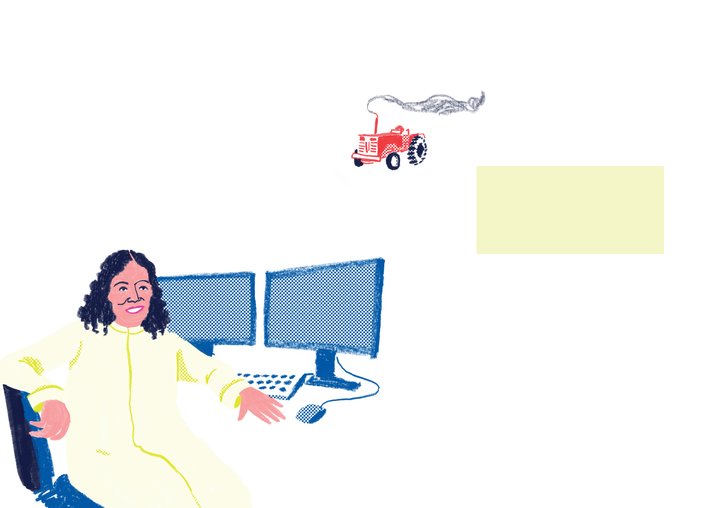
VANDANA ‘VANDI’ VERMA
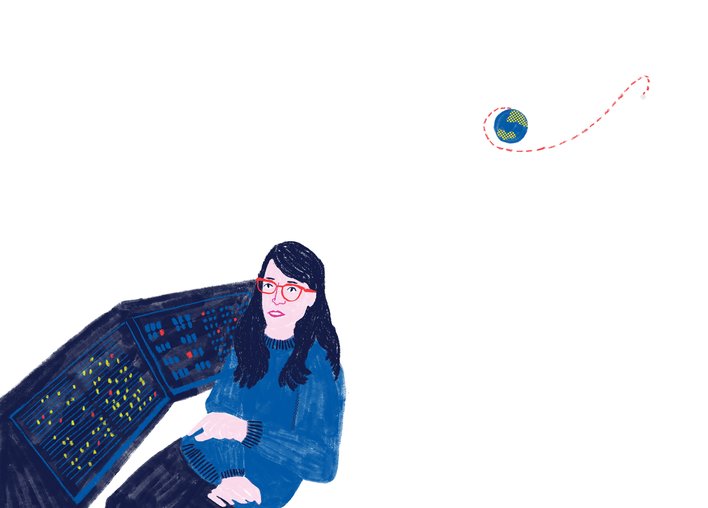
CURIOSITY AND AI Today, sitting at her desk at NASA, Verma drives, programs and navigates the Curiosity rover on Mars. Using Artificial Intelligence, the rover takes images, analyses soil and rocks, and helps NASA understand the planet’s past. Though Verma helps it do its job, the rover makes its own decisions.
BEHIND THE WHEEL Vandana ‘Vandi’ Verma was 11 years old when she got behind the wheel of her grandfather’s tractor. She never imagined that someday she would navigate a rover on Mars.
Verma holds a PhD in robotic exploration.
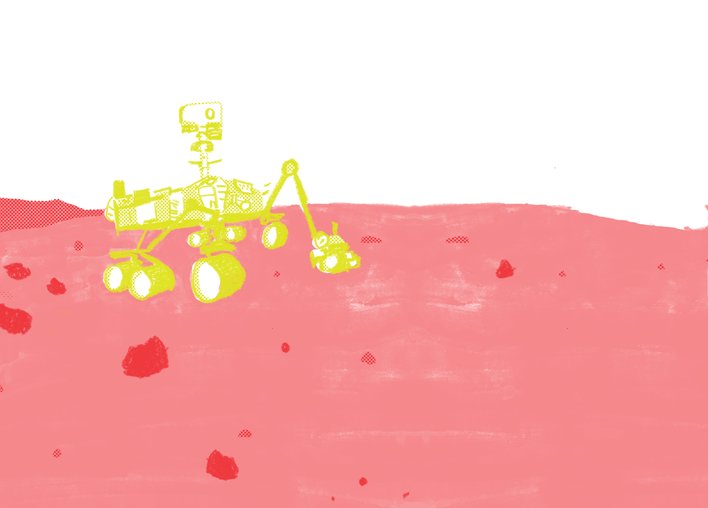
THE ROBOT Verma feels robots can help humans explore alien environments. When she was at Carnegie Mellon University in the USA, she designed many robots. What fascinated her was the way a robot reacted to an unexpected situation.
ANYBODY OUT THERE? Scientists think that Mars might have had some life form in the past, but now you don’t see any. What really happened out there? Verma would like to find these answers and she is busy developing systems for a Mars 2020 mission.
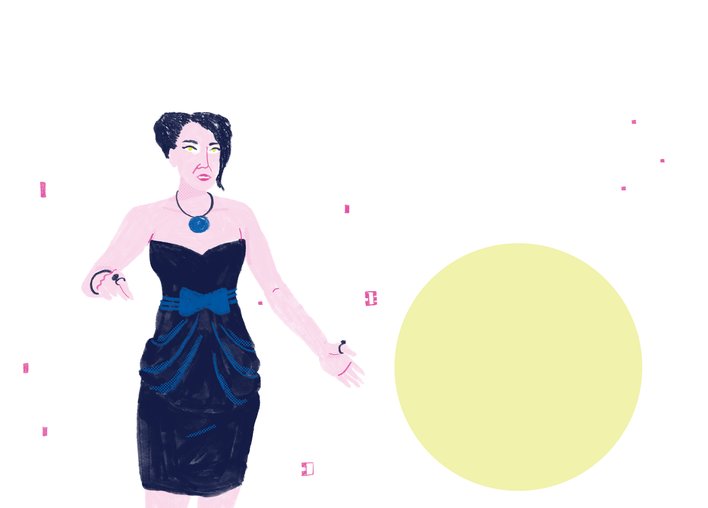
ANOUK WIPPRECHT
HIGH-TECH CLOTHING What happens when you mix fashion with engineering, science and interaction-based design and then 3D print it? You get clothes by Dutch designer and innovator Anouk Wipprecht!
Wipprecht works with Arduino, an open source hardware and software project that lets you to build digital devices that can sense the physical world.

SENSE AND SENSIBILITY Wipprecht’s dresses can sense, respond to and express the user’s experience of a space or situation with the help of ‘micro-controllers’ in the dress as well as on the body. Black Eyed Peas singer Fergie and pop star Britney Spears have worn Wipprecht’s designs.
SPIN MASTER Fashion Tech is a new field of design which uses technology to create a connection with the body and the surroundings of the wearer. Wipprecht is a Fashion Tech Designer who is captivated with the idea of having both a physical and a psychological relationship with a piece of clothing.
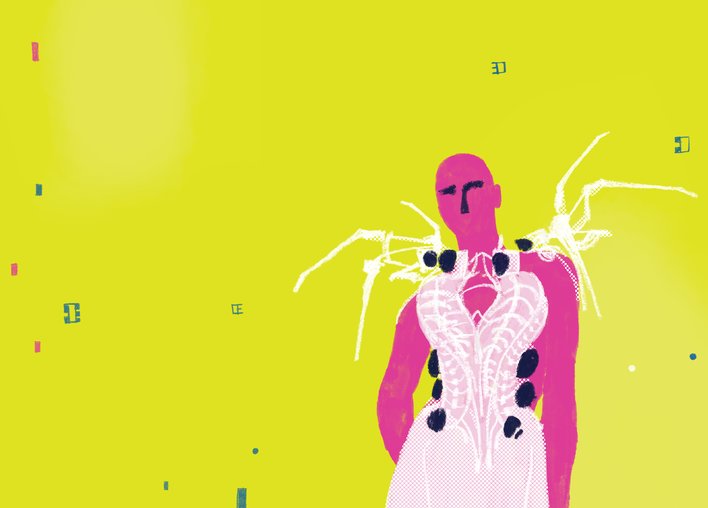
SPIDER, SPIDER! Wipprecht’s spider dress has a collar of robotic spider legs, fitted with servo motors. The closer someone gets to the dress wearer, the more aggressively the dress reacts and the spider legs unfurl. The legs retract when the danger goes away.

SANGHAMITRA BANDYOPADHYAY
FOLLOW THE PATTERN Professor Sanghamitra Bandyopadhyay works with algorithms—rules written for a computer to follow and solve problems. Algorithms also help you identify patterns.
Bandyopadhyay has received some of the biggest science prizes in India, like the Shanti Swarup Bhatnagar Award in Engineering Science in 2010 and the Infosys Award in 2017. She is also the first woman director of the Indian Statistical Institute, Kolkata.

BIOLOGY BASICS At school, biology was Bandyopadhyay’s least favourite subject. She loved science and decided to study physics first and then computer science. She began working with biology research and realised that, when put in order with the help of computer science, it could be a lot of fun.
CODES AND CELLS What kind of patterns can Bandyopadhyay identify? She and her team study molecules and cells that cause diseases like cancer. Bandyopadhyay sifts through mountains of information from biological experiments. She organises this information and feeds it to the computers to find patterns. She says her algorithms can be applied to any field.

FERESHTEH FOROUGH
A team of 20 students from Code to Inspire has created a game called Fight Against Opium. The game traces an Afghan soldier on a mission to destroy poppy fields, and depicts the challenges the army faces in fighting against drugs and the Taliban.
LITERATURE TO LOGIC Fereshteh Forough didn’t like maths one bit. She had studied literature in Iran where her Afghan parents had fled during the Soviet invasion of Afghanistan. When they moved back, Forough got into the computer science programme at Herat University. She hated the first day. There were just too many numbers. The next day, she learnt about algorithms and she was hooked.

CODE TO INSPIRE After studying computer science, Forough wanted to start something that would help make girls financially independent and more confident. She started Afghanistan’s first coding school for women, Code to Inspire, from her apartment. Many women who study there have never worked on a computer before.
BE A CREATOR Learning a new language—that’s what coding is like for Forough. It gives you the power to create what you want, and to pass on that power to others.

AUDREY TANG
NOT SO BOOKISH Tang wrote her first game when she was eight to help her younger brother with fractions. At 15, she told her teachers that textbooks were outdated and she wanted to study coding. Tang dropped out of school. She learnt coding through online communities, hackathons and webinars.
THE DIGITAL MINISTER Audrey Tang is Taiwan’s Digital Minister, and the first transgender person in the country’s cabinet.

ALL IN THE OPEN Tang worked in the startup space in the USA before moving back to Taiwan. In August 2016, Tang joined the Taiwanese government. She is trying to bring about a digital revolution in the administration and to make it paperless. She believes in free software and social entrepreneurship, and has helped set up social innovation labs in Taiwan.
Two years before she joined the government, Tang resigned from her job at Silicon Valley to help students back home in their protest against the government.
MARGARET HAMILTON & KATHERINE JOHNSON
TWO FIRSTS Hamilton later became the programming head at NASA’s Apollo 11 project that took man to the moon. Her team created the software to run the world’s first portable computers that went aboard the spacecraft. This was the earliest version of a computerised navigation system. There was an error three minutes before Apollo 11’s moon landing. Hamilton resolved the error and the mission could go ahead.
STRONG CORE When Margaret Hamilton was in school, you couldn’t learn computer programming because the field of software engineering did not exist. Hamilton, a mathematics student, was part of the team at the Massachusetts Institute of Technology (MIT) in the USA that developed the core concepts in computer programming.
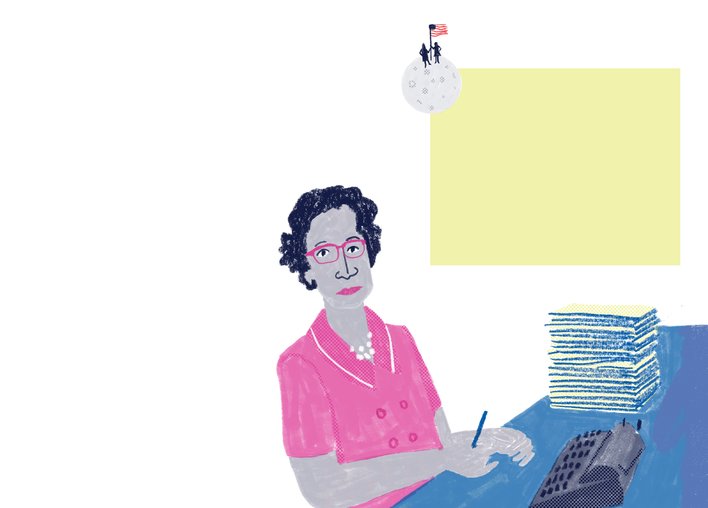
Astronaut Neil Armstrong became the first man to walk on the moon on July 20, 1969. Armstrong couldn’t have reached the moon without Margaret Hamilton or Katherine Johnson.
PATH LESS TRODDEN Mathematician Katherine Johnson was also part of the team. She calculated the exact trajectory or path the spacecraft would take to the moon for the Apollo 11 and Apollo 13 missions. She has been commemorated in a movie titled Hidden Figures.
GRACE HOPPER
Hopper was the first to use the word ‘bug’ to refer to a problem with the computer and the first woman to earn a PhD in Mathematics from Yale University in 1934.
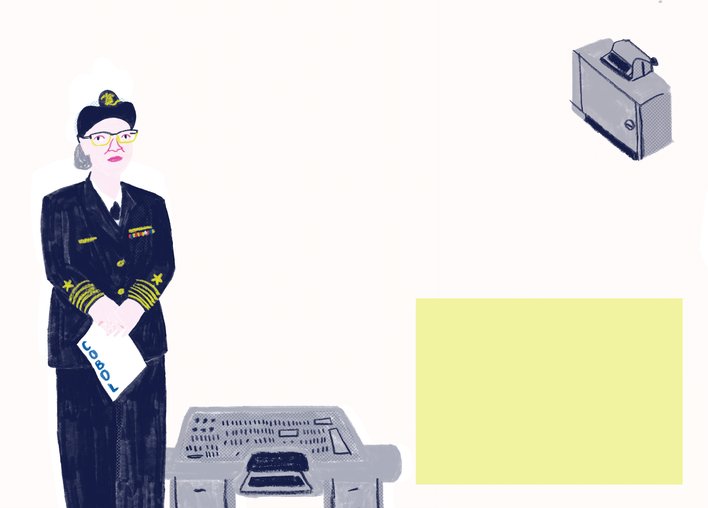
CANNONS AND COMPUTERS Mathematics Professor Grace Hopper left her job to join the United States Navy Reserve better known as WAVES. She became a Lieutenant during World War II. A year before the war ended, she began her work on programming Harvard University’s Mark I computer. Hopper later joined the team that programmed UNIVAC I, the world’s first large-scale electronic computer. She rose to the rank of Rear Admiral during her career.

LANGUAGE NO BARRIER Back then, you had to give instructions to a computer using numbers or computer code. Hopper invented an early compiler. The compiler was a program that translated human language to machine language for the computer.
On November 22, 2016, she was posthumously awarded the Presidential Medal of Freedom by the US President Barack Obama.

ADA LOVELACE
AHEAD OF HER TIMES A century before the Bombe—the first single-use computing device—was built, Ada Lovelace had already written the world’s first computer program.
Lovelace mastered university-level maths by exchanging letters with Augustus De Morgan, a maths professor in London.

A MACHINE NEVER BUILT Lovelace’s friend, the inventor Charles Babbage, designed a machine called the Analytical Engine. It could have become the earliest known programmable computer, which could be programmed using punched cards. Though the machine was never built, Lovelace, who was a mathematician, translated an Italian article on the engine and also described an algorithm explaining how it could be programmed, making it the world’s first computer program.
MATHEMAGICIAN One of Lovelace’s programs showed how the machine could calculate the BernouIli Numbers, a complex series of numbers, if you gave it the right formula. She was also the first to suggest that the machine could be instructed to do much more than just maths—even make art and music.
100 Years of Coding
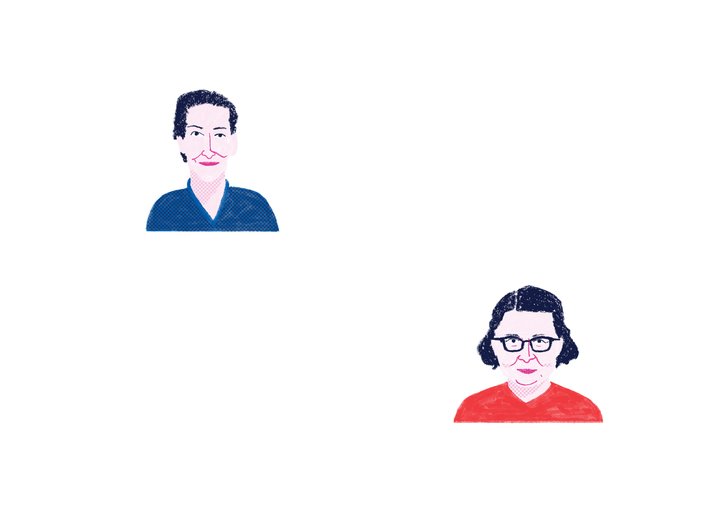
GRETE HERMANN 1901-1984 She was a German mathematician whose work is considered the foundation of computer algebra. Her critique of the no-hidden-variable theorem by John von Neumann was ignored for three decades, until it was independently discovered and published by John Stewart Bell in 1966.
RÓZSA PÉTER (RÓSA POLITZER) 1905-1977 This mathematician is known as the founder of Recursive Function Theory, a branch of mathematical logic and computer science. In 1952, she became the first Hungarian woman to be made an Academic Doctor of Mathematics.
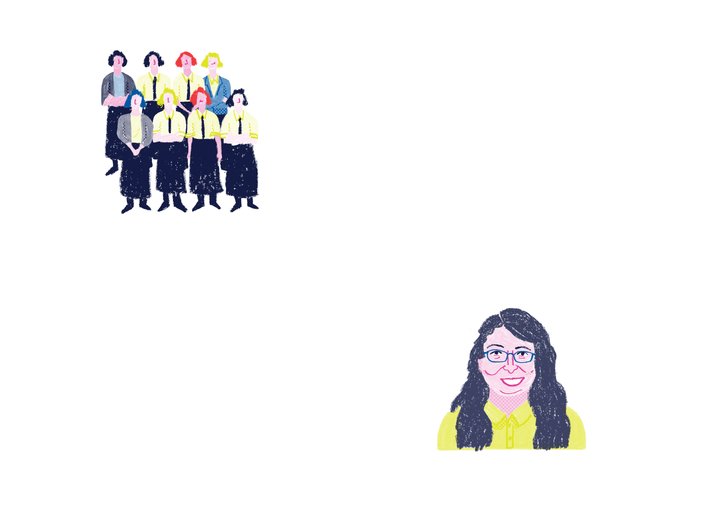
WOMEN IN BLETCHLEY PARK 1937-1945 During World War II, women secretly worked as code-breakers at Bletchley Park.
RADIA PERLMAN 1951-PRESENT This American computer programmer is known for the algorithm she wrote for the Spanning Tree Protocol (STP) which has influenced the way networks and data are organised.

DAME STEPHANIE ‘STEVE’ SHIRLEY 1933-PRESENT Dame Steve Shirley came to England as a five-year-old Jewish refugee during World War II. She learned to make computers from scratch and even code in the 1950s. With £6, Shirley started the software company Freelance Programmers in 1962 which later became Xansa. By 1975, out of the 300 programmers the company had, 297 were women.
ABISOYE AJAYI-AKINFOLARIN Abisoye launched Girl Coding in Nigeria in 2015 to help girls from underserved communities become developers. She aims to bring 20,000 female programmers into the Nigerian tech ecosystem by the year 2020.
ADITI PRASAD & DEEPTI RAO The two siblings founded Indian Girls Code in 2013. Under this initiative, young underserved girls are taught coding, robotics and how to develop real-world programs for real-world applications.

GLOSSARY
ALGORITHM: A set of steps written in plain language for a computer to follow and solve a problem.
ARTIFICIAL INTELLIGENCE: Artificial Intelligence is teaching a computer to think and learn. With AI, we try to program a computer to think and react like us.
CODING: Computer programming, or coding, is the process of creating a logical sequence of instructions that enables a computer to perform a particular task. A software engineer writes and tests this code using languages the computer understands.

SOFTWARE: A software could be a set of applications or an operating system that enable a computer to work. It is a set of instructions written in various computer languages.
ROBOTICS: It is a branch of engineering that designs, creates and operates robots. Robotics has currently automated various industrial tasks and will continue to spread across user’s lives in the future.
HACKATHON: In a hackathon, programmers, designers, other professionals and even beginners work in teams to create a product—software or hardware. This usually takes place within a span of 48 hours.

SOURCES
http://www.anoukwipprecht.nl/#intro-1 https://www.gadgette.com/2016/03/15/women-in-tech-history-margaret-hamilton/ https://www.gadgette.com/2016/03/23/women-in-tech-history-grace-hopper-admiral-programmer-and-rebel/ https://www.npr.org/sections/alltechconsidered/2014/10/06/345799830/the-forgotten-female-programmers-who-created-modern-tech http://www.sciencemag.org/careers/2015/07/space-roboticist https://www.natureasia.com/en/nindia/article/10.1038/nindia.2010.131 https://iq.intel.com/wearables-designer-anouk-wipprecht-curiosity-is-the-mother-of-invention/ https://www.wired.com/2015/10/margaret-hamilton-nasa-apollo/
Disclaimer: This story was compiled from a variety of sources: books, online resources, archival material. As much as possible we have listed sources in the bibliography.