Bombay Ducks, Bombay Docks
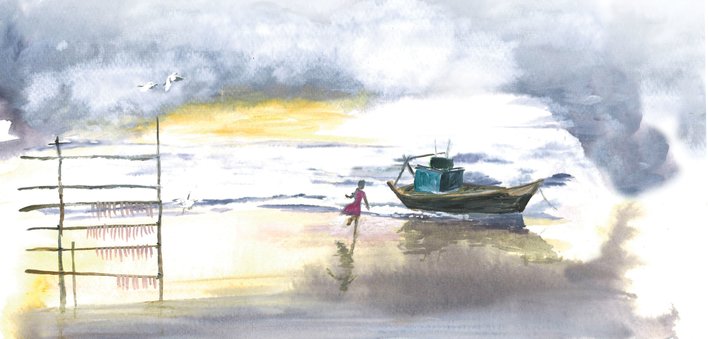
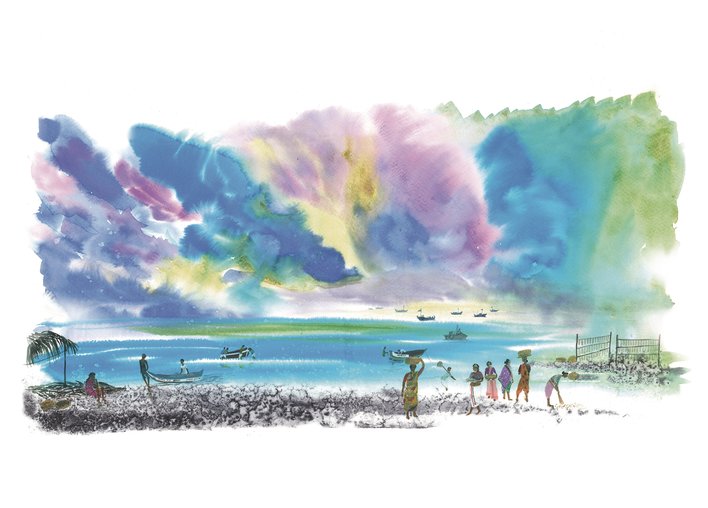
The twinkle of a million stars On the shimmering sea so far In the distance I can see The boats are chugging towards me Soon they’ll come in with their catch
The bombils we’ll then sort and batch On the bamboos they will dry Two, three days in the sun that’s high Bombay Ducks are not birds, you see They are fish served fresh and dry
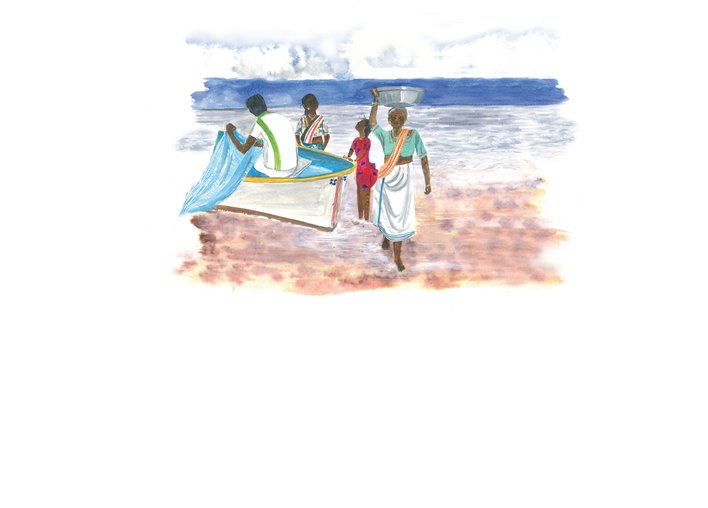
It’s the first day of the summer vacation. “No school until the rains,” Vandana tells herself. She lives in a koliwada along the shores of Mumbai and belongs to the Koli community, the original residents of Bombay. Her family owns two boats. Every day her father and grandfather set out to catch fish. During the holidays, Vandana helps sort the catch.
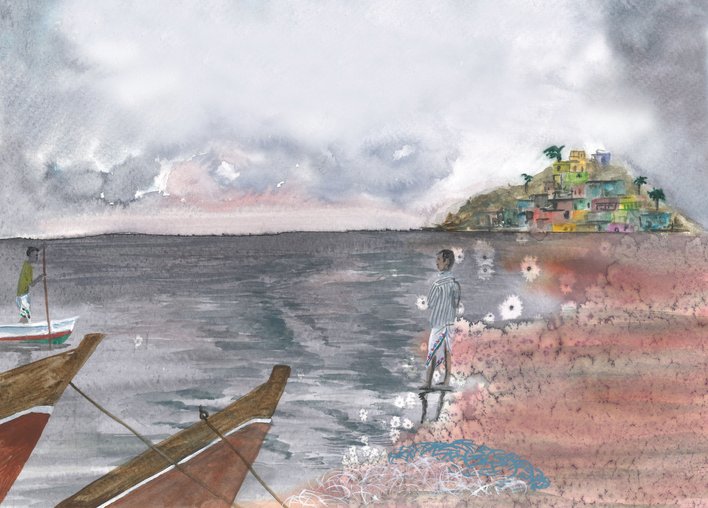
What time the fishing boats leave the koliwada depends on the tide and the mood of the sea. Today, the family’s boats come in with their catch at 3 in the morning.
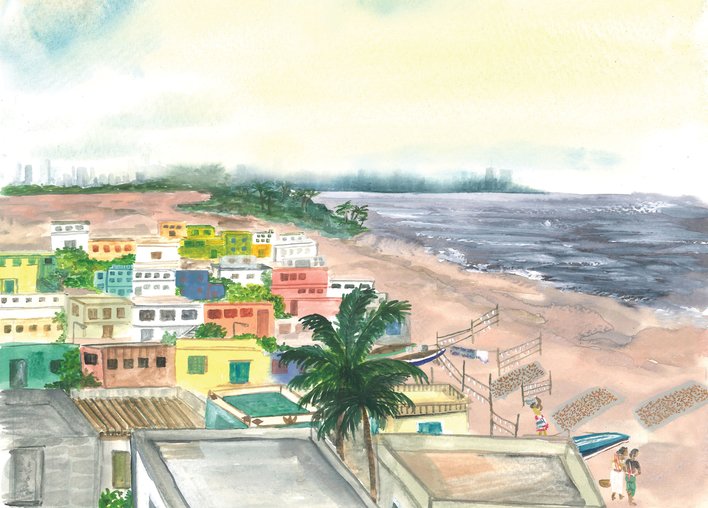
As dawn breaks, the women settle down to sort the fish. Later in the day, Vandana and her friends will help them. Bombils or Bombay Ducks are strung out on the bamboo racks like fat, glistening commas. The shrimps are spread out on clean concrete rectangles. From Vandana’s house up high, this looks like a patchwork quilt.
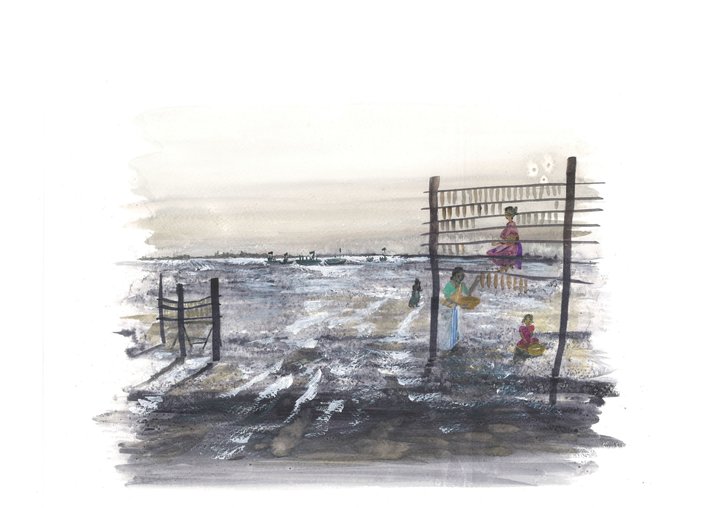
April and May are the busiest months of the year for Vandana’s family. By the last week of May, the strong winds and rough seas make it too dangerous for their tiny boats to ride the waves.

When the monsoon sky sends down rain, day after day, night after night, there is plenty of time to talk and rest. The family sits around Aaji. They listen to her stories and mend fishing nets. Vandana loves the tales of a time when there were hundreds of fishing villages on the islands that are now known as Mumbai.
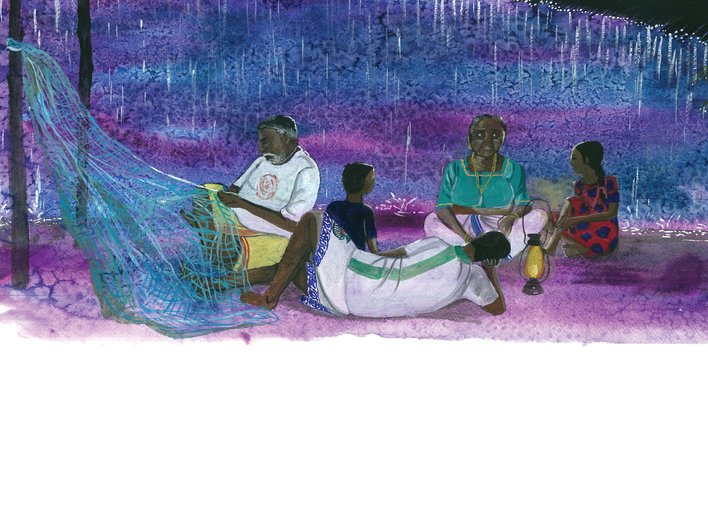
Aaji tells her tribe of listeners that though people think Bombay was made up of seven islands, a long time ago, there were 25 islands. “The shorelines were dotted with fishing villages. Then came the city. It was hungry for roads, bridges and development.” Today there are only 36 koliwadas left.
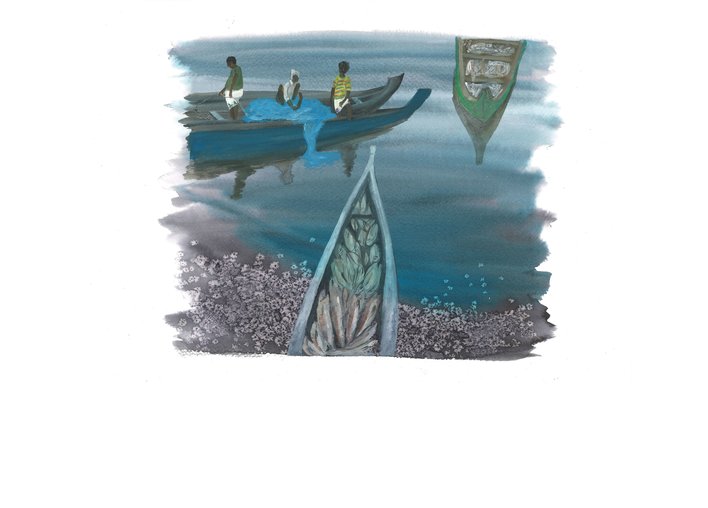
“Our koliwadas might be disappearing, but our Bombay Ducks remain. Have you ever wondered how a fish got such a name?” asks Aaji.
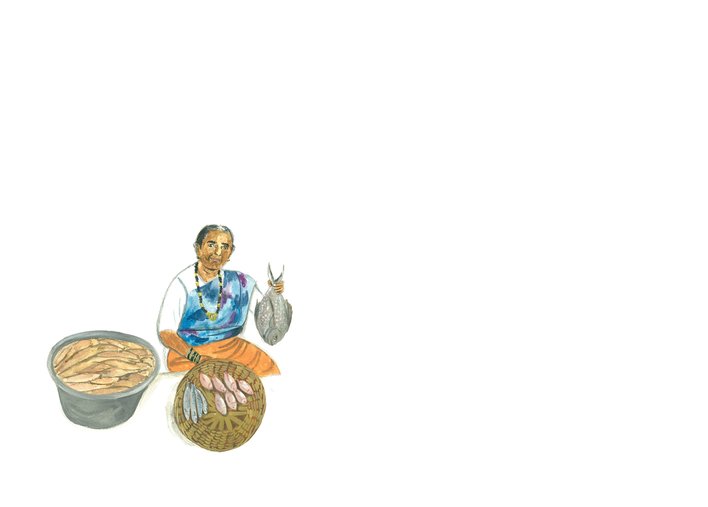
“We have always called the fish bomelow, bomello or bombil. But the story goes that the Bombay Duck got its name from mail trains or daaks. The daaks carried the dried fish far inland. From daak it became duck during the British Raaj,” she adds.

Aaji feels the Bombay Ducks and its famous docks are what make this city special. “Aaji, tell us more about the docks where ships were built,” says Vandana, who often visits Sassoon Dock with her Baba.
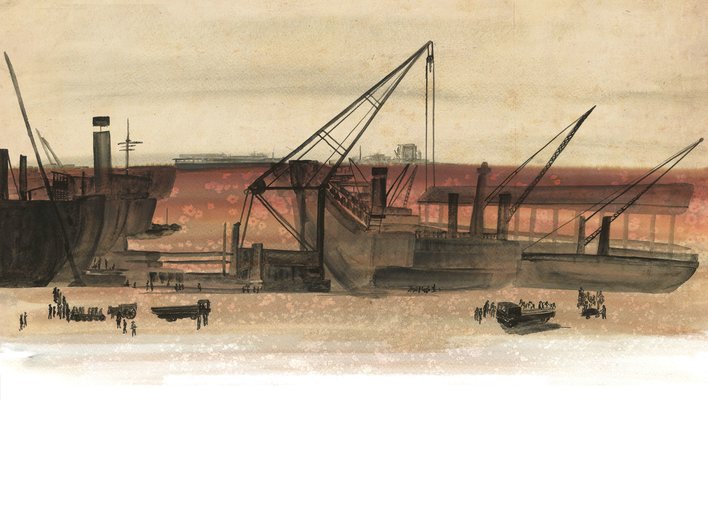
“The docks stood on the eastern shore of the islands,” says Aaji. “In the beginning, they were just bunders or landing places. Then they became places to repair boats and build ships, when trade increased.”
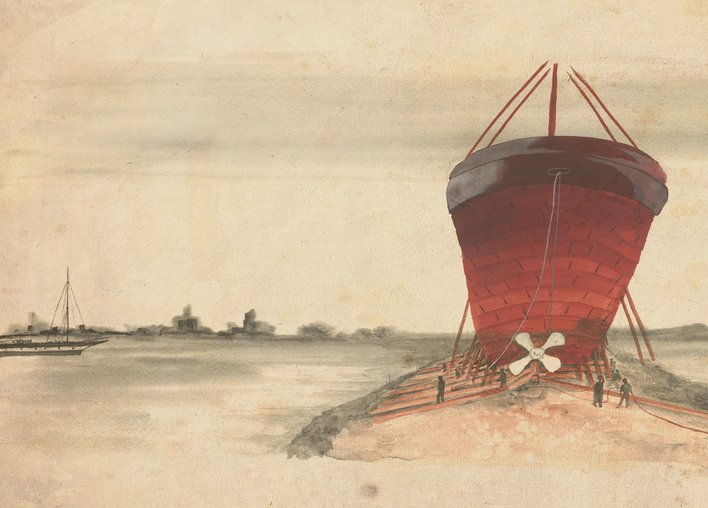
“Not just Kolis, but many different communities were part of building the ships and the docks,” recalls Aaji. The Parsis, the Wadia family in particular, she says, were big shipbuilders. Then there were Maratha and Christian carpenters from Bassein and lascars from the west coast, and even Chinese fitters and Pathan riveters.
Lascars: A term Europeans used for sailors from South Asia. Fitters: Someone who installs machinery. Riveter: Someone who fixes things, often with a hammer.
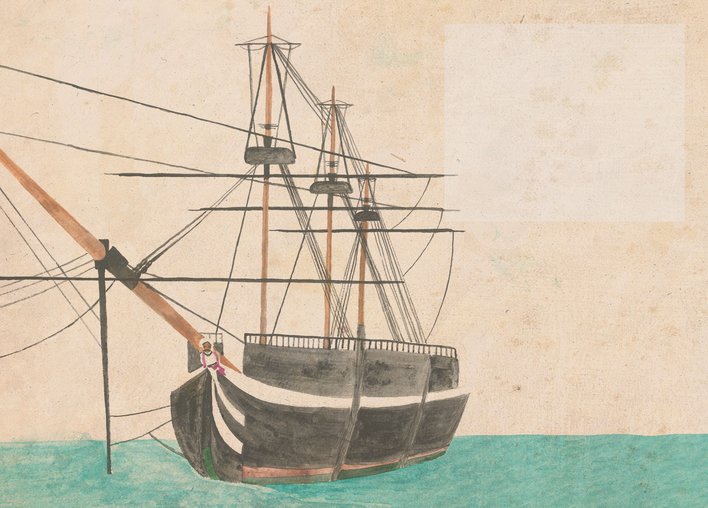
Agashi and Bassein, ports that lay just north of Bombay, were famous for their timber. Great ships that crossed the oceans were built here between the years 1550 and 1600.
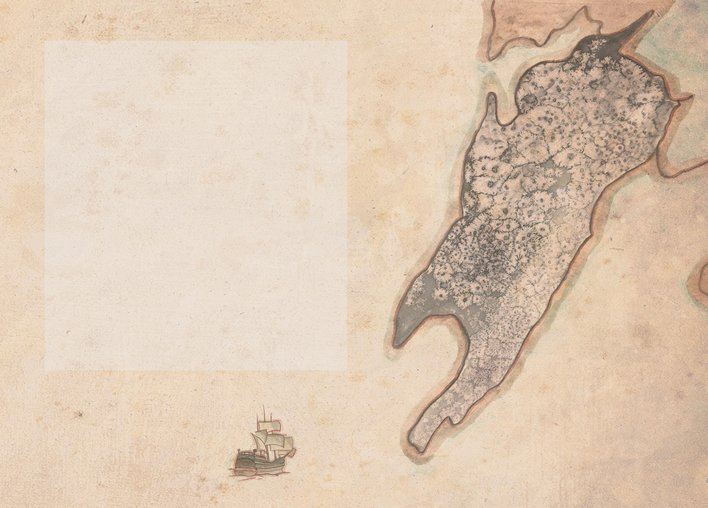
The Mazagon and Bombay dockyards came in the 1600s. Many historic ships that fought in naval battles were built here. HMS Trincomallee is one of the oldest warships afloat today. It is in a museum in England. The Treaty of Nanking, which ended the Opium Wars with China in 1842, was signed on the HMS Cornwallis, a 74-gun frigate built in Bombay.
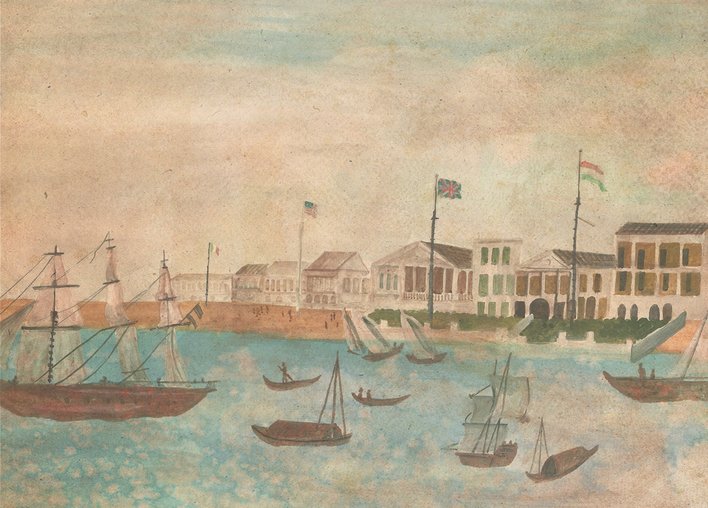
Ships from all over the world docked at Bombay. They shared the seas with boats from the little fishing villages.
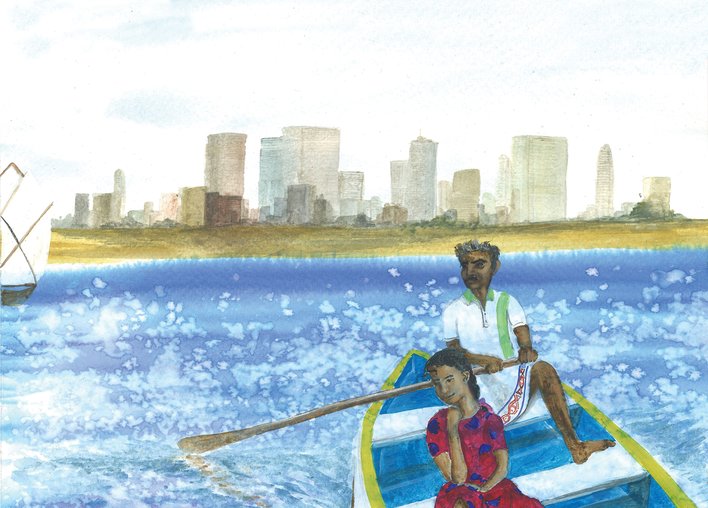
Vandana feels proud that she belongs to a community that has always lived and worked by the sea and shaped the city’s docks. She’s happy that her life is linked to the shimmering sea.
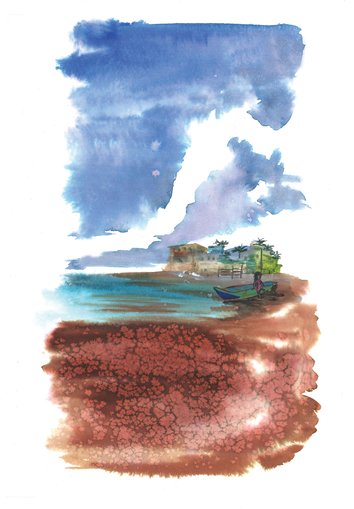
For over 500 years the Kolis have lived and worked around Mumbai’s coastal waters. They fish and man boats.
Docks are places where boats are anchored, but the docks in this story are also places where ships were built.
Between 1550 and 1600 great ocean voyaging ships were manufactured at Agashi and Bassein. The carpenters of two villages in Bassein, Small Carpentry and Big Carpentry, worked in the Bombay Dockyard till very recently.
The earliest dockyard was commissioned by Governor Aungier in 1671. Ship repairs began at Mazagon Dock in 1673 and shipbuilding officially dates back to 1774.