Barefoot Kanu Dadu
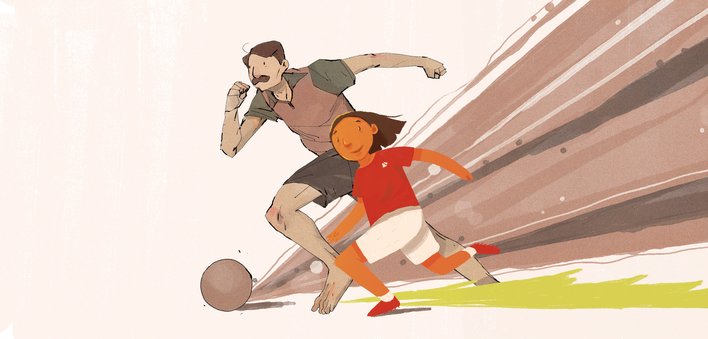
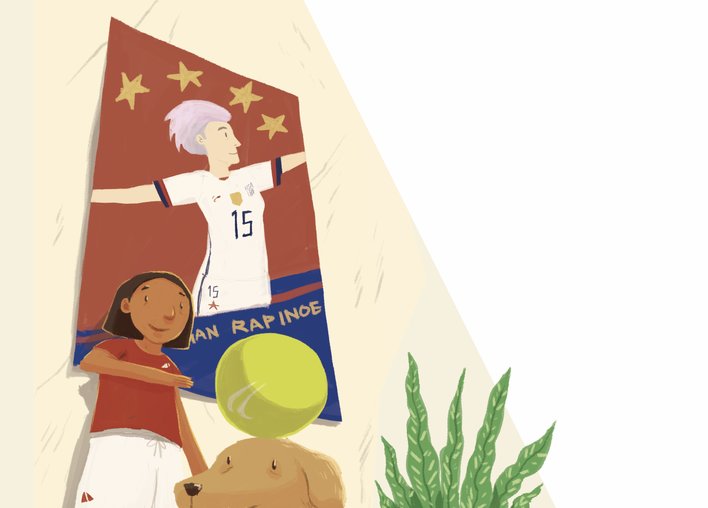
I am Chinar and I am eight years old. I hate addition and subtraction. I love dogs and comic books. Most of all, I love to play football.
“I am going to be like the great Megan Rapinoe. I am going to win the World Cup,” I tell Ma and my brother Spandan.
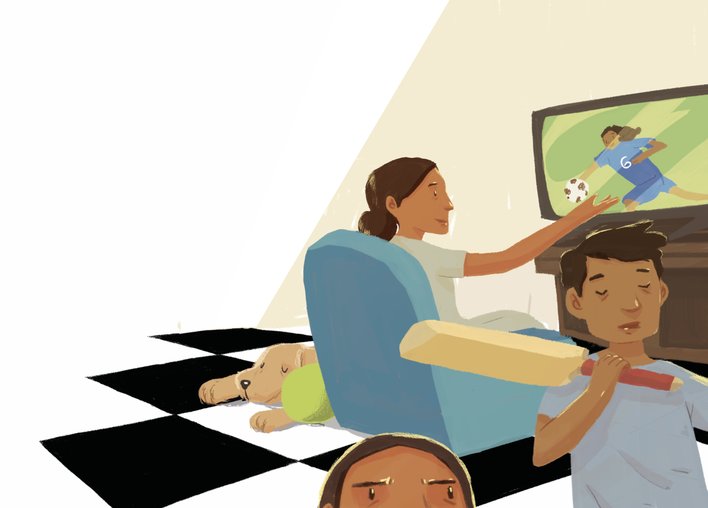
“My favourite is Bembem Devi,” Ma says. “Huh! No one is better than Sunil Chhetri,” my brother Spandan says. But what does he know about football? He plays only cricket.
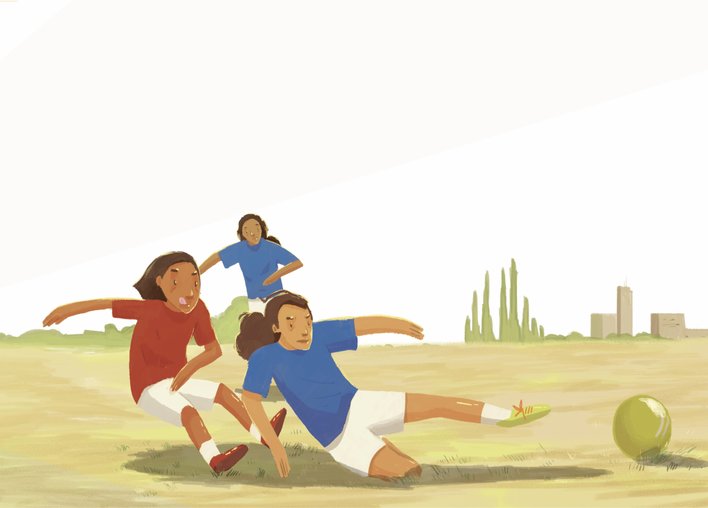
Ma takes me to Cross Maidan every Saturday evening. My four best friends, Insiya, Kandy, Ramanpreet and Seema, also come. We play football for two hours.
Today, Insiya is wearing sparkling new football shoes. They are light green with orange laces.
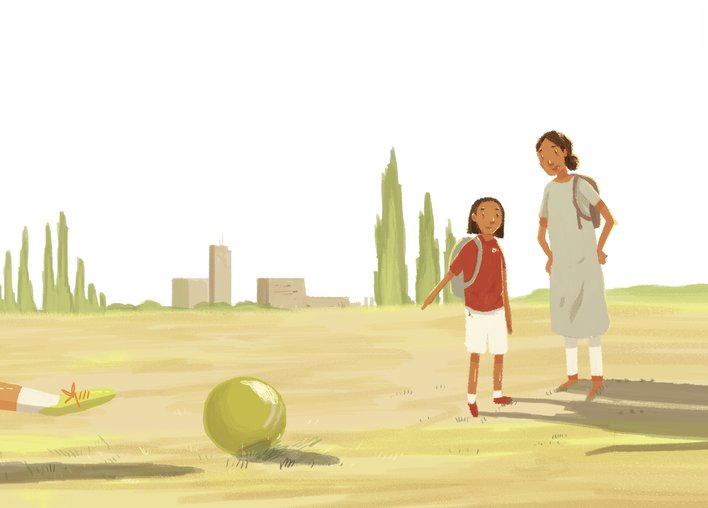
“I want new shoes like that,” I tell Ma at night. “You already have good shoes,” Ma replies. “Have I ever told you about my grand-uncle, Kanu dadu?” “No. Who is he?” I ask.
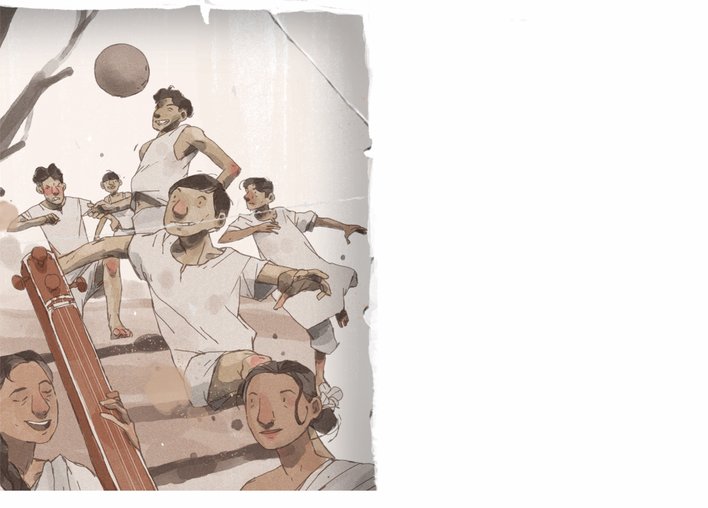
Kanu dadu had five brothers and two sisters. All six brothers, Shuren, Manu, Kanu, Khoka, Shailen and Moni, loved playing football. The sisters, Soudamini and Suhashini, loved music.
Kanu dadu was good at his studies but all he wanted to do was play football. His parents didn’t have much money and were always worried about him.
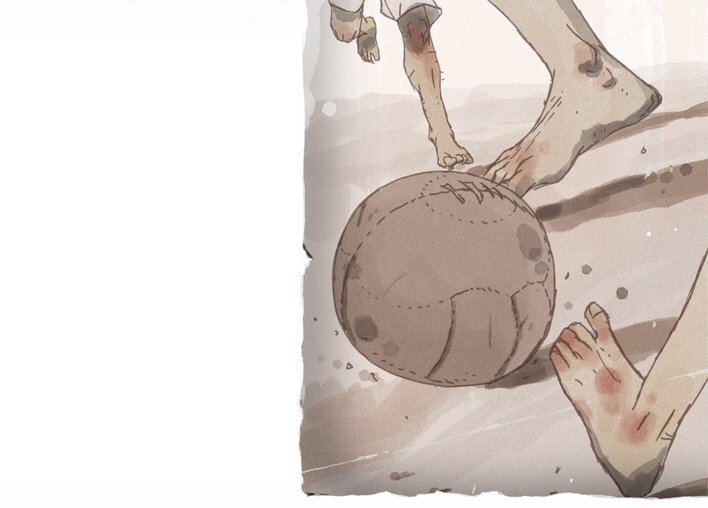
Kanu dadu and his friends began the Wari Football Club at his house—5, Ware Street, Wari Para, in Dhaka. It became one of Dhaka’s first football clubs.
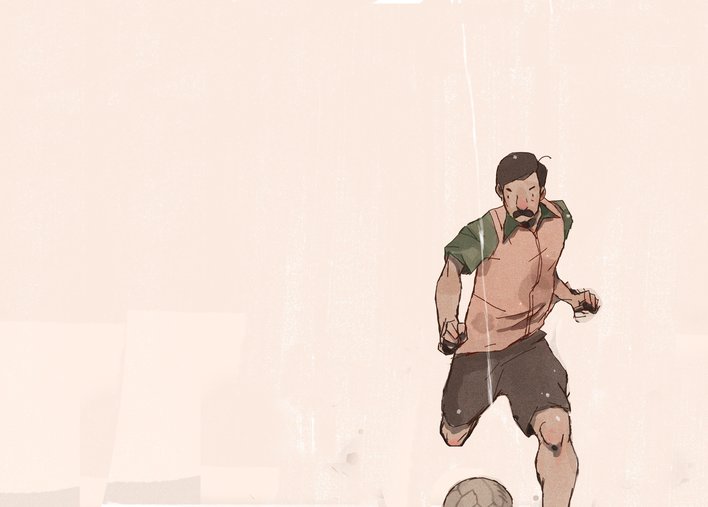
None of Kanu dadu’s friends had proper shoes. They all played barefoot.
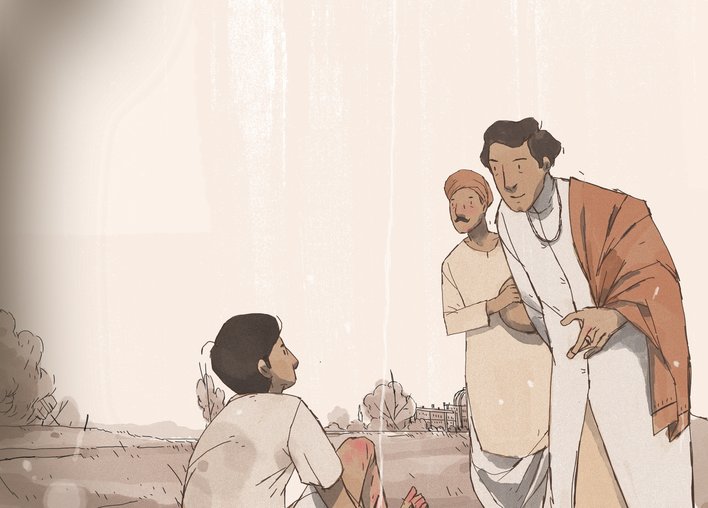
“Didn’t they hurt their feet kicking that hard football?” I ask.
“Yes, they often broke their toes. Kanu dadu’s mother kept a bowl of turmeric and lime paste in the corner of her kitchen. They put that on their toes for relief from the pain,” Ma tells me. One day the Maharaja of Cooch Behar saw Kanu dadu play a match. He promised to give him Rs 25 every month for his studies. In those days, Rs 25 was a lot of money.
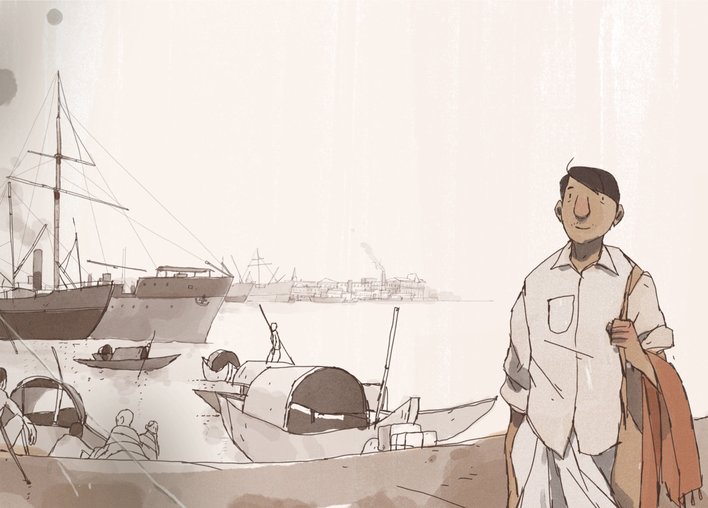
So Kanu dadu went to Calcutta in 1909 to study at Presidency College. It was there that he joined the great football club of Calcutta—Mohun Bagan.
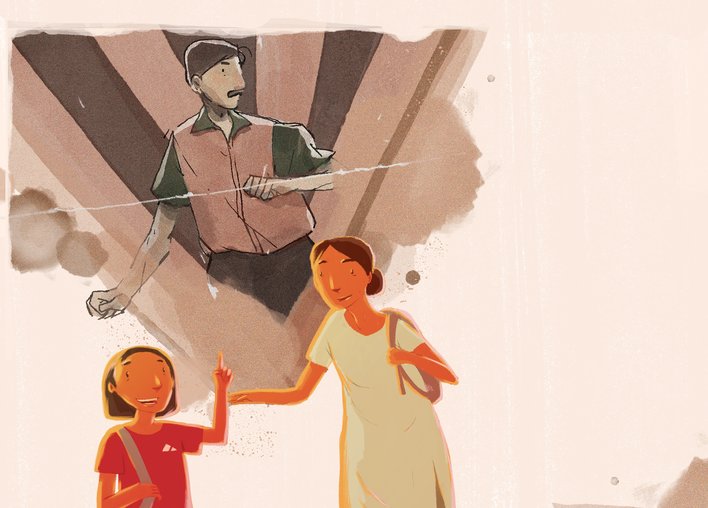
“I know Mohun Bagan! They wear maroon-and-green jerseys,” I say.
Kanu dadu played for Mohun Bagan for many years. He continued to play barefoot.
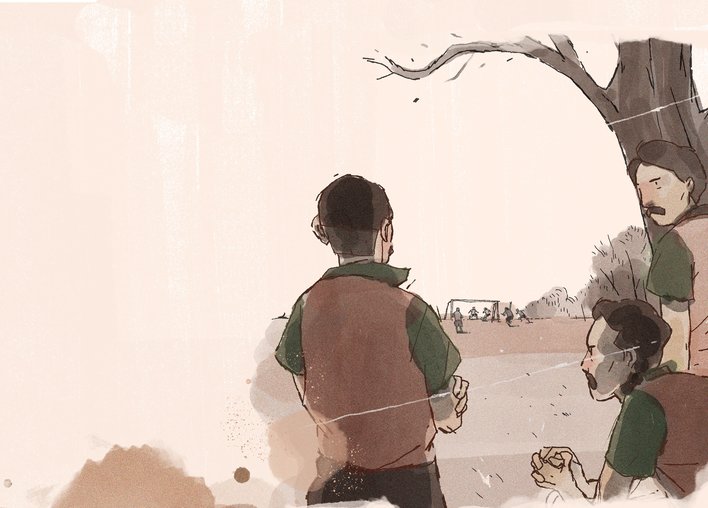
It was 1911. The British ruled India. Till then the Indian Football Association Shield was a tournament only for British regimental teams. Kanu dadu and his Mohun Bagan teammates were going to change that.
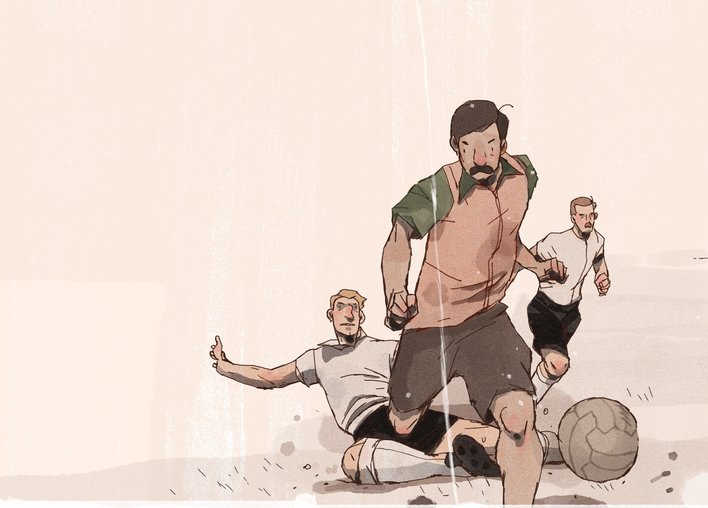
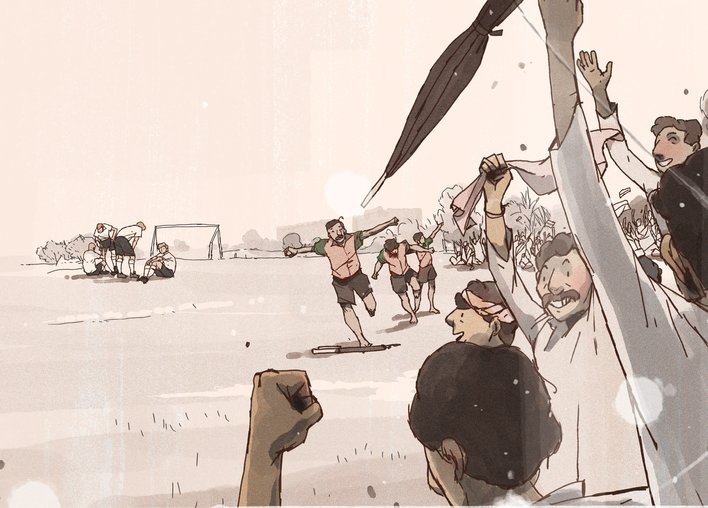
They played in the famous IFA Shield final against the East Yorkshire Regiment team. The British were beaten 2–1. By eleven Indian men, ten of them barefoot. The Reverend Sudhir Chatterjee was the only Mohun Bagan player who wore football boots. Kanu dadu was just 21 years old.
“They must have been so happy,” I say.
The whole stadium erupted with joy. There must have been 80,000 people cheering wildly. They threw umbrellas, pens, sticks, hats and mats into the air.
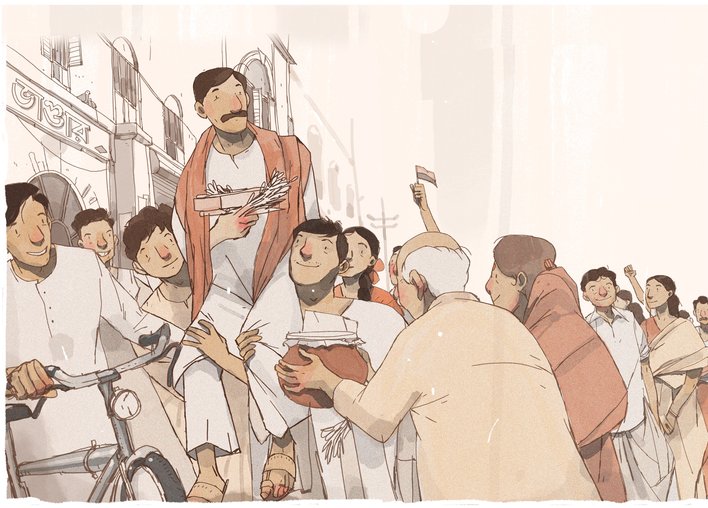
After the famous victory, Kanu dadu got a lot of love from everyone. The bus conductors did not charge him a fare, a sweet shop gave him free sweets. The big bicycle factory, Sen-Raleigh, gifted him a cycle.
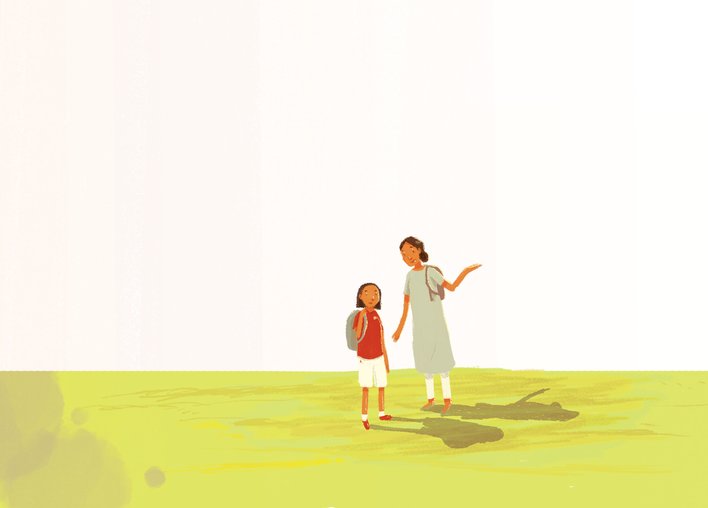
“I would have given him a pair of good shoes,” I tell Ma. “He did get good shoes then. But Kanu dadu still preferred to play barefoot,” Ma smiles.
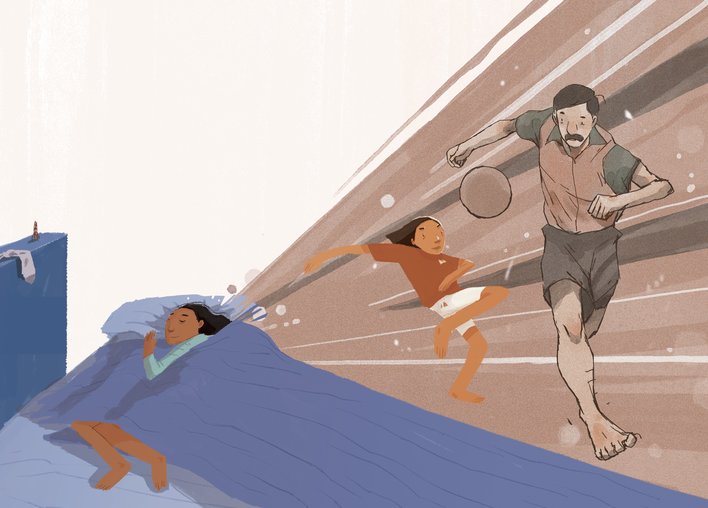
“Should I play barefoot, too?” I wonder, sleepily. But before Ma can say anything I fall asleep, and dream about scoring goals.
Author’s Note
Jitendranath (Kanu) Roy was my grandfather’s older brother. He played for Mohun Bagan football club from 1911-1917. The IFA Shield is one of the oldest football competitions, and was dominated by British army teams till Mohun Bagan beat the East Yorkshire Regiment on July 29, 1911. With the Indian freedom struggle gaining momentum, Mohun Bagan’s victory was a crushing blow to the British. Even today, July 29 is celebrated as Mohun Bagan Day.