Around You: States of Matter
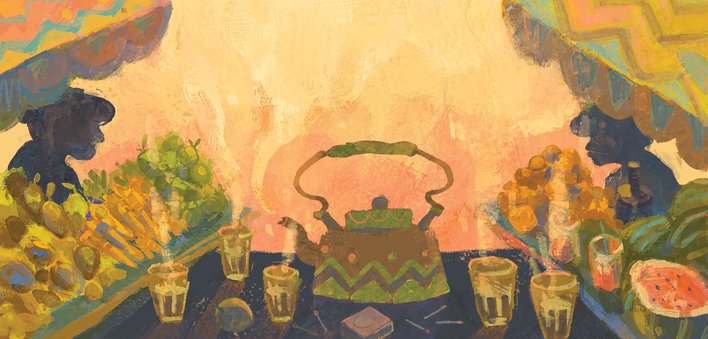

In the market you can spot fresh orange carrots, shiny purple brinjals, glasses of delicious watermelon juice.
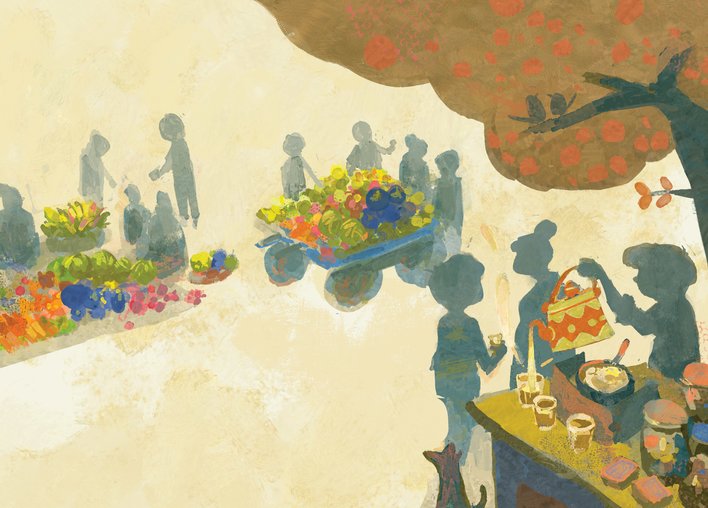
You can also see steam rising from cups of hot chai at the tea stall.
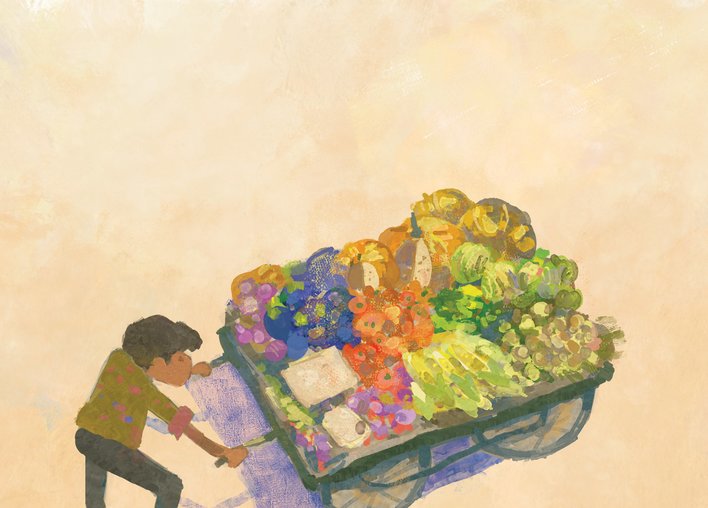
So many delicious things, and all of them so different. Some things look small, some look big, some are heavy and some light. Some feel too ripe and some unripe.

Do they have anything in common? Yes, they all take up space and have weight. Even the air we breathe. Anything that occupies space and has weight is called matter. Almost everything around us is matter.

Matter can be found in three states — solid, liquid and gas. Carrots, brinjals, the glass and the cup are solids. They have a definite shape and take up a fixed amount of space.

The watermelon juice in the glass and the chai in the cup are both liquids. They do not have a definite shape. They take the shape of the glass and the cup. They can be poured. They flow. But they also take up a fixed amount of space.

The air we breathe is a gas. Gases have no definite shape and do not take up a fixed amount of space. Unlike a liquid, air can be squeezed into a tiny space or expand to fill a large space.

All matter is made up of tiny particles. In a solid, these particles are packed very tightly together, which gives a carrot or a cup its fixed shape and size.
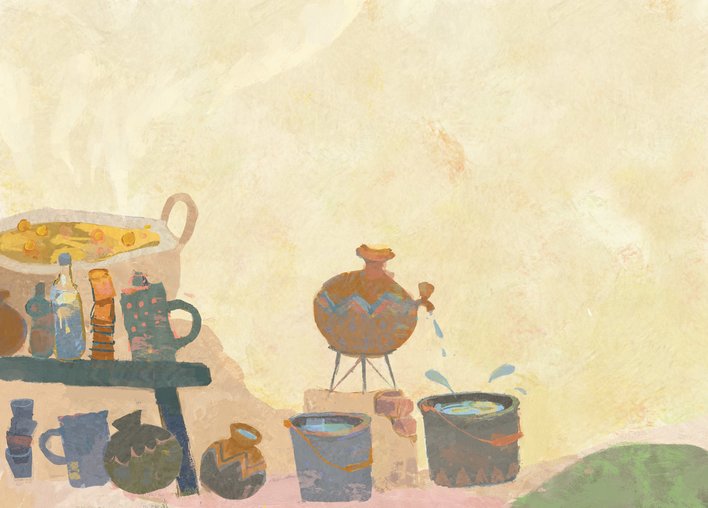
In a liquid, the particles are packed loosely and can move about easily. That is what allows water, oil, juice and chai to flow smoothly and not have a definite shape.

In a gas, the particles move about even more freely. They can be squeezed into a small space or spread out in a large space. This is why gases do not have a fixed shape or size.
STATES OF MATTER
Most objects are solids, liquids or gases. However, they can change their state from one to the other when there is a change in the surroundings. Water, which is usually a liquid, behaves like a solid when it is put inside a freezer. There are also objects which cannot be strictly called either a solid, liquid or gas. Solids usually have fixed shape and liquids do not. However, a piece of sponge seems to have a fixed shape like most solids do but it can change shape very easily.