All About Beaks
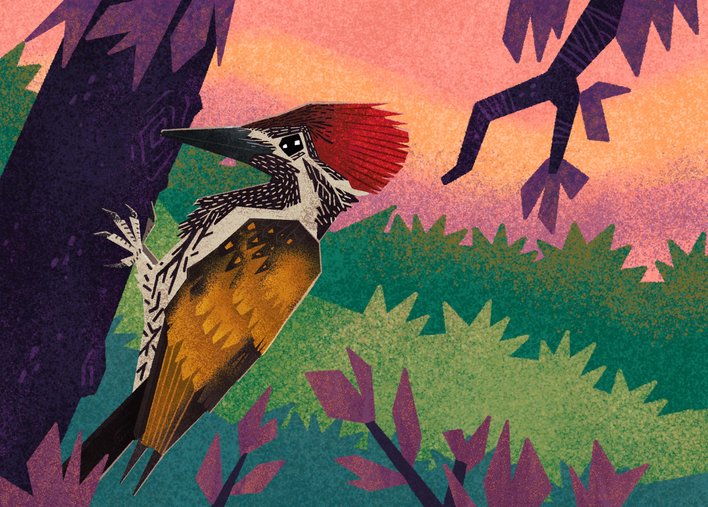
Drilling beak
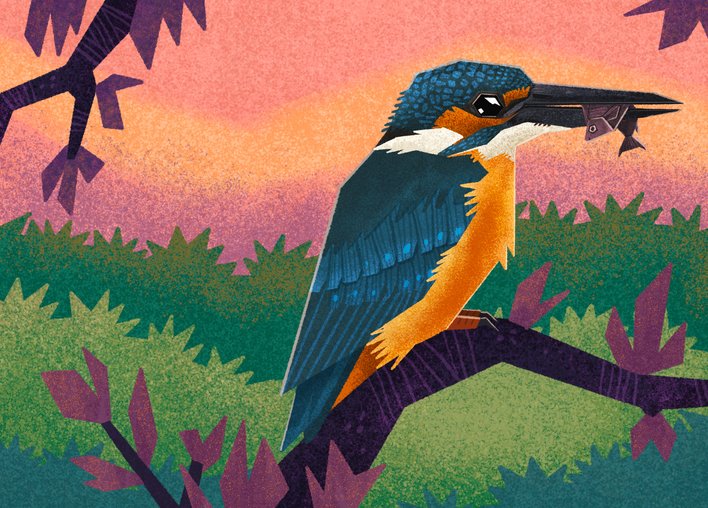
Fishing beak
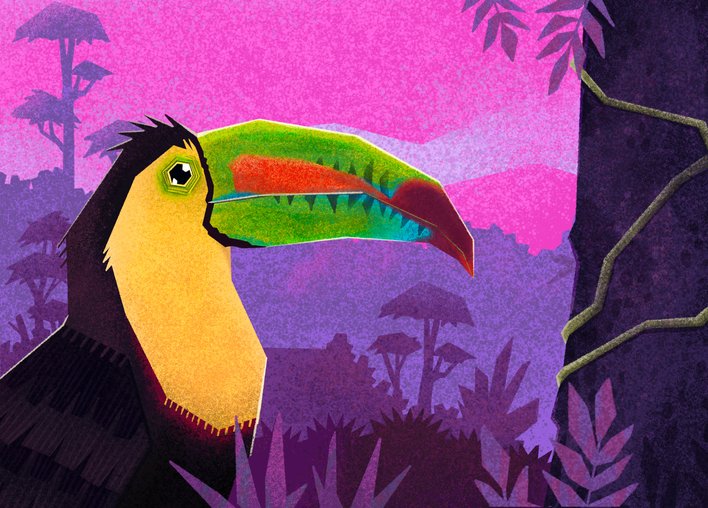
Colourful beak
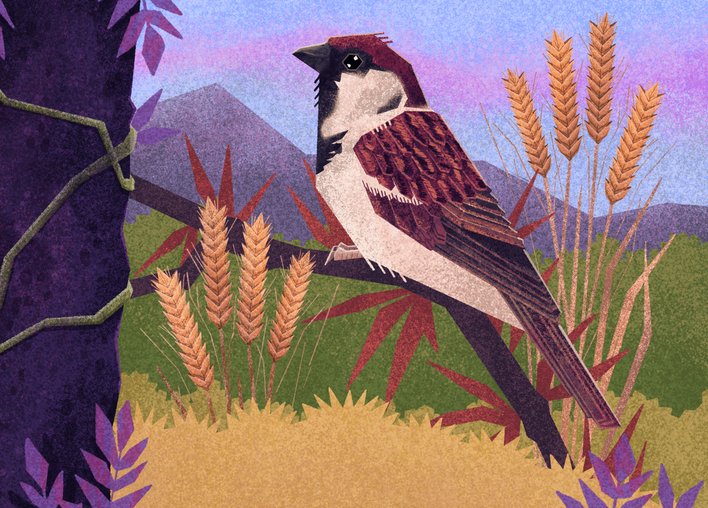
Grain-crushing beak
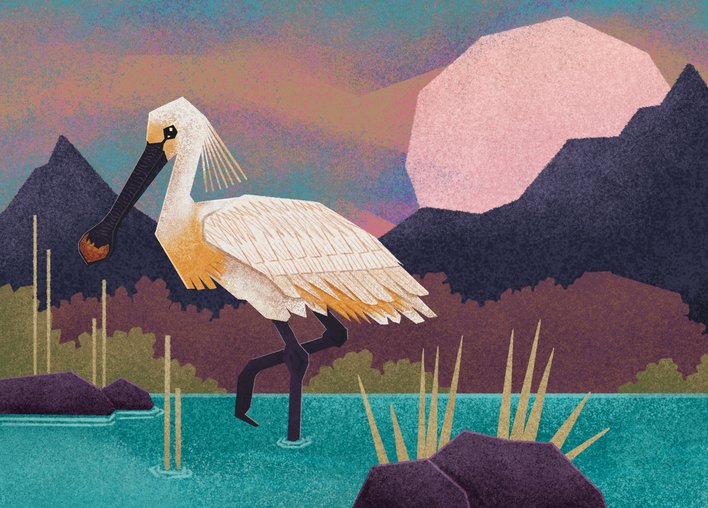
Spoon beak
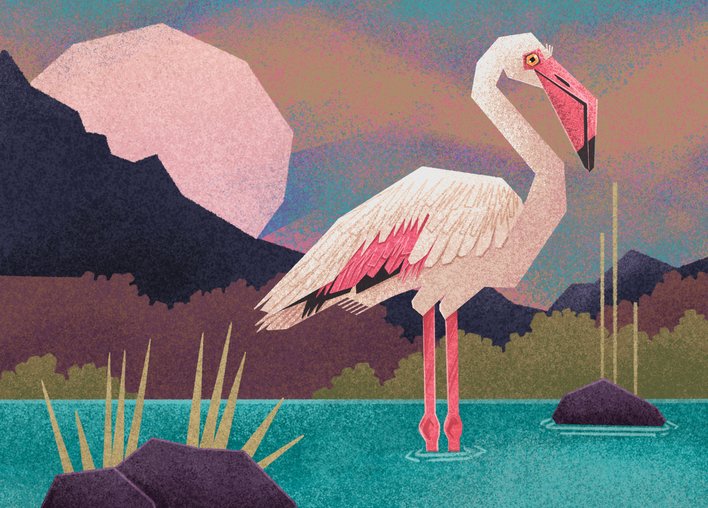
Filter beak
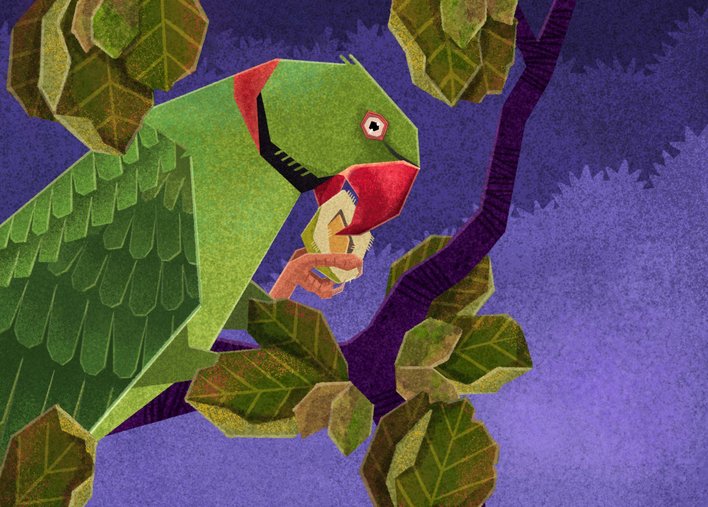
Nutcracker beak
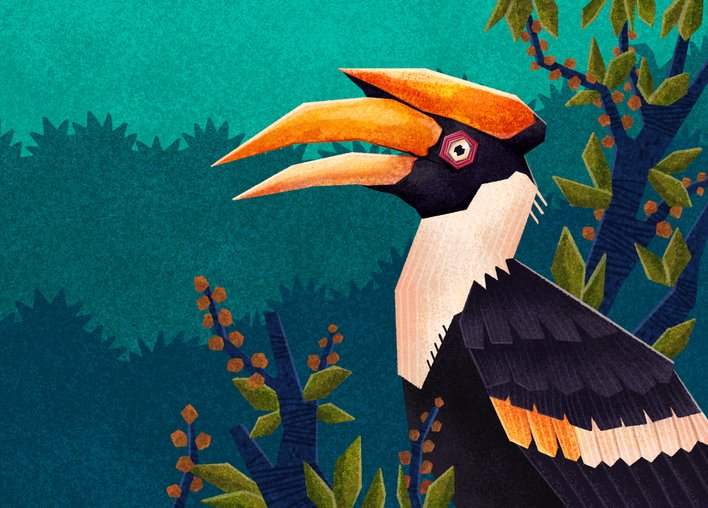
Sound-amplifier beak
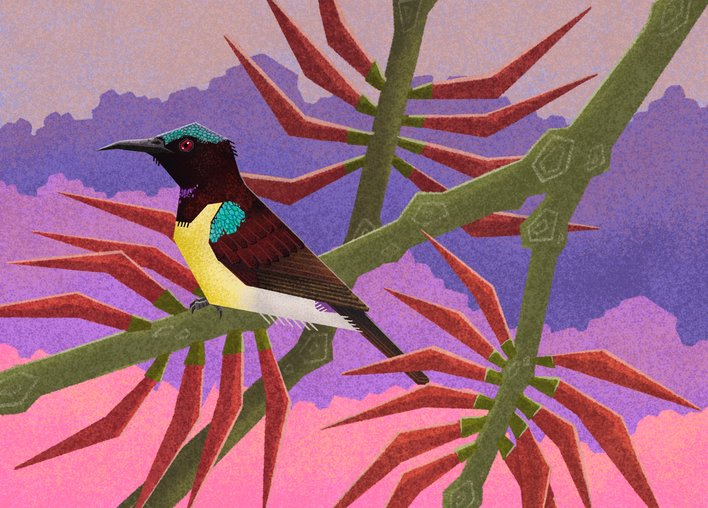
Needle beak
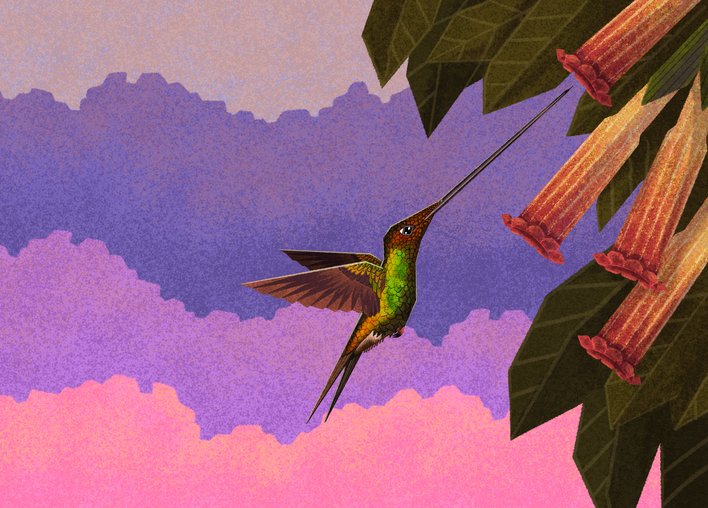
Sword beak
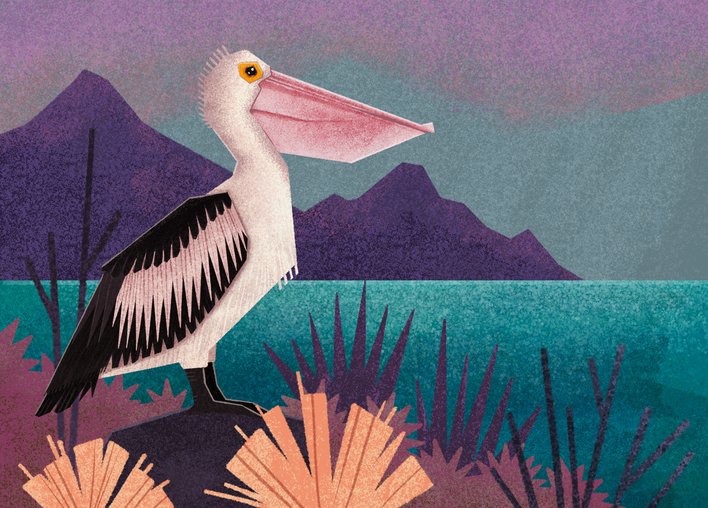
Pouch beak
Storage beak
More About Beaks
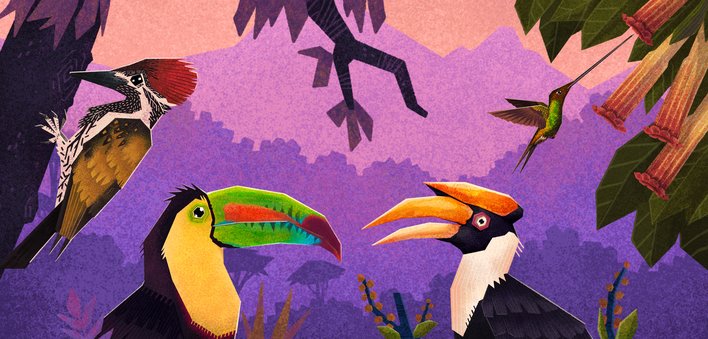
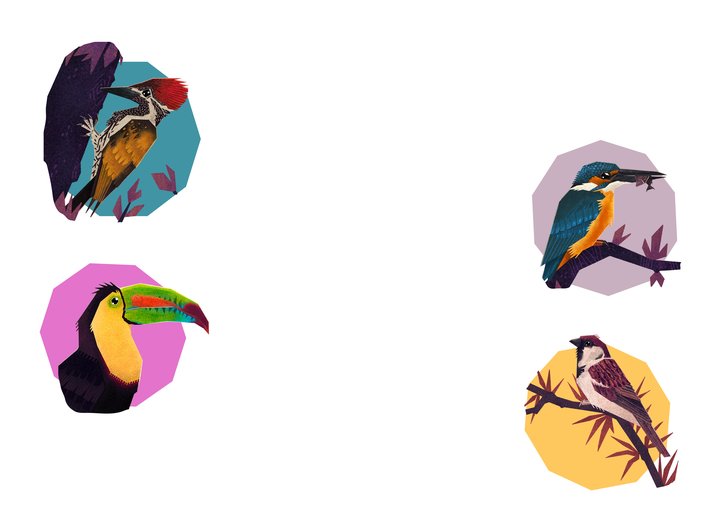
Woodpeckers have strong, sharp beaks.
With these beaks they drill holes in trees to make nests, and also to find insects to eat.
Kingfishers have long, pointed beaks, which do not disturb the water surface when they dive in to catch fish.
Toucans use their colourful beaks to show off their beauty as well as for self-defence.
Sparrows’ cone-shaped beaks are stubby but sharp. They are capable of crushing seeds in a very strong grip.
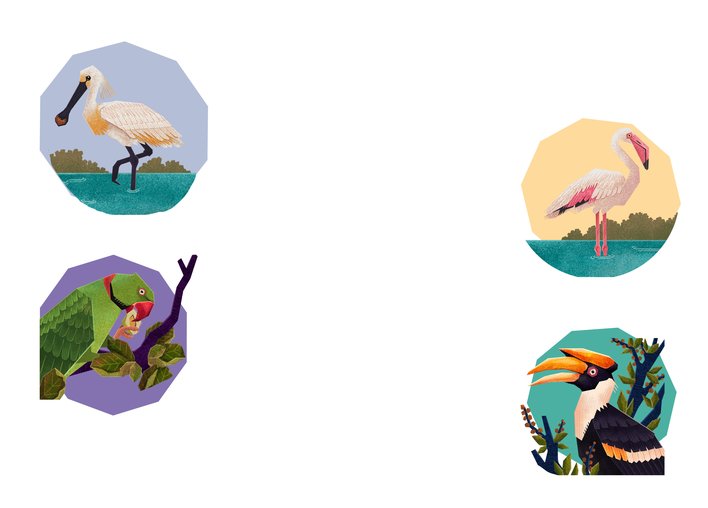
Spoonbills use their long, flat, rounded beaks to search for fish, amphibians and crabs along the bottom of muddy water.
Flamingos’ bent beaks help them filter out very small plankton, tiny fish and fly larvae from shallow, muddy water.
Parrots use their hook-like beaks for cracking open hard nuts.
Hornbills have unique helmet-like structures on their beaks which help their call travel farther by making the sound boom louder.
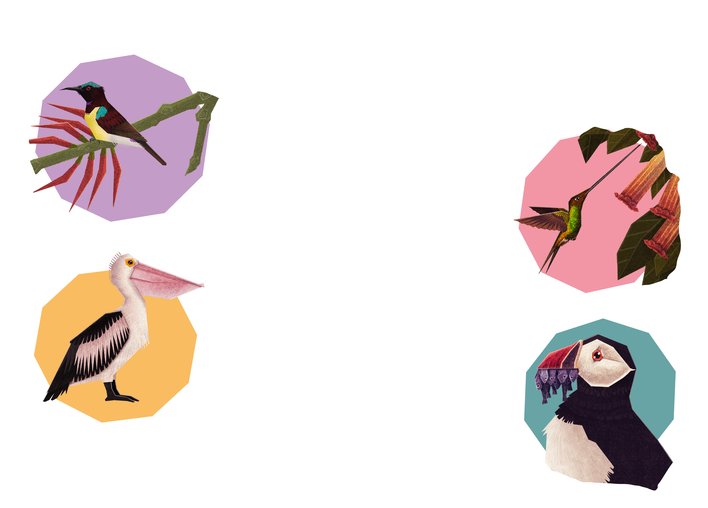
Sunbirds have long, curved beaks that point downward. They use their beaks to reach nectar, small spiders and insects deep inside flowers.
Hummingbirds have very long, thin beaks with which they probe deep into flowers for nectar.
Pelicans scoop up fish in their beak pouches. The water drains out, and the fish are swallowed.
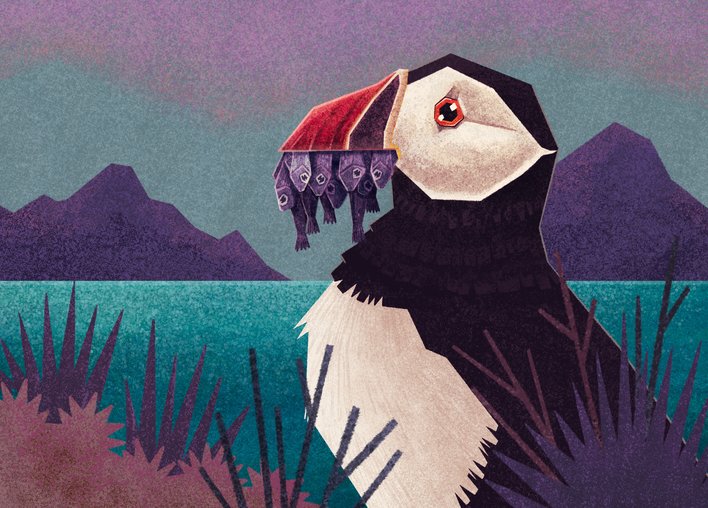
Puffins can catch and carry a bunch of fish at a time in their beaks.