Ajay of Agumbe and the Signal Snake
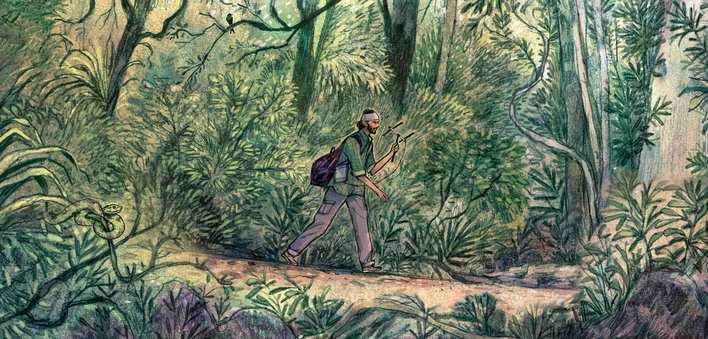
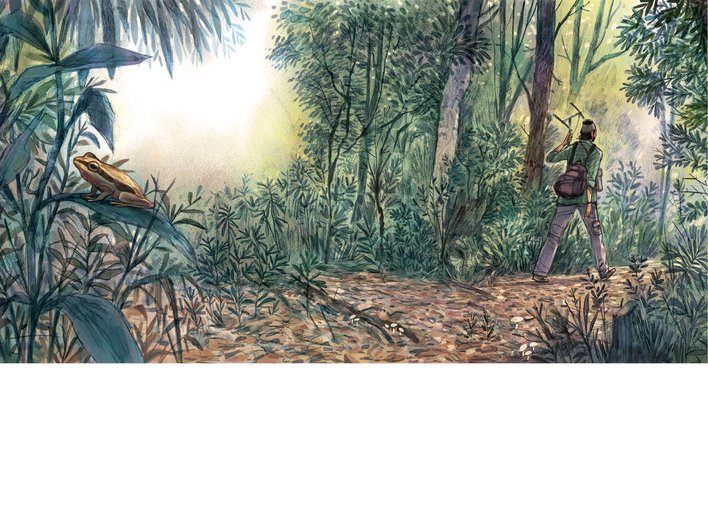
Ajay of Agumbe is off to find His study snake, of the king cobra kind. Using an antenna that is easy to spot, And a radio that, strangely, is not!
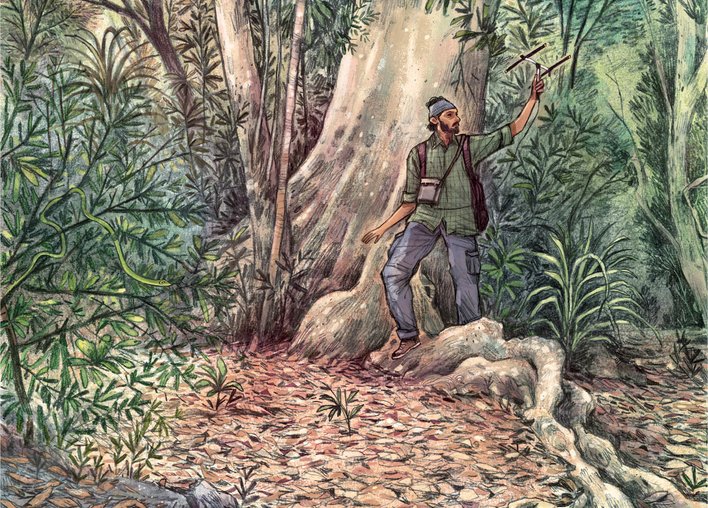
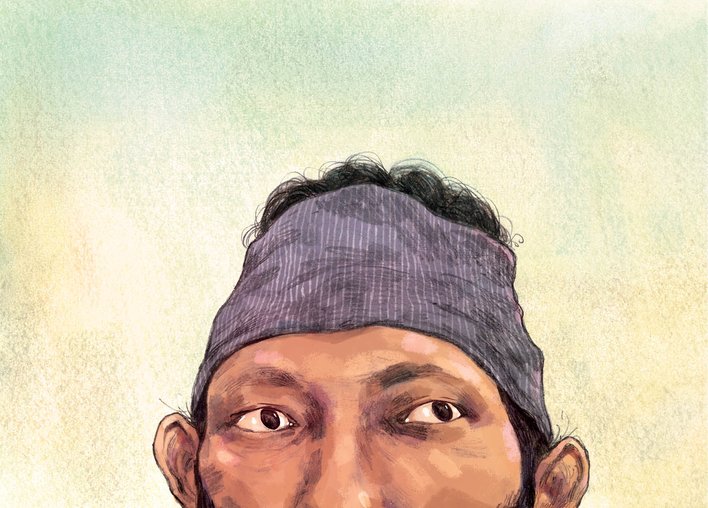
On high alert, his senses find Forest treats of every kind. A task that is really so much fun, And never quite done!
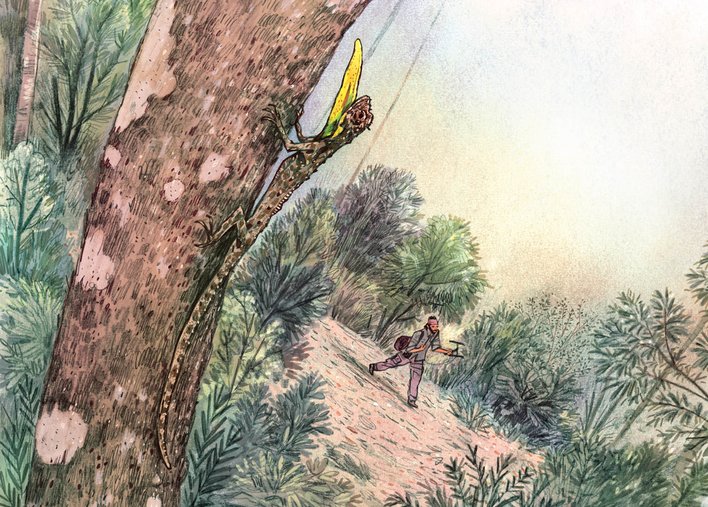
His sharp eyes spot the dewlap bright, Of a draco in golden light.
Then he smells a purple blossom, Its airy perfume truly awesome.
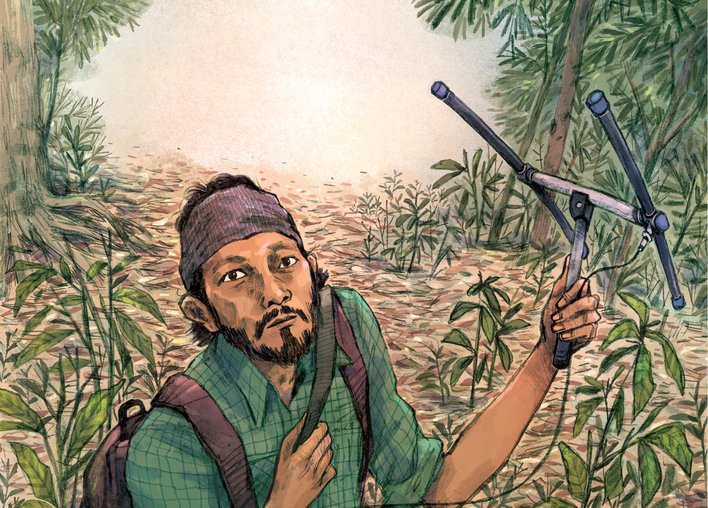
His hearing catches the whistling thrush, Singing in the forest lush.
His hands drum a tune. He’s heard the beep…
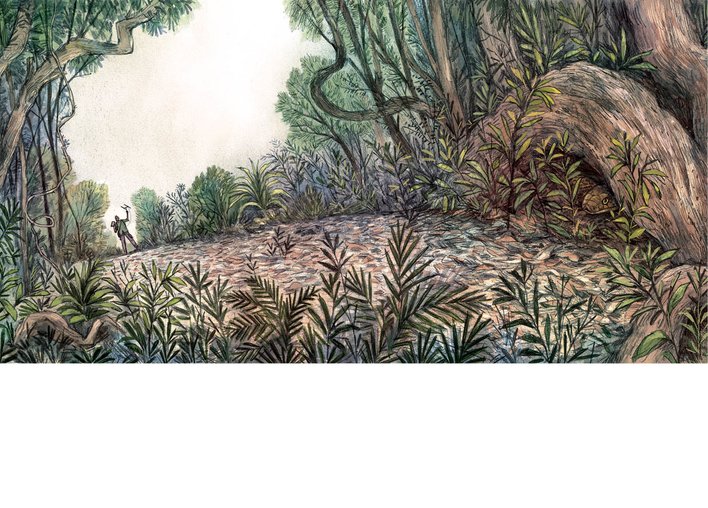
Of the Signal Snake, who’s still asleep.
Fast asleep, but looks awake, Her eyes wide open, after all she’s a snake!
Seeing this is always so much fun.
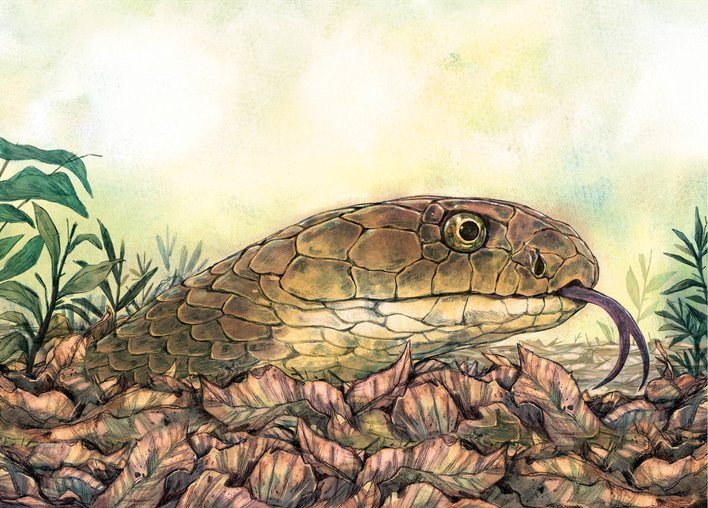
For now, the sleeping is done.
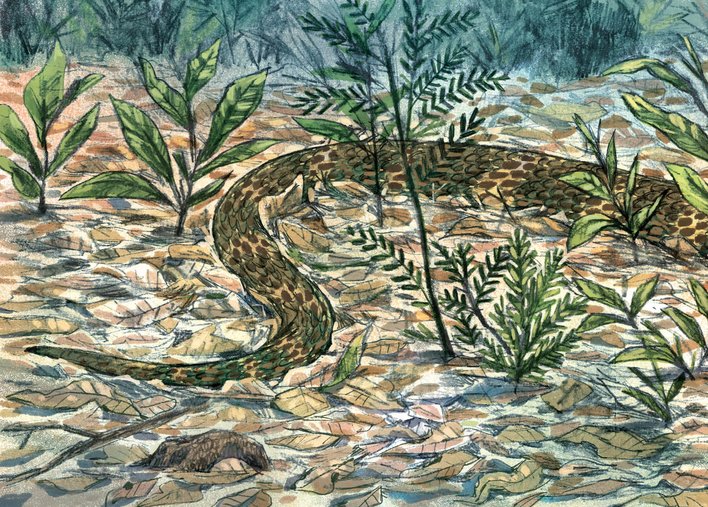
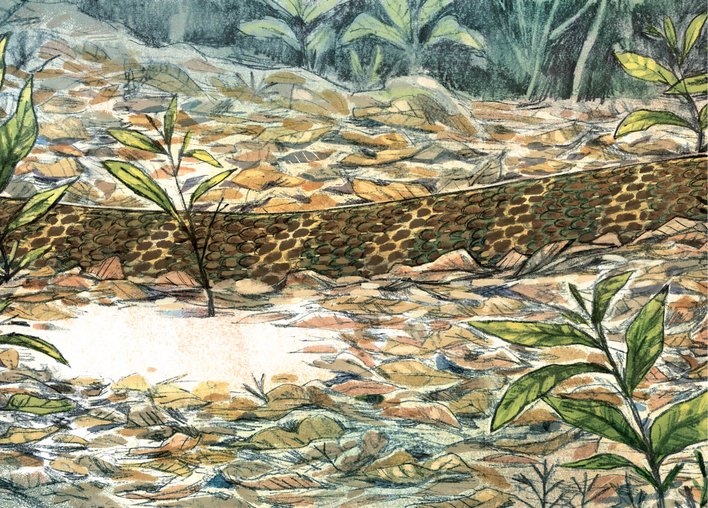
Now awake, the king cobra knows
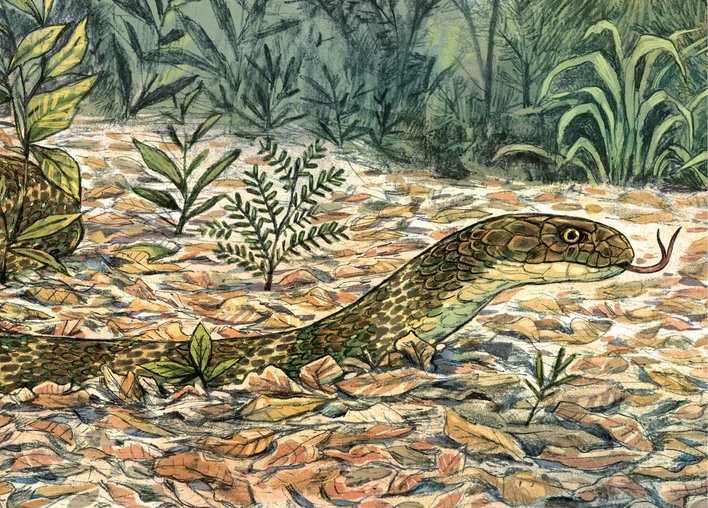
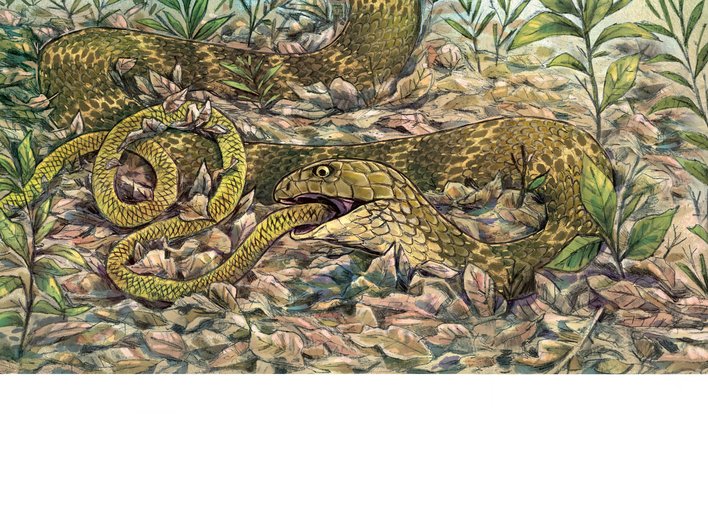
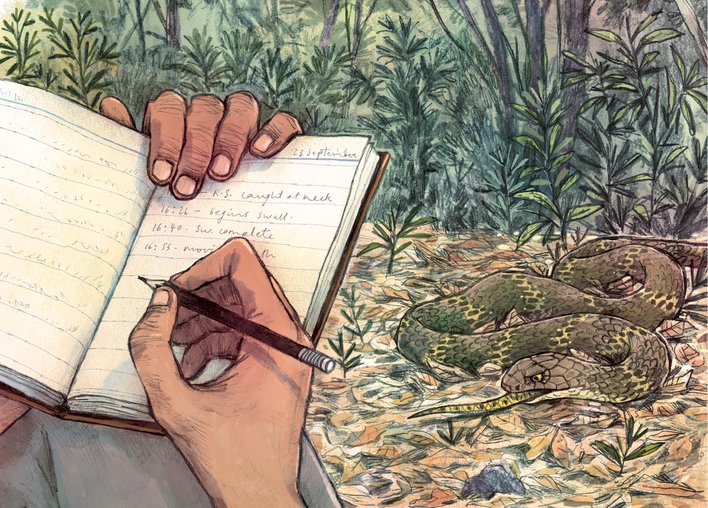
Her scientist friend is pretty close. Her tongue smells a delicious deal, A young rat snake, a first-class meal. She catches and swallows her favourite feed, While Ajay closely watches the deed.
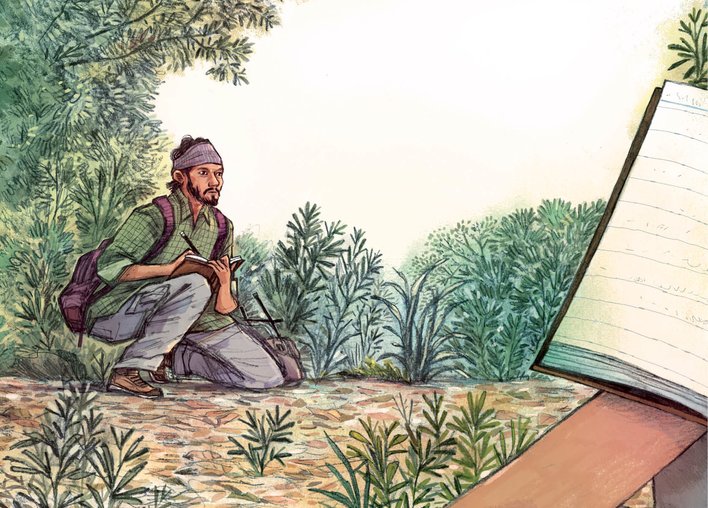
He writes it all down in his waterproof book— Every movement, every twitch, every look.
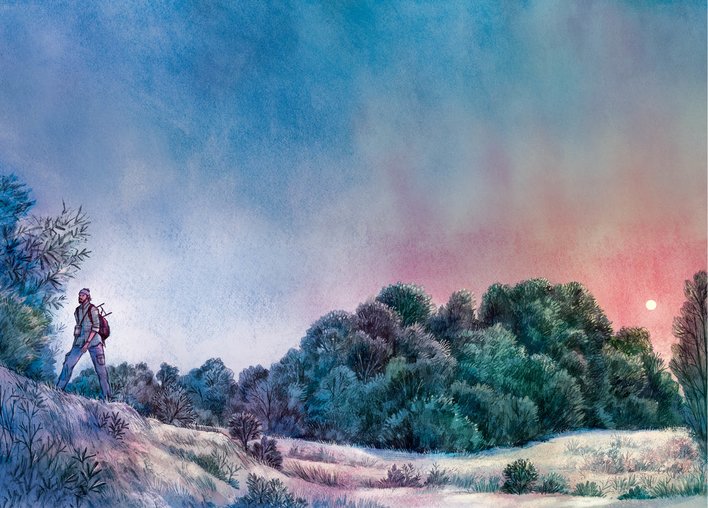
As the sun goes down in an orange splash, Ajay packs up, he’ll have to dash… Because night drizzles slowly from the sky, Time to leave, to say goodbye.
Ajay walks quickly back to camp, Tired, happy, cold and damp.
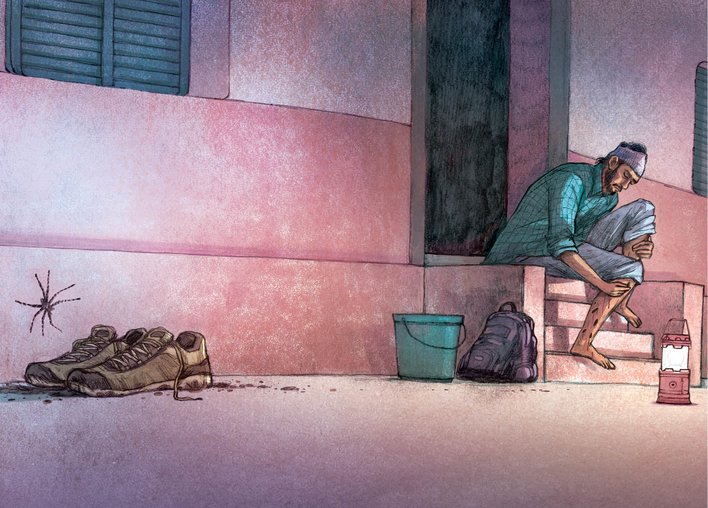
The next task is not so much fun! But it simply has to be done: Pick off leeches Feeding on him, In the solar light that’s pretty dim.
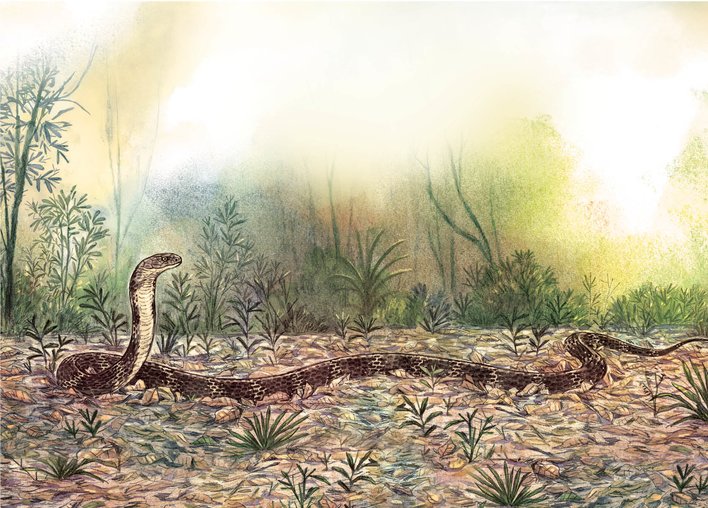
So where was the radio, all this time? This is a riddle, yours and mine. Let’s read it again and think it through, I’m sure we’ll succeed, me and you.
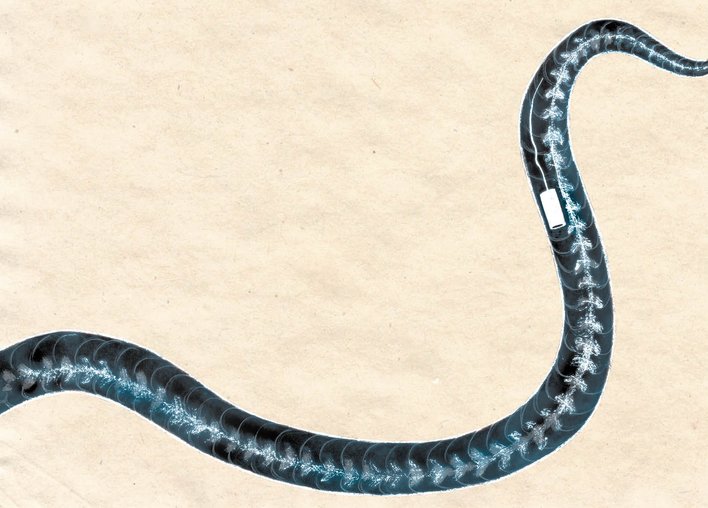
Where is the radio?
Telemetry is a wonderful way to study snakes (and other secretive animals).
Ajay Giri uses telemetry to study king cobras in Agumbe, located in the forests of the Western Ghats.
A veterinarian places a small radio, or transmitter, in the snake’s coelomic cavity. This part of its body has no major organs, so it is a safe area with space for implanting the transmitter.
The transmitter sends out information about the snake. A receiver, with a sensitive antenna, tracks it, picking up the signal even half a kilometre away!
This snake is an important species for the environment, being a top-predator that feeds on other snakes. It’s also an important species for humans, because one of its major prey species is the cobra, which causes many snakebite injuries and deaths.
With telemetry, Ajay is finding out interesting things about the life of the largest venomous snake in the world:
He knows whether the snake is alive. Sometimes, the beeps stop and we think the snake is dead, but it may simply be in a burrow: a cool, quiet place in which to shed its skin (a process known as ecdysis) or digest a heavy meal.
·
The snake’s BPM (heartbeats per minute) from which we can calculate its body temperature.
·
·
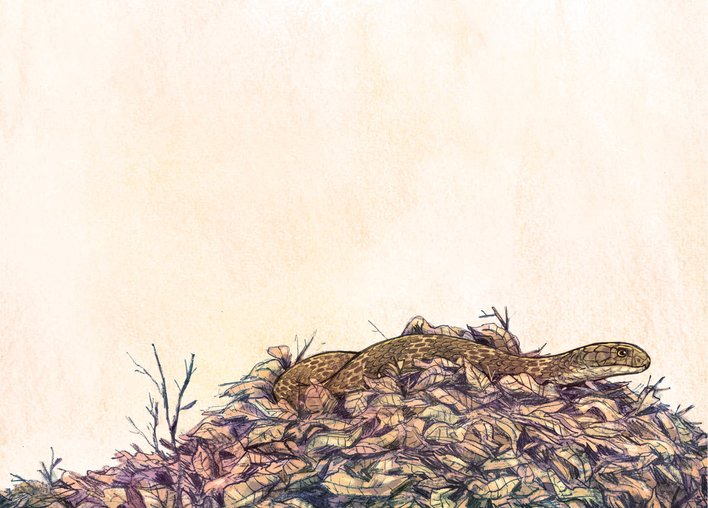
Once, he watched a king cobra as she swept up leaves with her body. In a couple of weeks, she built up a mound nest in which she laid her eggs. Of the 3,000 species of snakes in the world, this is the only one that builds a nest!
Meet Ajay Giri
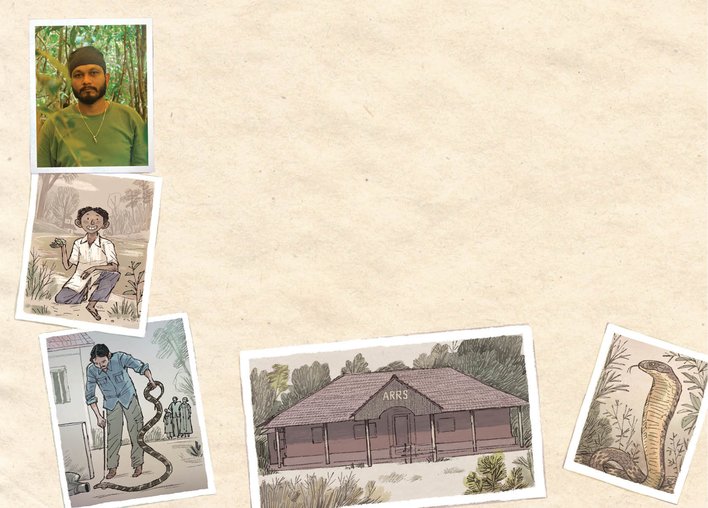
Ajay grew up in Akola, Maharashtra, and now lives in Agumbe in Karnataka. As a child, he loved watching wildlife, especially snakes and fish. Later, he began rescuing snakes from people’s houses. His mother realised that he was playing an important role in the community. “You can do this,” she said, “but please be careful. Don’t do anything foolish.”
Ajay takes her advice seriously. He doesn’t do anything foolish. He doesn’t show off, or play with snakes to impress people. The rescued snake, often a huge king cobra, is released close by, so it can remain in its own familiar habitat and continue its life comfortably. If released far away from its home, a snake may not be able to survive.
Ajay is Field Director of the Agumbe Rainforest Research Station, which was started by herpetologist Romulus Whitaker. It is run by the Madras Crocodile Bank Trust.