A Tree's Heart
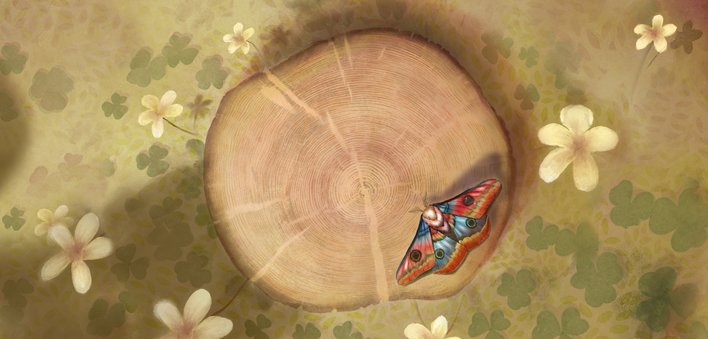
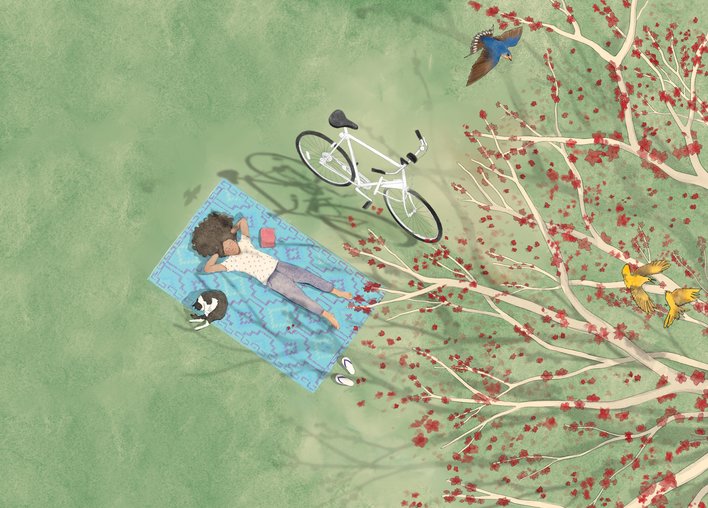
To those who stop to look, trees tell stories. Touch the trunk, listen to the rustling leaves, and lie down under the tree to watch the branches sway. There are stories hidden everywhere —
In the fold of a leaf. In the soft petal on which a beetle slips. In the fruit that a bird bites into. In the bark where a mantis hides in plain sight.
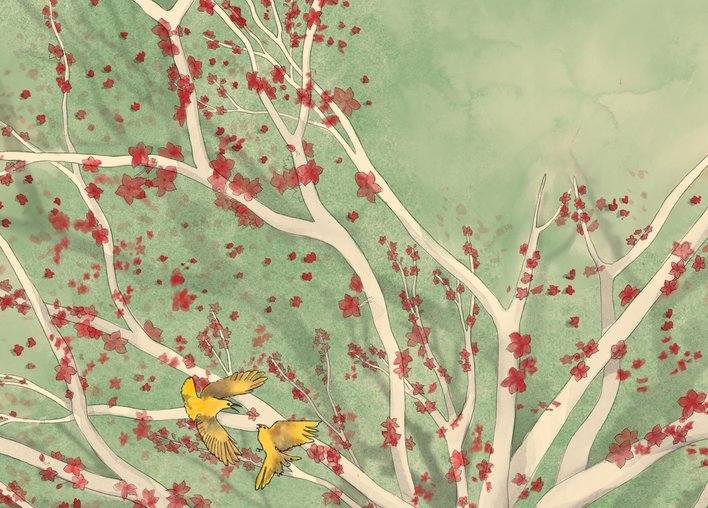
But leaves fall. Flowers turn into fruit. Fruit is eaten. Bark peels away.
What lives on, is the trunk of the tree. And in the centre of the trunk, near the heartwood, is where trees store their memories.
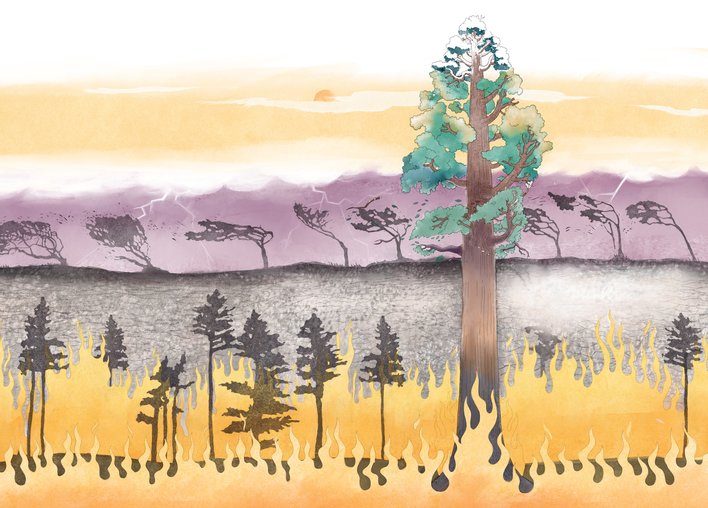
Memories of — A cold winter 36 years ago
A harsh summer 62 years ago
A forest fire 246 years ago
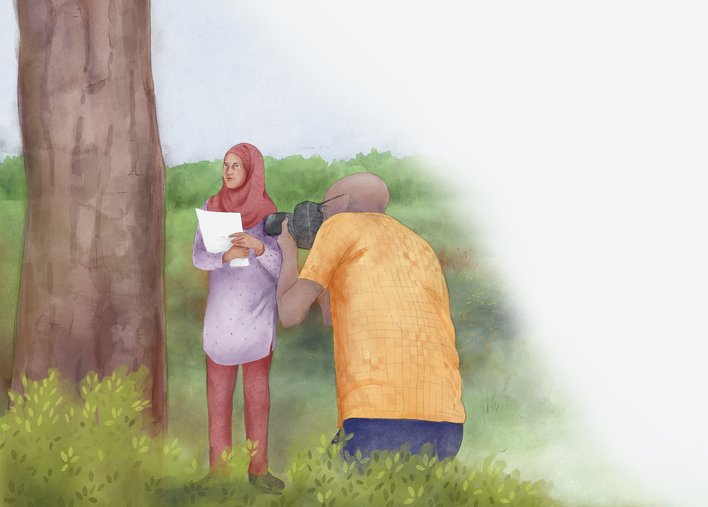
Trees are the original historians. By storing memories around their heartwood, they give us a glimpse of events of the past, to a time before there were human historians.
To understand these stories, it is essential to know the language of trees — a language that scientists have been working to understand.
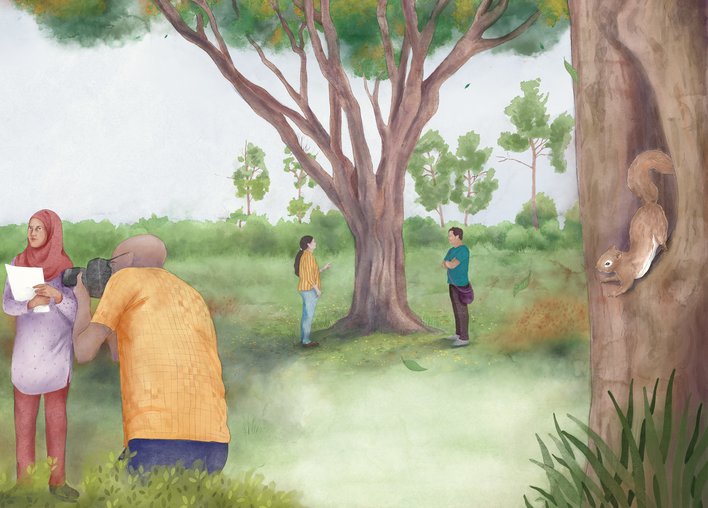
Like all living beings, trees are made up of cells. Plant cells have a short life and grow constantly.
This is why leaves grow and fall and new ones grow in turn. This way, trees continue to grow in height or girth as long as they are alive.
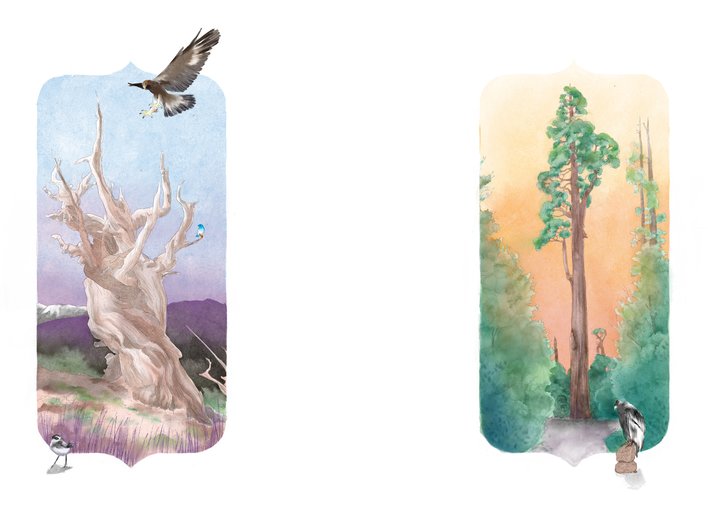
Trees live longer than most other living beings!
ABristlecone Pine tree in the White Mountains, USA, has been growing for about 4,850 years.
An Alerce tree in the Andes Mountains, Chile, is over 3,600 years old.
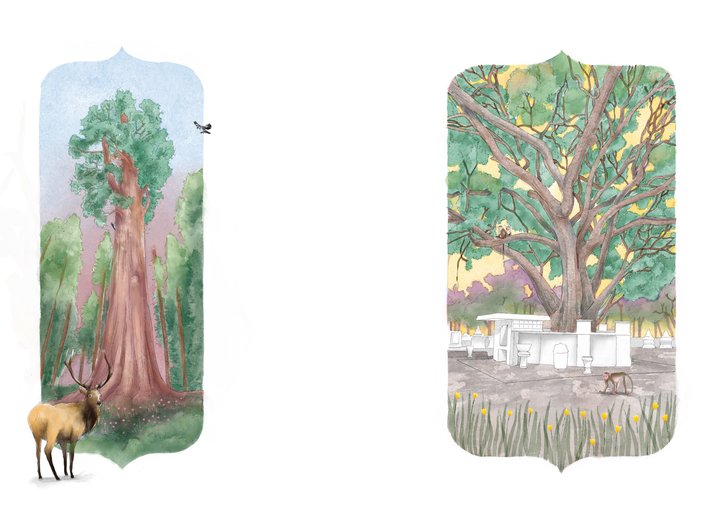
A Giant Sequoia tree in Sequoia National Park, USA, is 2,700 years old.
A Sacred Fig tree in Anuradhapura, Sri Lanka, is the oldest known human-planted tree, at 2,300 years.
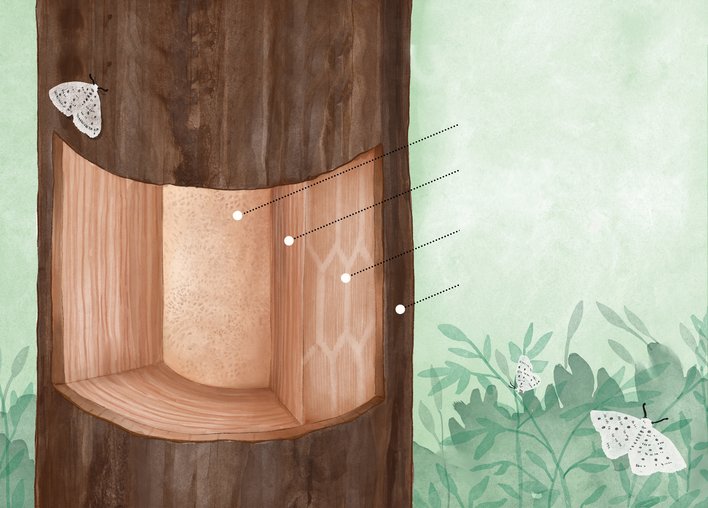
The only way to tell the age of a tree is to peek into the trunk.
Heartwood: Inactive cells that provide structural support to the tree
Sapwood: Soft wood with tissues that transport nutrients and water
Cambium: The active growing layer of the tree
Bark: The hard outer layer that protects the tree
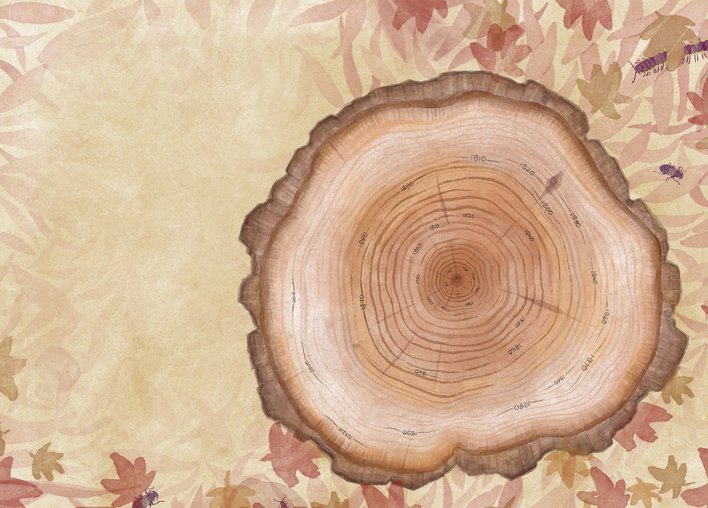
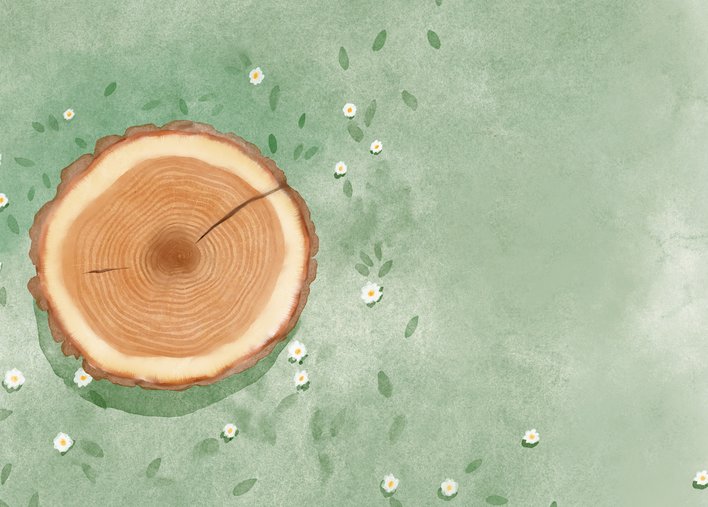
Every year, new wood cells grow in the cambium layer. In regions where there are distinct seasons — spring, summer and winter — the cells are light during spring, and darker during summer. In winter, the cells don’t grow at all.
The cells grow in circles, creating a pattern of contrasting rings. The oldest rings are in the centre, and the newest rings are outside, close to the bark.
Each ring could mark the passage of a year.
In tropical regions, like most of India, where there is rain almost all through the year, tree rings don’t have distinct patterns, making it difficult to calculate age.
With the right temperature and enough rainfall, the tree stays healthy and grows fast, creating a wide ring. When the summer is too hot, or if there is a drought, tree growth slows down, creating narrow rings.
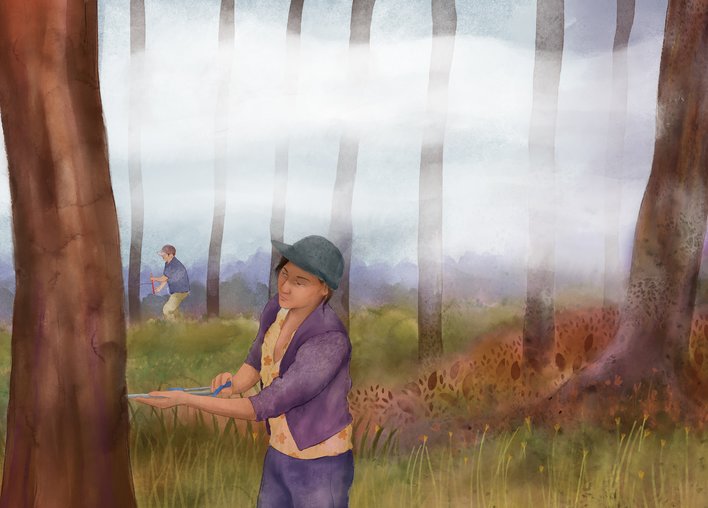
By drilling an increment borer to the heartwood, and extracting a thin long piece of wood, scientists are able to determine the age of a tree. They count the annual rings and read the patterns to understand how old the tree is and how many summers it has lived.
Dendrochronology is the study of tree rings to determine the age of a tree.
All the trees in a forest will have similar tree ring patterns. So, studying tree rings across a forest helps to understand what an entire landscape has experienced. A mass outbreak of insects that ate up all the leaves or bored into trunks of all trees will cause identical scars in tree rings.
Tree rings tell the story of weather conditions and climate change. Climate change is a change in the weather conditions of a particular region, such as temperature and rainfall, over a long period of time.
Studying changes in tree ring patterns of old trees over a long time gives an insight into how climate change is affecting the ecosystem.
This is called dendroclimatology.
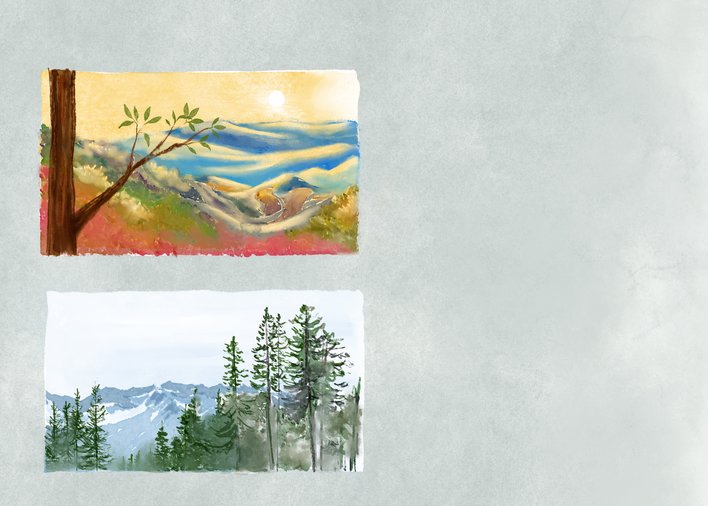
When trees in dry, cold climates face a very warm summer, or when trees in warmer climates face a very cold winter, the patterns of tree rings become irregular.
Bristlecone Pines have had wider growth rings in the last 60 years than they did in the previous 3,500 years.
In Sikkim, India, trees are losing more water through their leaves in summers, affecting their growth.
Alpine trees could now be growing higher up than usual in the Tibetan plateau, in search of colder weather.
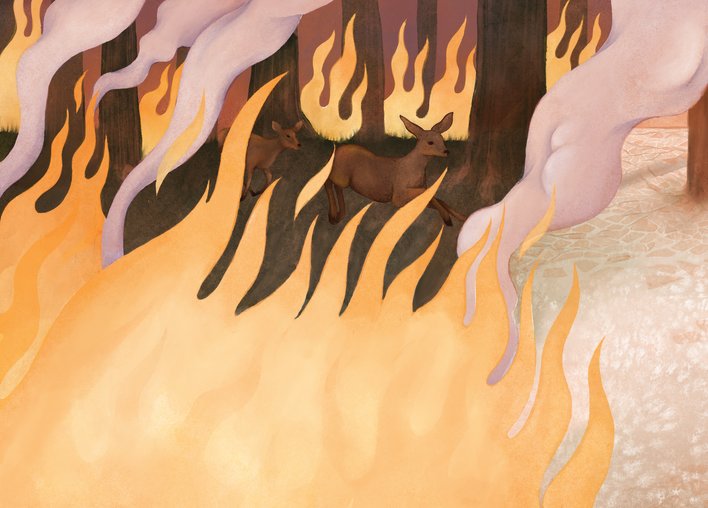
Trees are hardy and many survive forest fires. However, fires cause stress to a tree and this is seen in damaged barks, and scars in the tree rings. Giant Sequoia trees witnessed frequent forest fires before the 19th century, but the fires did not destroy the forest. Now, the fires occur less often, but are more intense and destroy entire forests.
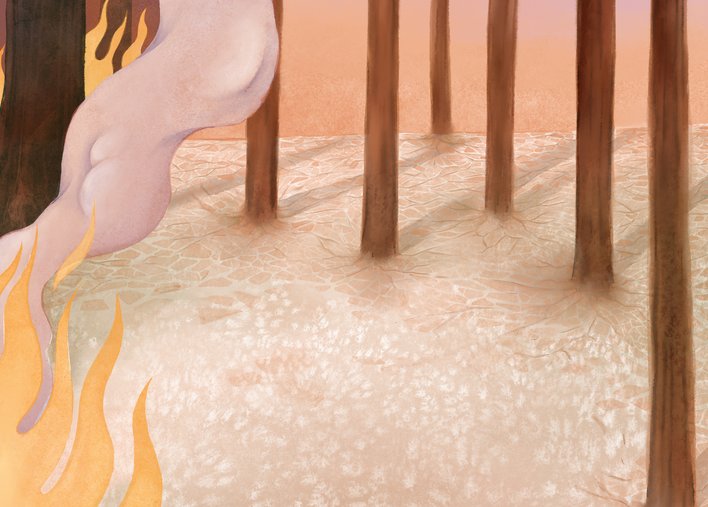
Most recorded weather data exists only from the early 19th century. Building a record of past climates helps scientists predict what will happen in the future — like how often forest fires will arise in a region, at what temperature ranges droughts occur, and how heavy rainfall will be.
Sadly, humans have interfered a lot with the natural world. Weather calamities are occurring more often, and more fiercely. Historical climate records cannot be relied upon for accurate predictions anymore.
But the solutions to all these problems continue to lie with trees — they give us a way to learn from the past and a path ahead to look into the future.
Trees are keepers of memories of the planet’s ecology and help trace human activity. They store an entire era in a few wood cells. Every layer of the tree’s trunk unravels a chapter in the history of the Earth.