Venus Flytrap
The Venus flytrap (Dionaea muscipula) is a super cool carnivorous plant. It grows naturally in wetlands with a warm, wet climate, mostly along the East Coast of the United States. You can find it in North Carolina and South Carolina. This amazing plant catches its food, like insects and arachnids (spiders!), using a special trap. This trap is actually part of its leaves and snaps shut when tiny hairs inside are touched.
Even though many people grow Venus flytraps to sell, the number of these plants in the wild is shrinking fast. The U.S. Fish & Wildlife Service is currently looking into protecting them under the Endangered Species Act of 1973.
Where Do Venus Flytraps Live?
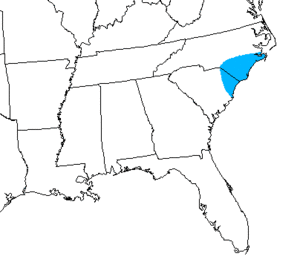
Venus flytraps are native to a very special place: a small area in the southeastern United States. This is mainly in North Carolina and South Carolina. They love places that are wet and have soil that doesn't have many nutrients. Think of bogs, swamps, and savannas. They also like sunny spots, but not too much direct sunlight that would scorch them.
What Does a Venus Flytrap Look Like?
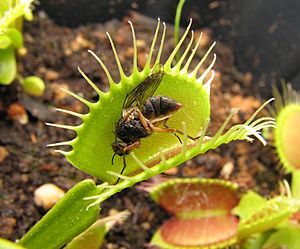
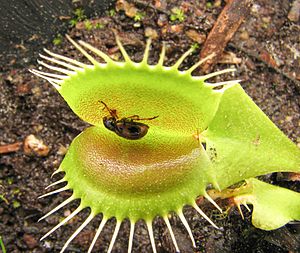
The Venus flytrap is a small plant. It usually has four to seven leaves that grow in a circle, like a rosette. These leaves come from a short stem that looks like a bulb underground. Each stem can grow to be about three to ten centimeters long. The leaves with bigger traps usually grow after the plant has flowered. If you see a flytrap with more than seven leaves, it's probably a group of plants that have grown together underground.
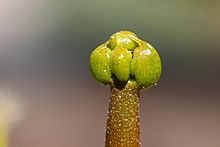
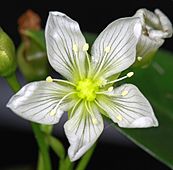
The plant also grows a flower on a long stem, which can be about 15 centimeters (6 inches) tall. Different flying insects, like sweat bees, longhorn beetles, and checkered beetles, help pollinate the flower.
How the Trap Works
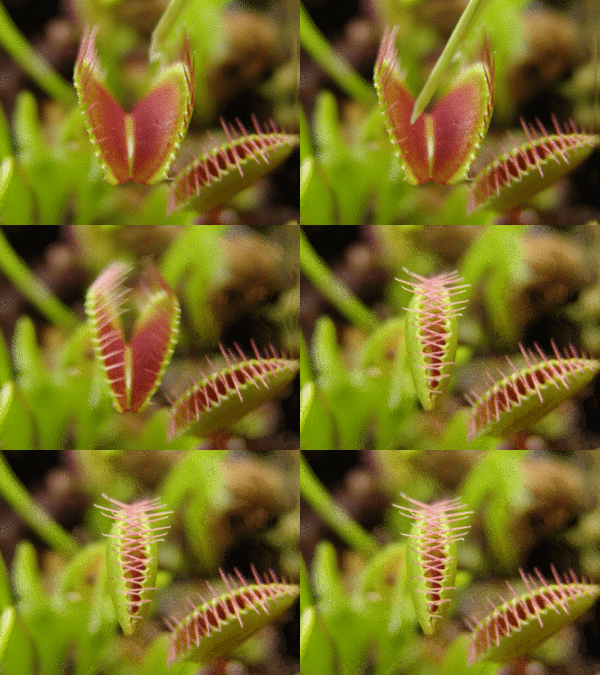
The most amazing part of the Venus flytrap is its trap! These traps are actually special leaves. They have two parts that are hinged, like a book, and can snap shut. Each part of the trap has three to five tiny, hair-like bristles on its inside surface. These bristles are super sensitive!
- The Trigger Mechanism: When an insect or other small creature lands on the trap and touches these trigger bristles, the plant reacts. It's smart, though! The trap usually needs two touches within a short time, or one strong touch that really bends a bristle. This clever trick stops the trap from closing for no reason, like from raindrops or small bits of debris.
- The Snap: Once it's triggered, the two parts of the trap snap shut incredibly fast. It takes only about one-tenth of a second! This is super quick for a plant, and it's really cool to watch. The edges of the trap have teeth-like spines that interlock, making it hard for the prey to escape.
- Digestion: After the trap closes, the plant starts to digest its meal. Special glands inside the trap release enzymes. These enzymes break down the soft parts of the captured creature. This releases nutrients that the plant can absorb. This whole process can take several days or even weeks, depending on how big the prey is. Once the nutrients are absorbed, the trap reopens, ready for its next meal!
What Do Venus Flytraps Eat?
The Venus flytrap's diet is mostly:
- 33% ants
- 30% spiders
- 10% beetles
- 10% grasshoppers
- Fewer than 5% are flying insects.
How Many Insects Do They Need?
A single Venus flytrap doesn't need to eat a lot of insects to stay alive. It might only catch and digest a few insects each year. But those few insects are super important for the flytrap. They give it the nutrients it can't get from the poor soil where it lives. It's a perfect example of how plants have adapted to survive in nature.
History and Discovery
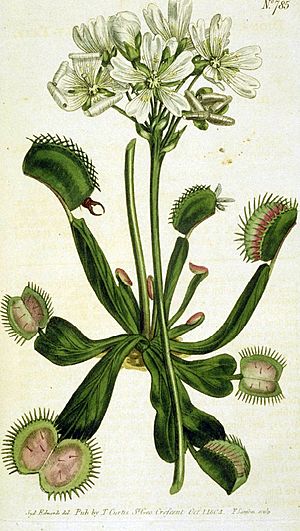
People who lived in the area long ago, like indigenous people, probably knew about Venus flytraps for centuries. But it wasn't until the 1700s that these amazing plants became known to scientists around the world.
- Early Accounts: In 1768, Arthur Dobbs, who was the governor of North Carolina at the time, wrote a letter describing the plant and its fascinating trapping skills. This letter, and other early stories, helped introduce this incredible plant to the rest of the world.
- First Cultivation: Soon after scientists learned about them, Venus flytraps started to be grown in gardens. They made their way to other parts of the world because people were so amazed by their unusual features!
- Growing Knowledge: In the 1800s and beyond, scientists studied the plant more and more. This helped us understand how it works, where it lives, and how it traps insects. Today, research continues on many parts of the plant's life and how it interacts with its environment.
Life cycle
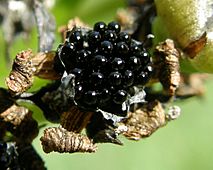
The Venus Flytrap life cycle begins as a tiny seed. A single Venus Flytrap flower can produce dozens of them! For a seed to wake up and start growing, it needs just the right conditions: not too hot, not too cold, just a comfortable temperature. Enough water to drink, but not so much that it drowns. A little sunshine to help it get started. When all these conditions are perfect, the seed begins to germinate. This is like the seed "hatching"! The hard outer shell of the seed cracks open, and a tiny, white root pushes its way out, reaching down into the soil to find water and nutrients. Soon after, a tiny green shoot emerges, reaching for the sky.
Once the seed has germinated, it enters the seedling stage. At this point, the Venus Flytrap doesn't look much like the famous bug-eater you might imagine. A young seedling looks more like a tiny blade of grass or a very small, delicate green sprout. It usually has one or two very small, simple leaves that are not yet shaped like traps. During this stage, the seedling is busy doing what most plants do: using sunlight, water, and air to make its own food through a process called photosynthesis. This stage can last for several weeks or even a few months, depending on how happy the little plant is with its environment.
As the seedling grows, it starts to develop its unique features. This is when the magic really begins! After a few months, the plant will start to form its very first, tiny traps. These traps are usually much smaller than the ones on a mature plant, sometimes only a few millimeters across. They might not be as strong or as quick to snap shut, but they are learning! These young traps are like practice traps, helping the plant learn how to sense insects and close its leaves. The plant is still mostly relying on photosynthesis for its energy, but it's slowly becoming a skilled hunter. The plant continues to grow larger, producing more leaves and bigger traps as it gets more sunlight and water.