The Mary Celeste
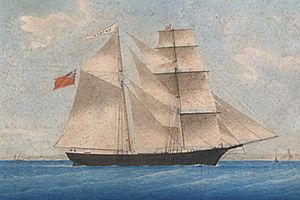
The Mary Celeste (sometimes called Marie Celeste by mistake) was a merchant ship. She was a brigantine, which is a type of sailing ship with two masts. This ship was found empty and drifting in the Atlantic Ocean near the Azores islands on December 4, 1872. Another ship, the Canadian brigantine Dei Gratia, discovered her. The Mary Celeste seemed a bit messy but was still able to sail. Her small lifeboat was gone. The last entry in her logbook was from 10 days earlier.
The ship had left New York City for Genoa, Italy, on November 7. When found, she still had plenty of food and water. Her cargo of alcohol was untouched. The captain and crew's personal items were still there. No one who had been on board was ever seen or heard from again. This mystery has puzzled people for a very long time.
The Mary Celeste was built in Spencer's Island, Nova Scotia, Canada, in 1861. She was first named Amazon. In 1868, she became an American ship and got her new name, Mary Celeste. She sailed without problems until her famous 1872 voyage. After she was found, a court in Gibraltar looked into what happened. They considered different ideas, like a disagreement among the crew or someone trying to trick an insurance company. But there was no strong proof for any of these ideas. Because of this, the mystery continued, and many stories have been told about the Mary Celeste.
After the court hearings, the Mary Celeste continued to sail with new owners. In 1885, her captain purposely crashed her off the coast of Haiti. This was part of a plan to trick an insurance company. The story of her being found empty in 1872 has been told many times. It has appeared in books, plays, and movies. The ship's name has become a way to describe something that is mysteriously empty or deserted. In 1884, Arthur Conan Doyle, who wrote the Sherlock Holmes stories, wrote a short story based on the mystery. He called the ship Marie Celeste, and that spelling became very common.
Building the Ship: Early Adventures
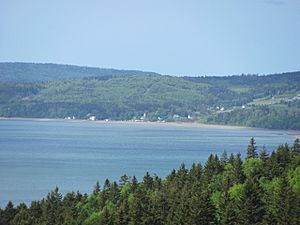
The Mary Celeste started as the Amazon. Her main frame was built in late 1860. This happened at Joshua Dewis's shipyard in Spencer's Island, Nova Scotia. The ship was made from local wood. She had two masts and was built as a brigantine. She was launched on May 18, 1861. On June 10, 1861, she was registered in nearby Parrsboro. Her papers said she was about 30 meters (99.3 feet) long. She was about 7.7 meters (25.5 feet) wide and 3.5 meters (11.7 feet) deep. She weighed about 198 tons. Nine local people owned her, with Joshua Dewis leading the group. Robert McLellan, the ship's first captain, was also an owner.
For her first trip in June 1861, the Amazon went to Five Islands, Nova Scotia. There, she picked up wood to take to London, England. Captain McLellan became sick while loading the ship. His health worsened, and he died on June 19. John Nutting Parker became the new captain. The trip to London continued, but the Amazon had more problems. She hit fishing gear near Eastport, Maine. After leaving London, she crashed into and sank another ship in the English Channel.
Captain Parker commanded the ship for two years. During this time, the Amazon mostly traded in the West Indies. In November 1861, she sailed to France. A famous artist might have painted her in Marseille. In 1863, William Thompson took over as captain. These years were calm. A shipmate later said, "Not a thing unusual happened." But in October 1867, a storm hit the Amazon near Cape Breton Island. She was badly damaged and her owners gave up on her. On October 15, Alexander McBean bought her as a wrecked ship.
New Owners and a New Name
Within a month, McBean sold the wreck. In November 1868, an American sailor named Richard W. Haines bought it. Haines paid US$1,750 for the wreck. He then spent $8,825 to fix and restore it. He became her captain. In December 1868, he registered her in New York as an American ship. She was given a new name: Mary Celeste.
In October 1869, Haines's creditors took the ship. She was sold to a group of New York businessmen led by James H. Winchester. Over the next three years, some owners changed, but Winchester always owned at least half of the ship. We don't have many records of what the Mary Celeste did during this time. In early 1872, the ship had a big repair job. This cost $10,000 and made her much larger. Her length grew to about 31.4 meters (103 feet). Her width became 7.8 meters (25.7 feet) and her depth 4.9 meters (16.2 feet). A second deck was added. The ship's total weight became 282.28 tons. By October 1872, Captain Benjamin Briggs owned four of the twelve shares in the ship.
Captain Briggs and His Crew
Benjamin Briggs was born in Wareham, Massachusetts, in 1835. He came from a family of sea captains. Benjamin was a very religious person. In 1862, he married his cousin Sarah Elizabeth Cobb. They had two children: Arthur, born in 1865, and Sophia Matilda, born in 1870.
By the time Sophia was born, Briggs was a respected captain. He thought about stopping his sea career. But instead, he invested his savings in a share of the Mary Celeste. In October 1872, Benjamin took command of the ship. This was for her first trip after the big repairs in New York. The voyage was planned for Genoa, Italy. He decided that his wife and baby daughter would come with him. His son, Arthur, stayed home with his grandmother.
Captain Briggs carefully chose his crew for this trip. The first mate, Albert G. Richardson, was related to one of the owners. He had sailed with Briggs before. The second mate was Andrew Gilling, about 25 years old. The steward, Edward William Head, was newly married. He had a good recommendation from an owner. The four sailors were Germans: brothers Volkert and Boz Lorenzen, Arian Martens, and Gottlieb Goudschaal. They were described as "peaceable and first-class sailors." Before the trip, Briggs wrote to his mother. He said he was very happy with the ship and the crew. Sarah Briggs also wrote to her mother. She said the crew seemed capable.
The Mysterious Abandonment
Leaving New York
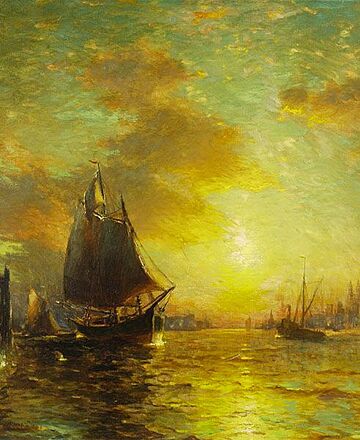
On October 20, 1872, Captain Briggs arrived at Pier 50 in New York City. He oversaw the loading of the ship's cargo. It was 1,701 barrels of alcohol. His wife and daughter joined him a week later. On November 3, Briggs wrote to his mother. He said he planned to leave on Tuesday. He added, "our vessel is in beautiful trim."
On the morning of Tuesday, November 5, the Mary Celeste left the pier. Captain Briggs, his wife, daughter, and seven crew members were on board. They moved into New York Harbor. The weather was not good, so Briggs decided to wait. He anchored the ship near Staten Island. Sarah used this delay to send a last letter to her mother-in-law. She wrote, "Tell Arthur, I make great dependence on the letters I shall get from him." The weather improved two days later. The Mary Celeste left the harbor and sailed into the Atlantic.