Penguin
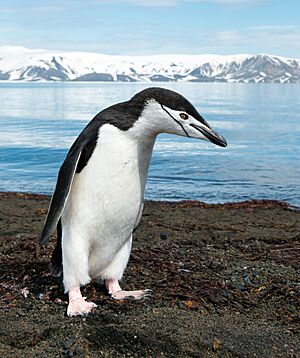
Penguins are amazing birds that live in the water but can't fly! They belong to a special group of birds called the Spheniscidae family. These unique birds are perfectly built for life in the ocean.
What's in a Name?
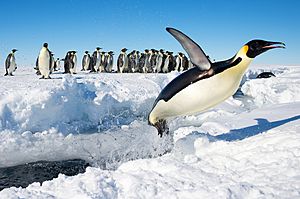
The word penguin first appeared a long time ago, in the late 1500s. Back then, it was used for a different bird called the great auk. When European explorers found the birds we now call penguins in the Southern Hemisphere, they looked a lot like the great auk. So, they named them "penguins" too, even though they aren't closely related!
Did you know that male penguins are sometimes called cocks, and females are called hens? A group of penguins on land is known as a waddle, and a group swimming in the water is called a raft.
Where Do Penguins Live?
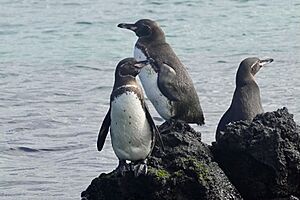
Penguins live almost entirely in the Southern Hemisphere. This means they are found south of the Equator. Only one type, the Galápagos penguin, lives north of the Equator. This is only possible because of the cold, rich waters of the Humboldt Current that flow around those islands.
You might think all penguins live in super cold places like Antarctica, but that's not true! Only a few species live that far south. Many types of penguins live in warmer, temperate areas. Even though the Arctic and Antarctic regions are both very cold, you won't find any penguins in the Arctic.
Large groups of penguins can be found in countries like Angola, Antarctica, Argentina, Australia, Chile, Namibia, New Zealand, and South Africa.
Penguin Appearance
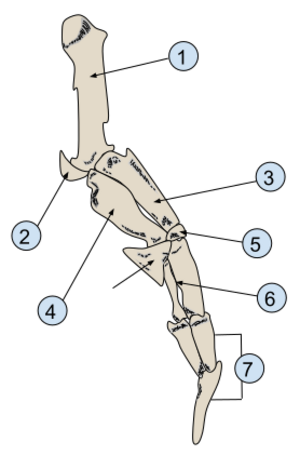
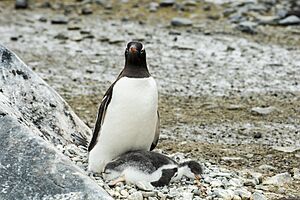
Penguins are perfectly designed for life in the ocean. They have dark backs and white fronts, which is a type of camouflage. Their wings have become strong, flat flippers, perfect for swimming.
The biggest penguins, like the emperor penguin, can stand nearly 4 feet tall (110 cm) and weigh almost 100 pounds (40 kg)! The smallest kinds, like the little blue penguin, are only about one foot (32 cm) tall.
Isabelline Penguins
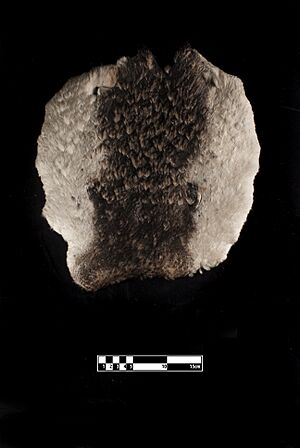
About one in 50,000 penguins are born with brown feathers instead of black. These are called isabelline penguins. This is different from being an albino. Isabelline penguins often don't live as long as other penguins because their brown color doesn't hide them as well from predators in the ocean. They also might have a harder time finding a mate.
How Penguins Move
When penguins swim, it looks a lot like other birds flying through the air! They have smooth feathers that trap a layer of air. This air helps them float and also keeps them warm in the cold water.
On land, penguins either waddle on their feet or slide on their bellies across the snow. This sliding is called "tobogganing." It helps them save energy and move quickly. They can also jump with both feet together to move faster or get over tricky rocks.
Staying Warm in Cold Water
Penguins have a very thick layer of insulating feathers. This helps them stay warm in the icy water, where they can lose heat much faster than in the air.
Their flippers also have a special system of blood vessels. This system helps warm up cold blood returning from the flippers before it goes back to the body. This amazing adaptation helps penguins keep their body heat and explains how these relatively small animals can survive in extremely cold places.
Penguin Camouflage
All penguins have a special kind of camouflage called countershading. This means they have black backs and wings, but white fronts. This helps them hide from predators.
If a predator like an orca or a leopard seal looks up from below, the white belly of the penguin blends in with the bright surface of the water. If a predator looks down from above, the dark back of the penguin blends in with the dark ocean depths.
What Do Penguins Eat?
Most penguins eat krill (tiny shrimp-like creatures), fish, squid, and other small sea animals. They catch their food with their bills and swallow it whole while swimming. A penguin has a spiny tongue and strong jaws to help it grip slippery prey.
Smaller penguins usually don't dive very deep. They catch their food closer to the surface in dives that typically last only a minute or two. Larger penguins can dive much deeper if they need to find food.
Penguin Behavior and Life Cycle
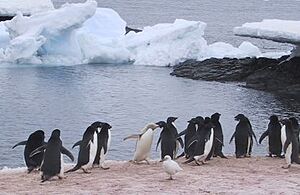
Most penguins live in large groups called colonies. Some colonies can have hundreds of thousands of penguins! Living in groups helps them stay safe and work together. Penguins communicate with each other using many different sounds and body movements.
Penguin Breeding
Penguins usually form pairs for one breeding season. Most types of penguins lay two eggs. However, the two largest species, the emperor penguin and the king penguin, lay only one egg.
Except for the emperor penguin, where the male does most of the work, both parents share the job of incubating (sitting on) the eggs. These incubation shifts can last for days or even weeks while one parent goes to sea to find food.
Penguins usually raise only one group of chicks per season. The only exception is the little penguin, which can raise two or three groups in a season.
Penguin eggs have a thick shell, which helps protect them and keeps them from drying out. When a chick hatches, it often still has some yolk from the egg inside it. This yolk helps feed the chick if the parents are delayed in bringing food.
In some species, like emperor and king penguins, the chicks gather in large groups called crèches. This is like a penguin daycare, where many chicks are looked after by a few adult penguins while their parents are out hunting.
Penguins and Humans
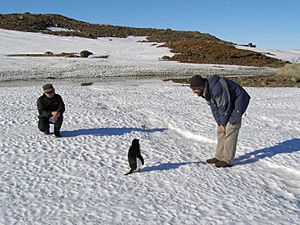
Penguins usually aren't afraid of humans and will often come close to people. This is probably because penguins don't have land predators in Antarctica or the nearby islands.
However, penguins do have predators! Other birds like skuas, petrels, sheathbills, and gulls sometimes eat penguin eggs and chicks. Adult penguins in the sea are at risk from predators like sharks, orcas, and leopard seals.
In 2011, an emperor penguin nicknamed Happy Feet became famous! He came ashore on a beach in New Zealand, which was about 3,200 km (2,000 miles) off course from his journey to Antarctica. He was very hot and had to have operations to remove sand and wood from his stomach. Happy Feet was a big media sensation, and after he recovered, he was released back into the ocean south of New Zealand.
Penguin Conservation Status
Most living penguin species are facing challenges. Their populations are decreasing. The IUCN Red List tracks their status. Some are "Least Concern," meaning they are doing okay. Others are "Endangered" or "Critically Endangered." This means they are at high risk of disappearing.
| Species | IUCN Red List Status | Trend | Mature Individuals | Last assessment |
|---|---|---|---|---|
| Emperor penguin , Aptenodytes forsteri | Near Threatened | Decreasing | Unknown | 2019 |
| King penguin , Aptenodytes patagonicus | Least Concern | Increasing | 2020 | |
| Little penguin , Eudyptula minor | Least Concern | Stable | 469,760 | 2020 |
| Southern rockhopper penguin , Eudyptes chrysocome | Vulnerable | Decreasing | 2,500,000 | 2020 |
| Macaroni penguin , Eudyptes chrysolophus | Vulnerable | Decreasing | 2020 | |
| Northern rockhopper penguin , Eudyptes moseleyi | Endangered | Decreasing | 413,700 | 2020 |
| Fiordland penguin , Eudyptes pachyrhynchus | Vulnerable | Decreasing | 12,500–50,000 | 2020 |
| Snares penguin , Eudyptes robustus | Vulnerable | Stable | 63,000 | 2018 |
| Royal penguin , Eudyptes schlegeli (disputed) | Least Concern | Unknown | 1,340,000–1,660,000 (best estimate: 1,500,000) | 2021 |
| Erect-crested penguin , Eudyptes sclateri | Endangered | Decreasing | 150,000 | 2020 |
| Yellow-eyed penguin , Megadyptes antipodes | Endangered | Decreasing | 2,600–3,000 | 2020 |
| Adélie penguin , Pygoscelis adeliae | Least Concern | Increasing | 10,000,000 | 2020 |
| Chinstrap penguin , Pygoscelis antarcticus | Least Concern | Decreasing | 8,000,000 | 2020 |
| Gentoo penguin , Pygoscelis papua | Least Concern | Stable | 774,000 | 2019 |
| African penguin , Spheniscus demersus | Critically Endangered | Decreasing | 19,800 | 2024 |
| Humboldt penguin , Spheniscus humboldti | Vulnerable | Decreasing | 23,800 | 2020 |
| Magellanic penguin , Spheniscus magellanicus | Least Concern | Decreasing | 2,200,000–3,200,000 | 2020 |
| Galápagos penguin , Spheniscus mendiculus | Endangered | Decreasing | 1,200 | 2020 |
Threats
The main threats to penguins are:
- Climate Change: Melting sea ice (vital for species like Emperors and Adélies), changing ocean currents, and warming waters that disrupt their food supply.
- Overfishing: Depleting their primary food sources like krill, anchovies, and sardines.
- Pollution: Oil spills, plastic pollution, and chemical runoff.
- Habitat Loss: Human disturbance and development on their breeding grounds.
What can we do to save them?
- Reduce Your Carbon Footprint: This is the single most important thing we can do for ice-dependent species like Emperor and Adélie penguins. This implies conserving energy (turning off lights, unpluging electronics, and using energy-efficient appliances), driving less (walk, bike, carpool, or use public transportation when possible), supporting renewable energy and eating sustainably (incorporating more plant-based meals into your diet can significantly reduce your personal emissions).
- Reduce Plastic Pollution: Plastic can entangle penguins or be mistaken for food.
- Support Conservation Organizations: These groups do the critical on-the-ground research, advocacy, and rescue work. Financial support is vital. Even a small monthly donation provides sustained funding. If you live near a rehabilitation center or a zoo/aquarium with penguins, inquire about volunteer opportunities.
- Be a Responsible Tourist: If you are ever lucky enough to see penguins in the wild, it's crucial to minimize your impact. Always follow guidelines (usually 3-5 meters minimum). Stress can cause adults to abandon their nests or chicks. Don't Feed Them! Human food is harmful to penguins.
- Advocate and Educate: Use your voice to create larger change. Share what you've learned with friends and family. Awareness is the first step to action. Support political leaders who prioritize science-based environmental policies. Every single action, no matter how small it seems, contributes to the larger effort to protect penguins and the oceans they call home.
Interesting Penguin Facts
- Penguins spend about half their lives on land and the other half in the sea.
- The largest living penguin is the emperor penguin (Aptenodytes forsteri). Adults are usually about 1.1 m (3.6 ft) tall and weigh around 35 kg (77 lb).
- The smallest penguin species is the little blue penguin (Eudyptula minor), also called the fairy penguin. It stands about 30–33 cm (12–13 in) tall and weighs around 1.2–1.3 kg (2.6–2.9 lb).
- Some prehistoric penguin species were huge, as tall or heavy as an adult human!
- Gentoo penguins are the fastest underwater birds in the world. They can swim up to 36 km (22 miles) per hour! They can also dive to depths of 170–200 meters (about 560–660 feet).
- Emperor penguins are the world's deepest-diving birds. They can dive to depths of about 550 m (1,800 ft) to find food.
- Penguins can drink salt water! They have a special gland near their eyes called the supraorbital gland. This gland filters out salt from their blood, allowing them to survive where fresh water is hard to find.
- There are 15-20 different types (species) of penguins alive today.
List of Penguin Species
Subfamily Spheniscinae – modern penguins
| Image | Genus | Living Species |
|---|---|---|
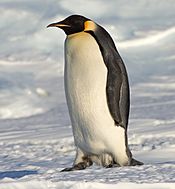 | Aptenodytes Miller,JF, 1778 – great penguins | King penguin , Aptenodytes patagonicus Emperor penguin , Aptenodytes forsteri |
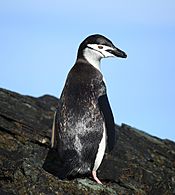 | Pygoscelis Wagler, 1832 – brush-tailed penguins | Adélie penguin , Pygoscelis adeliae Chinstrap penguin , Pygoscelis antarctica Gentoo penguin , Pygoscelis papua |
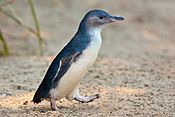 | Eudyptula Bonaparte, 1856 – little penguins | Little blue penguin , Eudyptula minor Australian little penguin , Eudyptula novaehollandiae White-flippered penguin , Eudyptula albosignata (provisional) |
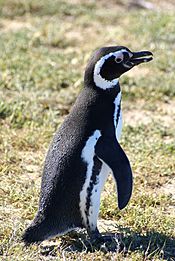 | Spheniscus Brisson 1760 – banded penguins | Magellanic penguin , Spheniscus magellanicus Humboldt penguin , Spheniscus humboldti Galapagos penguin , Spheniscus mendiculus African penguin , Spheniscus demersus |
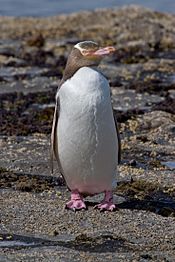 | Megadyptes Milne-Edwards, 1880 | Yellow-eyed penguin , Megadyptes antipodes † Waitaha penguin , Megadyptes waitaha (extinct) |
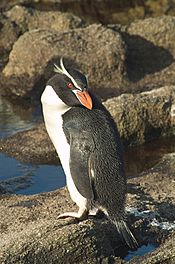 | Eudyptes Vieillot, 1816 – crested penguins | Fiordland penguin , Eudyptes pachyrynchus Snares penguin , Eudyptes robustus Erect-crested penguin , Eudyptes sclateri Southern rockhopper penguin , Eudyptes chrysocome Eastern rockhopper penguin , Eudyptes filholi Northern rockhopper penguin , Eudyptes moseleyi Royal penguin , Eudyptes schlegeli (disputed) Macaroni penguin , Eudyptes chrysolophus † Chatham penguin , Eudyptes chathamensis (extinct) |