India
India, officially known as the Republic of India, is a large country in South Asia. It is the seventh-largest country in the world by land area. Since 2023, India has become the most populated country globally. It is also the world's largest democracy.
India is surrounded by the Indian Ocean to the south, the Arabian Sea to the southwest, and the Bay of Bengal to the southeast. It shares land borders with Pakistan to the west; China, Nepal, and Bhutan to the north; and Bangladesh and Myanmar to the east. In the Indian Ocean, India is close to Sri Lanka and the Maldives. Its Andaman and Nicobar Islands share a sea border with Thailand, Myanmar, and Indonesia.
Modern humans first arrived in India about 55,000 years ago. Over time, settled life began in the Indus River basin 9,000 years ago. This led to the Indus Valley Civilisation, a very old city-based culture. Later, around 1200 BCE, Sanskrit language and early Hinduism began to spread. Around 400 BCE, the caste system developed within Hinduism. Also, Buddhism and Jainism started, offering new ways of thinking about society. Large empires like the Maurya Empire and Gupta Empire formed, bringing periods of great creativity in art and science.
In the early medieval period, religions like Christianity, Islam, Judaism, and Zoroastrianism became established in India. Later, Muslim armies from Central Asia entered northern India, leading to the Delhi Sultanate in 1206. This connected northern India to the wider Islamic world. In the south, the Vijayanagara Empire created a strong Hindu culture. The Mughal Empire followed, bringing economic growth and beautiful Mughal architecture.
Gradually, the British East India Company took control, turning India into a colonial economy. British rule began in 1858. Modern ideas and technology were introduced, and a strong Indian independence movement grew. This movement, known for its nonviolent resistance led by Mahatma Gandhi, helped end British rule. In 1947, the British Indian Empire was divided into two independent countries: India and Pakistan. This division led to a huge movement of people and much loss of life.
Since 1950, India has been a federal republic with a democratic parliamentary system. It is a diverse country with many languages and cultures. India's population has grown a lot, and its economy has become one of the fastest-growing in the world, especially in IT services. Indian movies and music are also becoming popular globally. India has reduced poverty but still faces challenges like gender inequality and air pollution. India is a nuclear-weapon state and has a large military. It has ongoing disputes over Kashmir with Pakistan and China. India is also a megadiverse country with many different plants and animals, protected in special areas.
What's in a Name?
The name "India" comes from the Classical Latin word India. This word came from the Greek word Indos, which refers to the Indus River. So, "India" means the land of the Indus River. The ancient Greeks called the people living there Indoi, meaning 'people of the Indus'.
Another important name for India is Bharat. This name is found in old Indian stories and the Constitution of India. It was originally used for North India but became a common name for the whole country in the mid-1800s.
Hindustan is another name for India that became popular around the 1200s. It was widely used during the Mughal Empire. Hindustan can mean the northern part of India or almost the entire country.
India's Story: A Journey Through Time
Early Beginnings
The first modern humans arrived in India from Africa about 55,000 years ago. The oldest human remains found in South Asia are about 30,000 years old. Around 6500 BCE, people started farming and building permanent homes in places like Mehrgarh.
These early settlements slowly grew into the Indus Valley Civilisation, which thrived from 2500 to 1900 BCE. Cities like Mohenjo-daro and Harappa were centers of this culture. They were skilled in crafts and traded widely.
Between 2000 and 500 BCE, many parts of India moved from using copper to using iron. During this time, the Vedas, the oldest holy books of Hinduism, were written. This period also saw the start of the caste system, which organized society into different groups. In South India, large stone monuments called megaliths show that people were settling down and farming.

Around 600 BCE, smaller states in the Ganges Plain grew into 16 larger kingdoms called mahajanapadas. New religions also emerged. Jainism became important through its leader, Mahavira. Buddhism, based on the teachings of Gautama Buddha, attracted many followers. Both religions taught that giving up worldly desires was important.
By the 3rd century BCE, the Magadha kingdom grew into the powerful Maurya Empire. Its most famous ruler, Ashoka, later chose peace and spread the Buddhist teachings. In South India, the Cheras, Cholas, and Pandyas traded with the Roman Empire and other parts of Asia.
Between the 4th and 5th centuries, the Gupta Empire brought a period of great art and learning. Hinduism became stronger, and there was a flowering of sculpture, architecture, and literature. Indian science, astronomy, medicine, and mathematics also made big advances.
Medieval Times
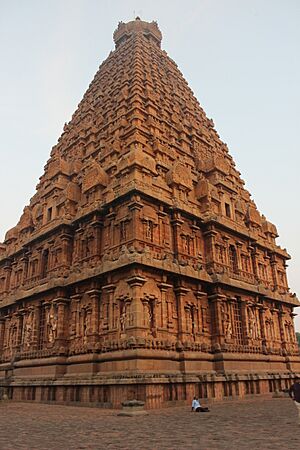

From 600 to 1200 CE, India was made up of many regional kingdoms. No single ruler could control the entire subcontinent. During this time, the caste system changed and became different in various regions.
In the 6th and 7th centuries, devotional songs called Bhakti hymns became popular in the Tamil language. These songs spread across India, helping Hinduism grow and leading to the development of many modern Indian languages. Temples became important centers, attracting many people and helping cities grow. Indian culture and political ideas also spread to Southeast Asia.
After the 10th century, Muslim groups from Central Asia began to conquer parts of northern India. This led to the Delhi Sultanate in 1206. The Sultanate protected India from Mongol attacks and brought many scholars, traders, and artists to India. This created a mix of Indian and Islamic cultures in the north. In the south, the Vijayanagara Empire grew strong, influencing society for a long time.
Early Modern India
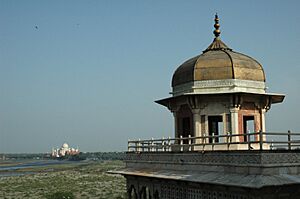
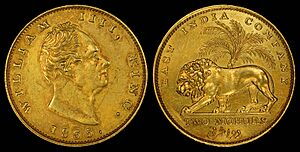
In the early 1500s, the Mughal Empire took over northern India. The Mughals created a strong, organized government. They encouraged art, literature, and architecture, leading to famous buildings like the Taj Mahal. This period brought economic growth and peace. New groups like the Marathas, Rajputs, and Sikhs also became powerful.
By the early 1700s, European trading companies, including the British East India Company, set up outposts along the coast. The British East India Company, with its strong navy and army, gained control over the Bengal region by 1765. They gradually took over most of India by the 1820s. India then became a source of raw materials for the British Empire. This period is often seen as the start of India's colonial era.
Modern India

