Hummingbirds
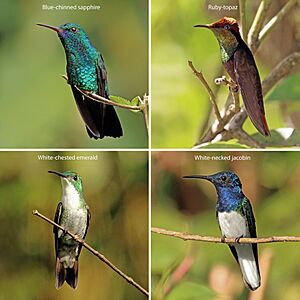
Hummingbirds are tiny, colorful birds belonging to the family Trochilidae. They are known for their amazing ability to hover in the air and fly backward.
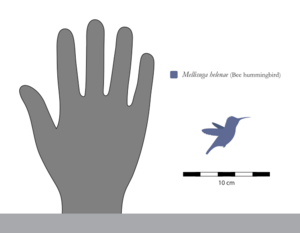
These birds are among the smallest in the world. Most species are about 7.5 to 13 centimeters (3 to 5 inches) long. The smallest living bird is the Bee Hummingbird, which is only 2 to 5 centimeters long. Hummingbirds can flap their wings incredibly fast, from 12 to 80 times per second. This allows them to hover perfectly still. They can also fly very fast, over 54 kilometers per hour (34 miles per hour).
What Hummingbirds Look Like
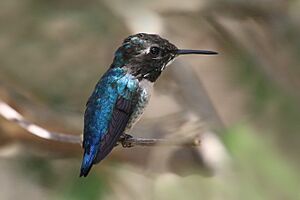
Hummingbirds have small, strong bodies. Their wings are long and shaped like blades. This special wing shape helps them fly like a helicopter, moving in any direction, even hovering.
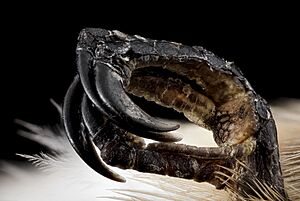
Hummingbirds have short legs and small feet. Their feet have claws that help them grip onto flower stems or branches. Unlike most birds, hummingbirds do not walk or hop on the ground. They mostly use their feet for perching, cleaning their feathers, or building nests. They also use their feet to grab opponents during fights.
When hummingbirds take off, they use their legs to push themselves up. However, their short legs give them less power than other birds. While flying, hummingbirds tuck their feet close to their bodies. This helps them fly smoothly and move easily.
Male and Female Differences
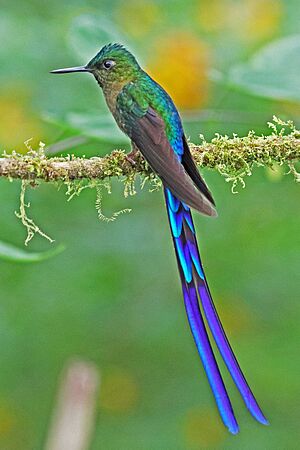
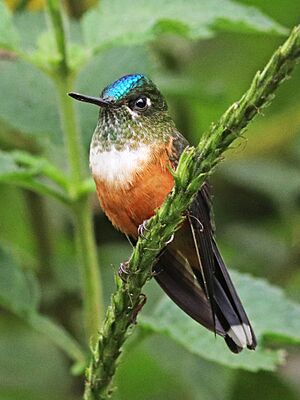
Male and female hummingbirds often look different. Males usually have brighter, more colorful feathers on their heads, necks, wings, and chests. A common feature on males is the gorget. This is a patch of shiny neck feathers that looks like a bib. It changes color depending on how you look at it. Males use their gorget to attract females and to warn other males to stay away from their area.
For birds of the same size, females tend to have longer beaks. Males are often smaller than females. Being smaller helps males save energy. This allows them to find food more easily and spend more time on courtship displays.
Female hummingbirds are usually larger and need more energy. Their longer beaks help them reach nectar deep inside tall flowers. This makes females better at finding food. It also helps them get enough energy for their larger bodies.
Where Hummingbirds Live
Hummingbirds live only in the Americas. You can find them from southern Alaska all the way down to Tierra del Fuego in South America, and also in the Caribbean. Most species live in warm, wet forests in Central and South America. Some species also live in cooler areas. Some hillstar hummingbirds even live high in the Andes mountains, up to 5,200 meters (17,000 feet) high!
The most different types of hummingbirds live in the Andes mountains. Many species are also found in the Atlantic Forest, Central America, and southern Mexico. Countries like Colombia have over 160 species, and Ecuador has about 130 species. In comparison, the United States has fewer than 25 species, and Canada and Chile each have fewer than 10.
What Hummingbirds Eat
Nectar from flowers is the main food source for hummingbirds. It gives them lots of energy. A hummingbird might visit one or two thousand flowers every day to get enough energy!
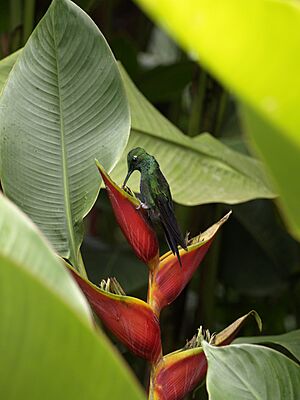
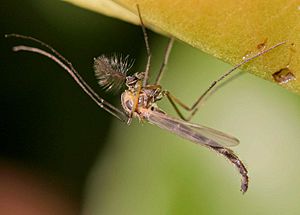
Nectar is great for energy, but it doesn't have all the nutrients hummingbirds need. It's low in fats and often lacks important amino acids (building blocks of protein). Even though hummingbirds don't need much protein, nectar alone isn't enough. So, hummingbirds also eat small insects and spiders to get the nutrients they need.
They often catch small flying insects in the air, like flies (especially midges). They also pick spiders from their webs. Hummingbirds with longer or more curved beaks might find it harder to catch insects in the air. So, they might eat more spiders.
Hummingbirds don't fly all day because it uses too much energy. Most of their time is spent sitting and resting. They eat many small meals throughout the day. They can eat about half their body weight in nectar every day! Because they are so small and have a fast metabolism, they digest their food very quickly, sometimes in less than an hour. Hummingbirds spend about 20% of their time eating and 75-80% sitting and digesting.
Because they need so much energy, hummingbirds are very good at finding food. Some species, especially in North America, protect their food sources, like a feeder. They try to keep other hummingbirds away to make sure they have enough food for themselves. Hummingbirds also have a special part of their brain that helps them remember where they found flowers before.
Hummingbird Feeders
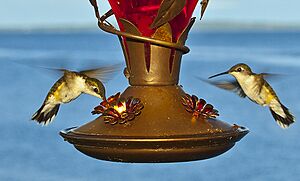
In nature, hummingbirds get nectar from flowers. Nectar is mostly made of different kinds of sugar. People can also put out bird feeders with sugar water. This lets people watch hummingbirds up close. It also gives the birds a steady source of energy, especially when flowers are not blooming. However, if birds rely too much on feeders, they might visit fewer flowers. This means they might do less pollination, which is how plants make seeds.
A common recipe for hummingbird feeders is to mix white sugar with water. A good mix is about 20% sugar. Hummingbirds prefer sweeter nectar, so they might protect feeders more if the sugar content is higher. It's important to only use white granulated sugar. Other sugars like brown sugar, agave syrup, or honey can be harmful. Honey can spoil quickly and grow germs that can hurt the birds.
Some people used to think that adding red food dye to the sugar water was good. But it's not needed and can even be harmful. Commercial "hummingbird food" might have preservatives or artificial flavors and dyes. These are also unnecessary and could be bad for the birds. Hummingbirds get all the nutrients they need from the insects they eat, so they don't need extra nutrients in their sugar water.
Hummingbird Metabolism
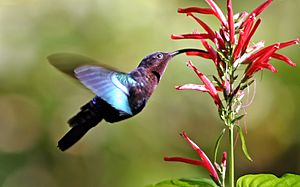
Hummingbirds have the fastest metabolism of all animals with backbones. This super-fast metabolism is needed to power their wings, which beat incredibly quickly during hovering and fast flight.
They are unique because they can use the sugar they just ate almost immediately to fuel their flight. They can use new sugars for hovering flight within 30 to 45 minutes of drinking them. By using new sugars for flying, hummingbirds save their stored fat. They use this fat to survive the night when they can't eat, or for long migratory flights.
For example, a ruby-throated hummingbird can fly 800 kilometers (500 miles) across the Gulf of Mexico without stopping. Before this long flight, it stores fat, sometimes doubling its body weight. This fat gives it the energy to fly over the open water. The amount of fat a hummingbird uses for this flight is like a human climbing about 15 meters (50 feet).