Dolphins

Dolphins are super smart and friendly aquatic mammals that live in oceans and some rivers around the world. They belong to a group called toothed whales. There are about 40 different kinds of dolphins, from the tiny 1.7-metre-long (5 ft 7 in) Maui's dolphin to the huge 9.5 m (31 ft) orca, which is actually the largest dolphin! Dolphins have sleek bodies, powerful tails, and special flippers that help them swim incredibly fast and gracefully. They are known for their playful nature and their amazing ability to communicate with each other using clicks and whistles.
Where the Name "Dolphin" Comes From
The word "dolphin" comes from an ancient Greek word, delphís, which meant "a 'fish' with a womb." This name traveled through Latin and Old French to become the word we use today. Sometimes, people use "dolphin" as a general name for the most common type, the bottlenose dolphin. It's also important to know that a mahi-mahi is a type of fish, sometimes called a dolphinfish, but it's not a mammal like a true dolphin.
Dolphins are different from porpoises, even though they look similar. Porpoises usually have shorter snouts and spade-shaped teeth, while dolphins have longer snouts and conical teeth. A group of dolphins is called a school or a pod. Male dolphins are called bulls, females are called cows, and young dolphins are called calves.
How Dolphins Evolved Over Millions of Years
Dolphins didn't always live in the water! Millions of years ago, their ancestors were land mammals that looked a bit like small deer. Over about 48 million years, these animals slowly adapted to life in the water. Their bodies changed to become streamlined, their front limbs became flippers, and their back legs eventually disappeared, leaving only tiny bones inside their bodies. This amazing journey shows how animals can change over time to fit their environment.
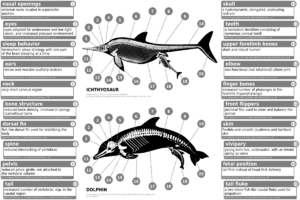
Dolphin Body and Senses
Dolphins have torpedo-shaped bodies, which means they are smooth and tapered at both ends, perfect for gliding through water. Their necks aren't very flexible, but their powerful tails, called flukes, help them push through the water. They have flippers for steering and a dorsal fin on their back for stability.
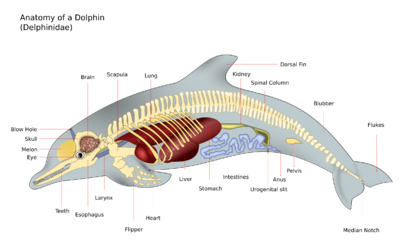
Their Unique Skin and Blubber
A dolphin's skin is smooth and rubbery, without hair. Underneath, they have a thick layer of fat called blubber. This blubber is super important! It helps them stay warm in cold water, provides energy when food is scarce, and makes their bodies streamlined for swimming. Baby dolphins are born with thinner blubber, which grows thicker as they get older.
How They Move and Dive
Dolphins use their strong tail flukes to propel themselves through the water by moving them up and down. Their flippers are mostly for steering. Some dolphins are incredibly fast, like the orca, which can travel at speeds up to 55.5 km/h (34.5 mph). Many dolphins can also dive very deep. They have special ways to save oxygen, like slowing their heart rate and sending blood to their most important organs, like the brain and heart.
Incredible Senses: Echolocation and Sight
Dolphins have amazing senses, especially their hearing. They use a special ability called echolocation, or biosonar, to "see" with sound. They send out clicks and listen for the echoes that bounce back from objects. This helps them find food and navigate, even in murky water or darkness.
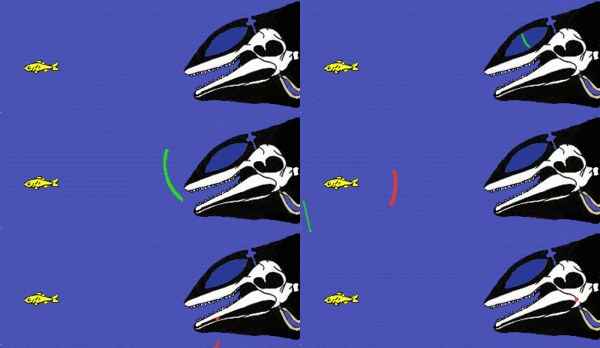
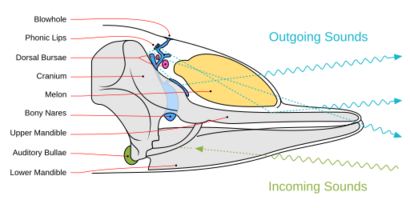
Their eyes are on the sides of their heads, giving them a wide view. They can see well both underwater and above the surface. However, dolphins don't have a good sense of smell, and their sense of taste is also thought to be limited.
Smart and Social Dolphins
Dolphins are known for being very intelligent animals. They can learn, teach each other, and work together. Scientists have found special brain cells in dolphins that are similar to those in humans, which are linked to social behavior and emotions. Orcas, the largest dolphins, have the second-largest brains of any animal on Earth! Some studies suggest dolphins might even have a form of self-awareness, meaning they can recognize themselves. This is often tested using mirrors, where animals show they understand the reflection is of themselves.
Dolphin Life and Habits
Social Life and Communication
Dolphins are very social creatures and usually live in groups called pods. These pods can have a few dolphins or sometimes hundreds! They form strong friendships and will help injured or sick members, even pushing them to the surface to breathe. They've even been seen helping other animals, like guiding whales out of shallow water or protecting swimmers from sharks.


Dolphins communicate using a variety of sounds, including clicks and whistles. Each dolphin even has a unique "signature whistle" that's like its own name! They can also communicate through touch and body language.
Life Cycle and Family Life
Dolphins typically give birth to one calf at a time. The baby dolphin is usually born tail-first. Mothers take full responsibility for raising their young, often nursing them for a long time. The gestation period (how long the baby is in the mother's womb) varies by species, from about 11 months for smaller dolphins to around 17 months for orcas.
Amazing Dolphin Hybrids
Sometimes, different species of dolphins can have babies together, creating hybrids! One famous example is the wholphin, which is a mix of a false killer whale and a bottlenose dolphin. Two wholphins currently live at the Sea Life Park in Hawaii; the first was born in 1985. Wholphins have also been seen in the wild.
How Dolphins Sleep
Dolphins have a unique way of sleeping. They usually sleep with only one half of their brain at a time. This allows them to stay partly awake to breathe and watch out for danger. In captivity, they sometimes enter a deeper sleep where both eyes are closed, and a tail kick reflex keeps their blowhole above water.
Hunting for Food
Dolphins are skilled hunters. They mostly eat fish and squid. Some larger dolphins, like orcas, also hunt seals, sharks, and even other dolphins. They use clever strategies to catch their prey. One common method is "herding," where a group of dolphins works together to gather a school of fish into a tight ball, making it easier to catch them. They can also chase fish into shallow water or even onto beaches. Some dolphins have even been seen working with humans to catch fish! In Brazil, dolphins help fishermen by driving fish towards their nets.
Jumping and Playing
Dolphins love to jump out of the water, a behavior called "porpoising." They do this for many reasons: to save energy while traveling, to get a better view of their surroundings, to communicate, to shake off parasites, or just for fun! They are very playful animals and often play with objects, make bubble rings, and interact with other dolphins or even other animals.