Castles
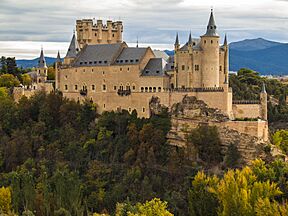
A castle is a strong, fortified building from the Middle Ages. Kings, queens, and powerful nobles built them. Castles were private homes that also served as fortresses. They are different from palaces or mansions, which were mainly for comfort, not defence.
Castles came in many shapes and sizes. Common features included strong outer walls, narrow openings for archers, and heavy gates. European castles first appeared in the 9th and 10th centuries. They helped lords control their lands and offered protection from enemies. Castles were also important centres for managing land and showing power. Some were in cities to control people and trade routes. Others were in the countryside, near important places like farms or water sources.
Many early castles in northern Europe were made of earth and wood. Later, builders replaced these with strong stone. These first castles often used natural hills for defence. They might not have had many towers or arrowslits. By the late 12th and early 13th centuries, castle design became more advanced. Builders added many towers for better defence. They also created "concentric castles" with several layers of walls. This made them very hard to attack.
Over time, some parts of castles, like moats, became symbols of power. They were not just for defence. Even after gunpowder arrived in Europe in the 14th century, castles were still built. But by the 15th century, cannons became powerful enough to break stone walls. This made traditional castles less useful for defence. They were replaced by new types of forts or large country homes. Later, in the 18th century, people started building "mock castles" for their beauty, not for war.
What is a Castle?
Where the Word "Castle" Comes From
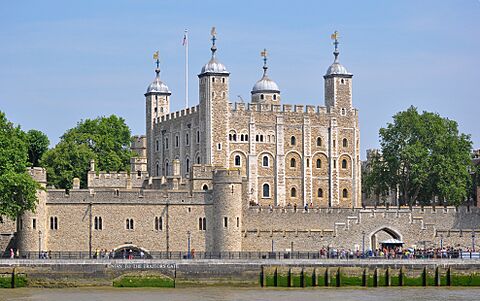
The word "castle" comes from the Latin word castellum. This means "fortified place." Many languages have similar words, like castillo in Spanish. The word came to England just before the Norman Conquest in 1066. It described a new type of strong building.
Key Features of a Castle
A castle is mainly a private, fortified home. This means it was built for a lord or noble to live in and defend. It was not a public defence like a city wall. Castles were owned by powerful local lords or their kings. These lords often granted land to people called vassals in exchange for military service and loyalty. This system was known as feudalism.
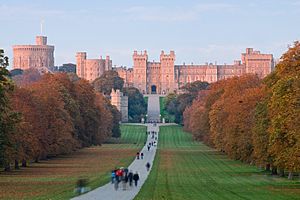
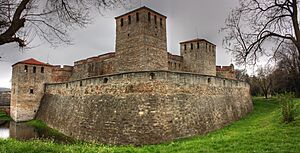
Castles had many uses. They were military bases, administrative centres, and homes. They could be used to attack enemies or to defend against them. For example, William the Conqueror built many castles in England after 1066. These helped him control the land and prevent rebellions. Warwick Castle was one such example.
As time went on, especially with the invention of powerful cannons, castles became less important for war. They became more about showing off wealth and power. Lords wanted their castles to look grand and impressive. They also made them more comfortable to live in. While castles still offered some protection, large country houses eventually replaced them as the main homes for the wealthy.
Different Kinds of Fortifications
Sometimes, people use "castle" to describe any old fort. But technically, a castle is a specific type of medieval building. For example, Maiden Castle is an Iron Age hill fort, not a medieval castle. It had a very different purpose.
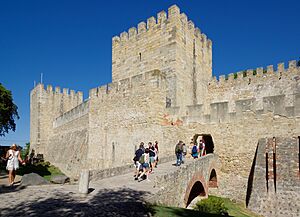
Castles first appeared in Europe and then spread to parts of the Middle East. They shared similar designs and ways of fighting. However, other parts of the world had their own unique fortified structures. For instance, Japanese shiro were also called castles. But they developed differently and were mostly made of wood until the 16th century. European castles, by contrast, were mostly stone by the 12th century.
Common Castle Features
Motte: The Castle Hill
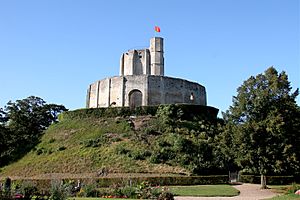
A motte was a large, flat-topped mound of earth. It was often man-made. Digging out the earth for the motte created a ditch around it, known as a moat. Mottes often had a fortified structure, like a keep, on top. A wooden fence, called a palisade, usually surrounded the top of the motte. Bridges often crossed the moat to reach the motte.
Bailey: The Castle Courtyard
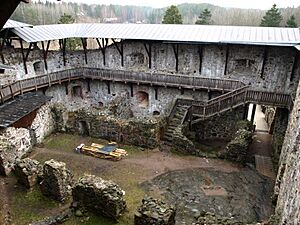
A bailey was a fortified area, like a courtyard, inside the castle walls. Most castles had at least one. The lord lived in the keep, but the bailey housed the rest of the castle's people. It contained barracks for soldiers, stables, workshops, and storage. A well or cistern provided water. Over time, important buildings like the lord's chambers moved into the bailey. Some castles had several baileys, but only one main defensive enclosure, called an enceinte.
Keep: The Main Tower
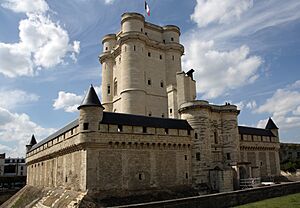
The keep was the main tower or building in a castle. It served as the lord's living quarters and the strongest point of defence. The word "keep" was not used in medieval times; they called it a "donjon." A "dungeon" is a dark prison, which is a changed form of "donjon." Keeps were often the last refuge if attackers broke through other defences. They were also used as homes for the lord and his guests.
Curtain Wall: The Outer Defence
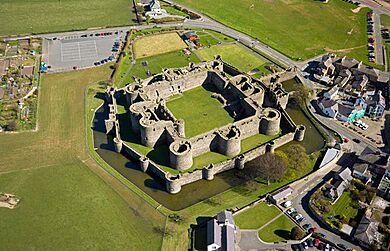
Curtain walls were the strong defensive walls that enclosed the bailey. They needed to be tall enough to stop attackers from climbing over. They also had to be thick enough to resist attacks from siege engines. A typical wall might be 3 meters (10 feet) thick and 12 meters (40 feet) tall. Walkways on top allowed defenders to shoot at enemies. Battlements, with their gaps and solid blocks, gave extra protection. Towers along the walls allowed archers to shoot along the wall's length.
Gatehouse: The Castle Entrance
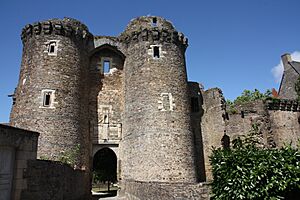
The entrance was often the weakest part of a castle's defences. To make it stronger, builders created the gatehouse. This allowed those inside to control who came and went. Gatehouses often had projecting towers on each side, like those used by the Romans. They also had several defences, such as portcullises. These were heavy metal-reinforced wooden grilles that could block the passage. Narrow arrowslits allowed defenders to shoot at enemies. The passage through the gatehouse was often long. This forced attackers to spend more time under fire.
It's a common myth that holes in the gatehouse ceiling were used to pour boiling oil. This was usually not practical. They were more likely used to drop stones or pour water on fires. Later, a barbican was added in front of the gatehouse. This was an extra rampart, ditch, and sometimes a tower. It provided another layer of defence and guided attackers to a specific entry point.